Anime Production Committee: Who Really Owns the Anime You Watch?
Jujutsu Kaisen and the final season of Attack On Titan were both animated by MAPPA, so it’s natural to assume the studio owns them too. Makes sense, but it’s often wrong. The rights, the profits and even the decision on whether a show gets made usually belong to a group of companies called: the production committee.
What Is an Anime Production Committee?
An anime production committee (seisaku iinkai, 製作委員会) is a group of companies that jointly finance an anime and then share its copyright, licensing rights and profits. A typical committee brings together the publisher of the source material, a TV broadcaster, a music label, a merchandise maker and a distributor.
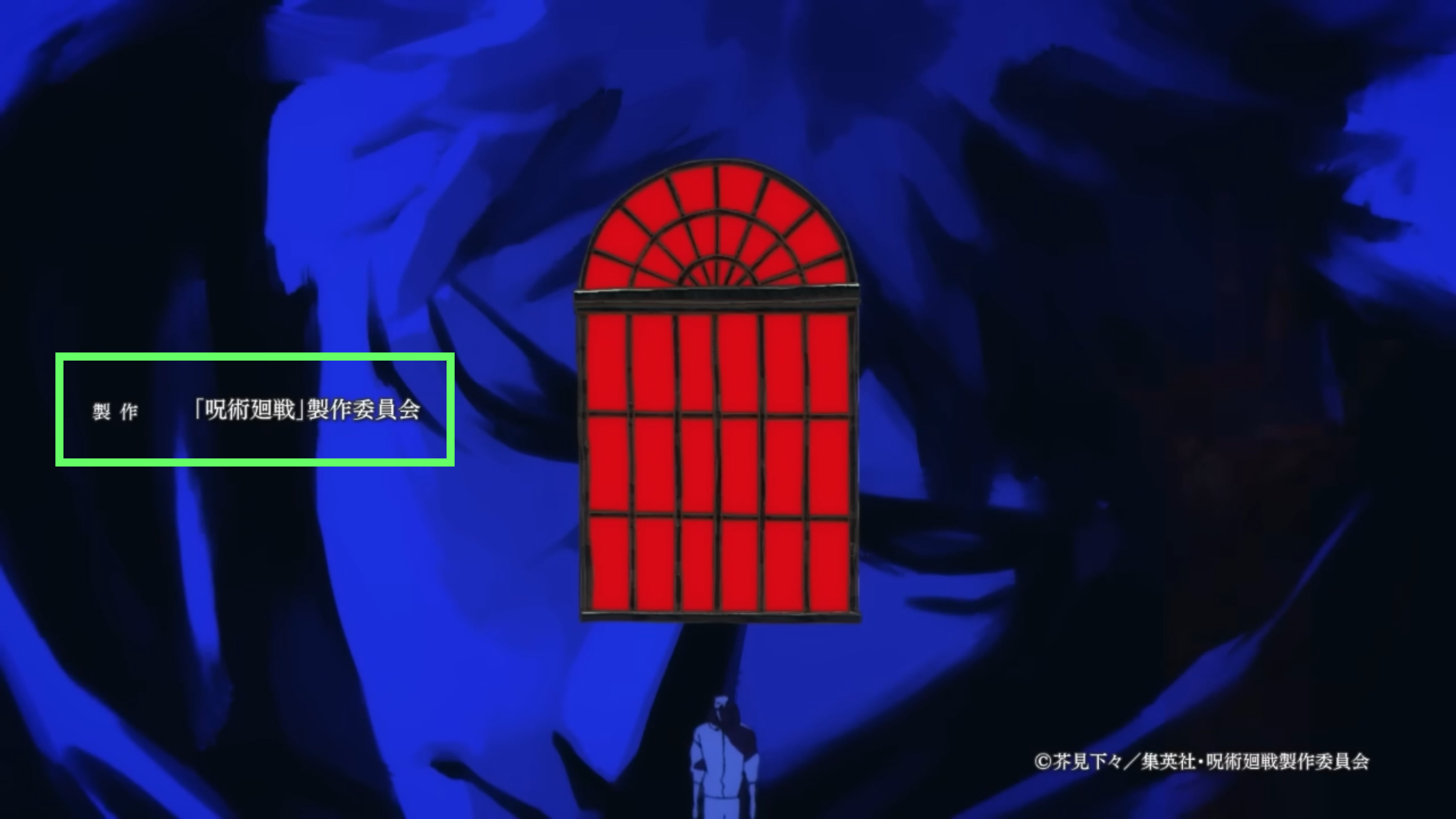
The animation studio is usually hired to make the show, not to own it. Think of it as a contractor building a house. It rarely handles the music, the merchandise or the home video release either. Each of those belongs to a different company.
So why did anime end up working this way?
Why Anime Turned to Committees
For much of anime’s television history, studios made shows commissioned by TV networks or by sponsors, often toy and confectionery companies that paid for airtime in exchange for a show that sold their products. Whoever wrote the cheque decided what got made and the arrangement worked as long as one sponsor could carry the cost of a series. That became harder as more anime moved from prime-time slots to late-night broadcasts, where a single station or sponsor could no longer justify the expense alone.
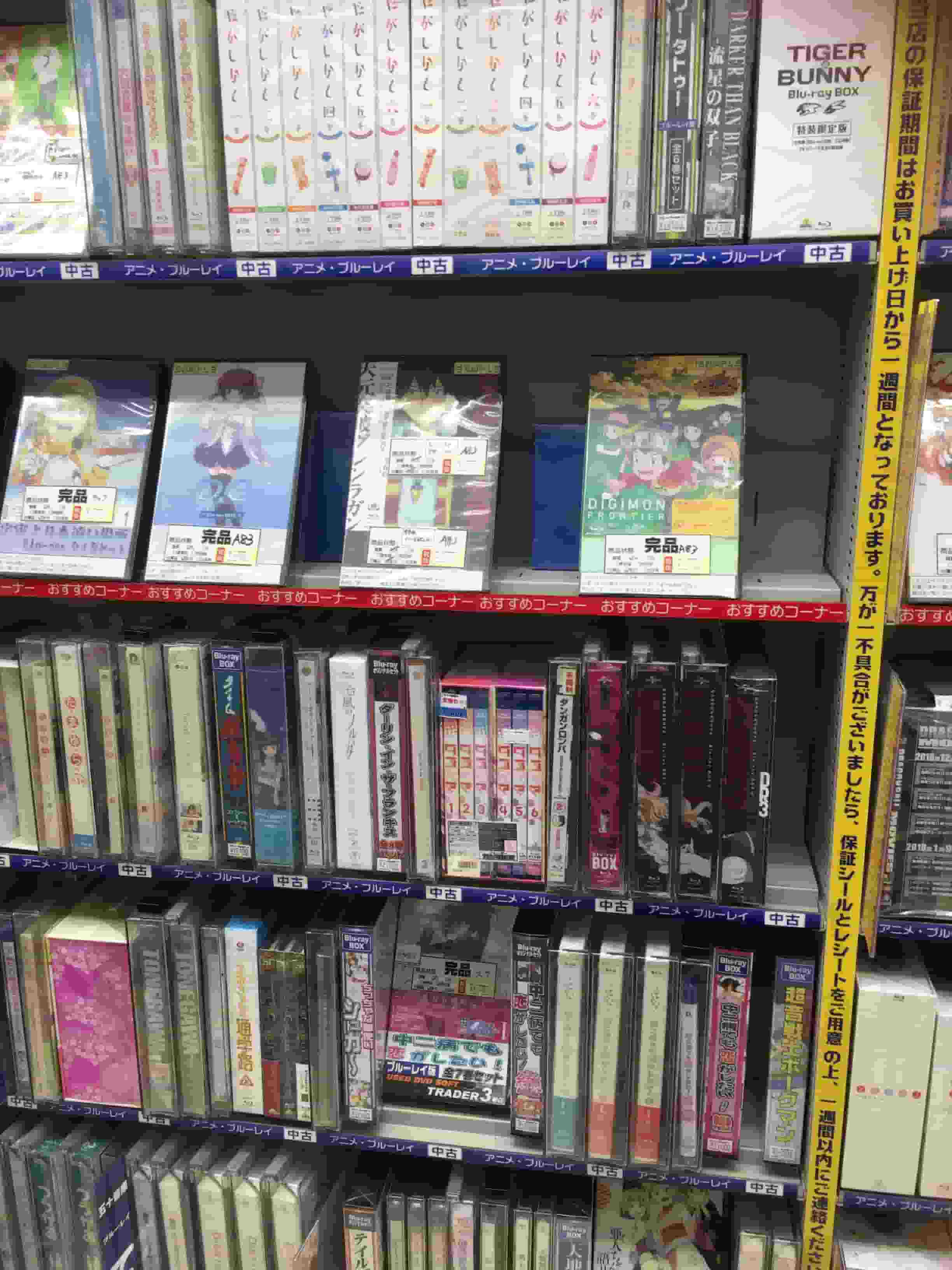
What changed the equation was home video. From the late 1980s, adult fans began buying anime on VHS and later on DVD, which meant a show could keep earning long after its broadcast ended. Suddenly a single anime was not just a TV programme but the centre of several businesses at once: tapes and discs, soundtracks, figures and the source manga itself. Each of those businesses belonged to a different kind of company and each wanted a share.
At the same time, anime was becoming more expensive. Today a single 30-minute episode can take around 100 people two months and cost upwards of ¥20 million. Yet there’s no guarantee the series will find an audience. The industry’s answer was to split both the cost and the risk. Committees appeared in the 1980s and slowly became the standard. The change took more than a decade, roughly from Nausicaä of the Valley of the Wind (1984) to Neon Genesis Evangelion (1995).
But who exactly are those companies?
Who Sits on the Committee
Every committee is assembled for a specific anime. What they share is a logic: each member invests because a successful anime grows the part of the business it already owns and each usually manages a “window” - the slice of rights it knows how to sell.
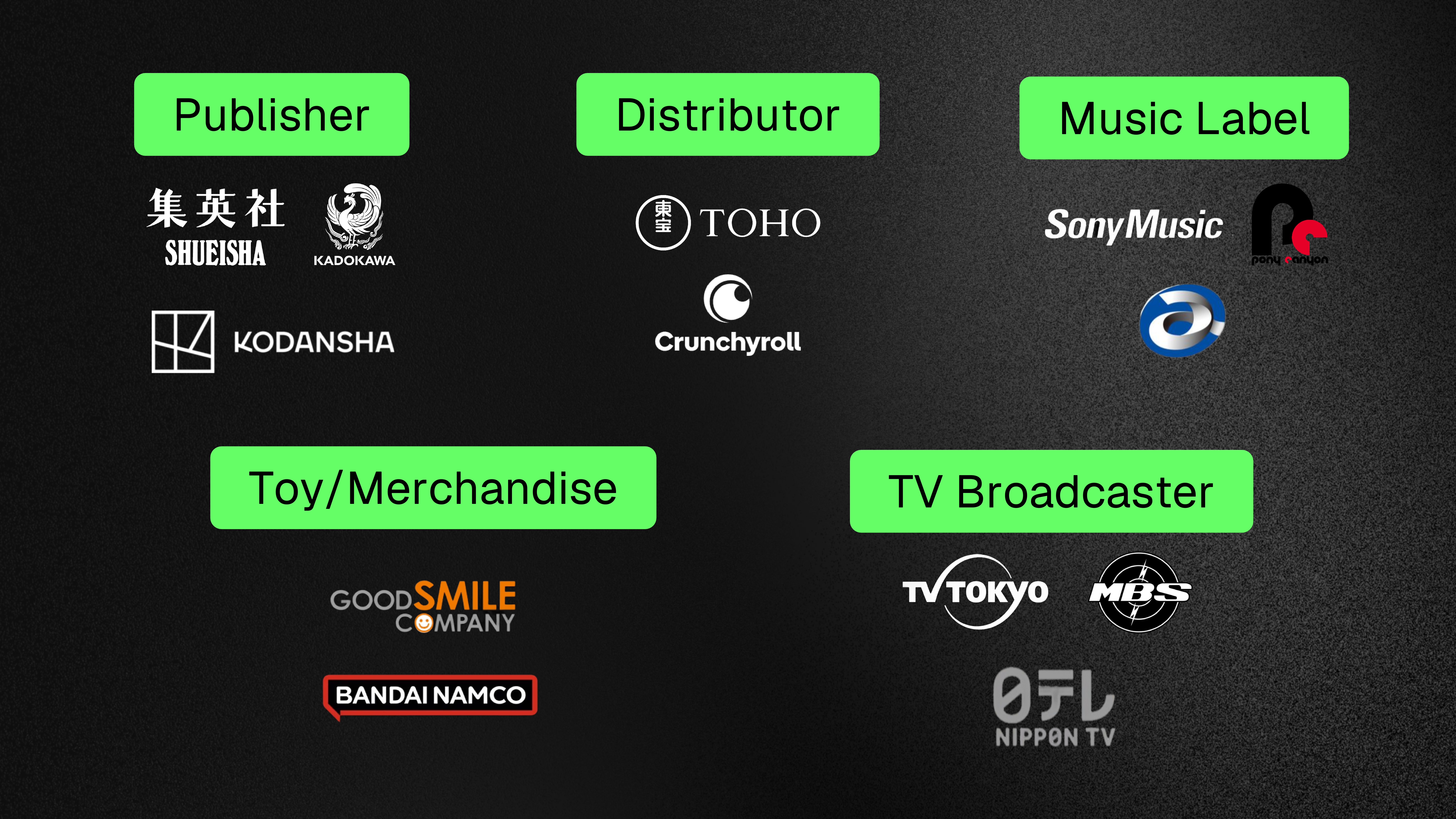
The publisher
For adaptations, the story begins here. Publishers such as Shueisha (One Piece) and Kodansha (Attack On Titan) track reader surveys and volume sales to decide which titles are worth adapting. For them, an anime often works as an expensive advertisement for the source, so a show that lifts book sales can count as a success even when its own numbers look modest. That’s also why publishers watch closely how a story is translated to the screen, since anime adaptation requires much different from its own manga.
The broadcaster
Networks such as TV Tokyo or MBS air the show in Japan and earn from advertising and broadcast rights.
The music label
A label such as Sony Music Entertainment Japan commissions the opening and ending songs. For the label, a well-placed opening theme is a promotional campaign for its artists, which is why anime songs so often chart in their own right.
The merchandise partner
Toy and game companies such as Bandai Namco turn characters into figures, apparel and games, often one of the most profitable windows of all.
The producer or distributor
Companies such as Aniplex or Toho often lead the project, assemble the other members and handle home video or theatrical release.
The overseas partner
Here the cast has changed the most. Streamers used to simply buy licences. Now they invest. In 2025, Crunchyroll sat on the committee for roughly 18% of new TV anime, more titles than Shueisha, Kodansha or Bandai. Funimation did the same before it merged into Crunchyroll.
Sometimes, the studio
A studio can join as an investor, but only some do. And that single difference, as we will see, changes almost everything about what the studio earns.
All above are just typical roles within a production committee. Together, they’re going to decide which show gets the green light.
How the Big Decisions Get Made
A show starts from a proven source, to a producer who sees franchise potential, to a committee that agrees on money and windows - and only then to a studio. Studios generally join after the committee has already formed, which tells you a lot about the order of power. It also explains why original anime are harder to fund. Without sales figures from a manga or novel, there is far less proof to rally investors around.
Once formed, the committee approves the budget, signs off on the director and key staff, chooses the studio, commissions the music, settles the broadcast schedule and decides how the show will be licensed abroad. Influence inside the committee tends to follow two things: how much a member invested and which window it manages. The member that holds overseas rights, for example, decides where most of the world will watch. That is how Bleach: Thousand-Year Blood War ended up exclusive to a single platform in many regions.
How a studio gets chosen follows the same logic. Three factors usually decide it:
- Relationships: Producers return to studios and directors that have delivered for them before, because reliability is worth as much as talent.
- Ownership: Some committee members own studios outright. Aniplex, a subsidiary of Sony Music Entertainment Japan, owns A-1 Pictures and CloverWorks, so a project led by Aniplex often stays within the family.
- Cost and capacity: Studios compete on price and on whether they can hit a schedule, which is one reason budgets across the industry remain so tight. A studio can turn a project down if it is fully booked, but most will still take the job.

Influence can also come from individual creators. Kerorira - Chief Character Designer and Chief Animation Director of Bocchi the Rock! - told Rolling Stone Japan he loved the manga so much he contacted producers himself to get it adapted. Cases like this are rare, but most anime staff are freelancers who choose which projects to join, which is part of why an anime studio’s identity runs deeper than its art style.
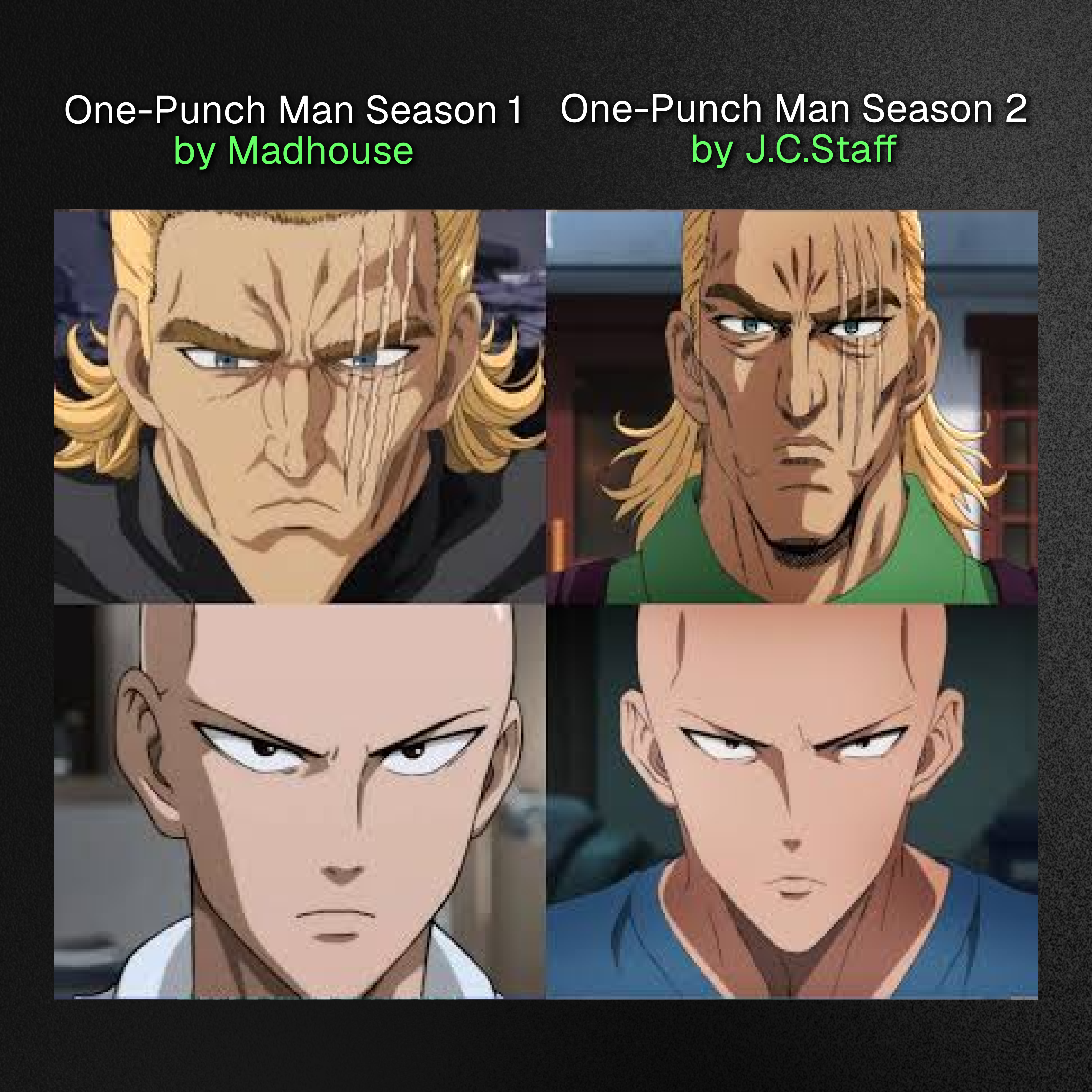
Because the studio is hired based on the project, it can also be replaced. One-Punch Man moved from Madhouse to J.C.Staff for its second season, and the final season of Attack On Titan moved from Wit Studio to MAPPA. Fans often see such changes as creative decisions, but they are also a reminder of where ownership sits: the IP stays with the committee, while the studio is a partner for one production at a time. Which leads to the question most fans never see answered on screen: when a show becomes a hit, who actually gets paid?
Where the Money Goes
For most studios, a hit and a flop pay roughly the same. The studio signs a production contract, receives a fee to make the episodes and usually transfers the copyright to the committee. That is why an anime’s copyright notice typically names the author, the publisher and the committee rather than the studio.
Once the show airs, revenue from each window flows back to the committee. Members recoup their investment and share the profit according to their stake, on top of whatever their own window earns directly. The industry numbers show the result. According to the Association of Japanese Animations, Japan’s anime market hit a record ¥4.45 trillion in 2025, but studios earned about ¥505.5 billion of it, roughly 11%.
There are a few exceptions. When a studio earns from a hit, it’s almost always because it invested in the show. Demon Slayer is the clearest example: ufotable sits on its committee alongside Shueisha and Aniplex. So when Infinity Castle grossed around $793 million worldwide to become the highest-grossing Japanese film of all time, the studio that animated it was also an owner of it. Kyoto Animation follows a similar path, frequently joining the committees of its own shows, which helps fund its unusually patient, salaried way of working.
Studios can change that by investing. MAPPA’s president Manabu Otsuka has described two ways to do it: put money in and collect royalties, as MAPPA did on Yuri!!! on ICE, or invest and also run one of the windows. Both take capital and business skills that most studios, working fee to fee, simply do not have. If the system leaves most studios with so little, why has it survived for three decades?
A Safety Net That Became a Ceiling
Within a production committee, at least no one has to carry the full cost of a series that may never find its audience. Each partner sells what it already knows how to sell, so a publisher, a music label, a broadcaster and a toy maker can together run a media mix none of them could manage alone. Pooled money also keeps production volume high: more than 250 anime premiered on U.S. streaming services in 2025 alone. Even studios benefit: with marketing, music and merchandise handled by partners, they can focus on making the anime.
But the system still has a cost and the studio pays for most of it. The budget is fixed before production starts, so if the work takes longer or costs more than planned, the studio covers the extra. And if the show becomes a hit, the studio’s fee stays exactly the same. Many of the animators are freelancers paid per drawing, so a tighter schedule simply means more drawings at the same rate. Critics call this anime’s “profitless boom”: the industry is making record money, but the studios that make the shows are still struggling. By September 2025, eight studios had already shut down, the highest number in ten years, according to Teikoku Databank.
The pressure also grows beyond Japan. Facing a shortage of domestic staff, nearly half of the production companies asked in a 2024 Teikoku Databank survey (45.2%) said they were sending part of their work to studios overseas. More of that work is now going to Vietnam and the Philippines. For animation studios outside Japan, this is a real opportunity. But most of this work is paid per job, with no share of the profits if the show becomes a hit.
This has pushed some of the industry’s most influential players to start looking for a way around it.
The Ground Is Shifting
The best-known studio to break away from the committee is MAPPA. For Chainsaw Man, the studio paid 100% of the budget itself. Even so MAPPA didn’t go it alone: they still worked with Shueisha and Toho on distribution in Japan and with Sony Pictures globally. Owning the IP didn’t mean doing everything in-house. It meant choosing its own partners and terms. MAPPA is reportedly building a wider portfolio of IP it controls and CoMix Wave Films and Production I.G are also said to be keeping the copyrights of the anime they make.
Streamers are reshaping the picture from another direction. As anime are going global, overseas revenue now makes up more than half of the industry, and the companies that bring anime to that audience now have more power. Netflix, for example, usually pays studios directly instead of joining a committee. It has also started asking less often to be the only platform that can show a series.
The third shift is consolidation. Sony acquired Crunchyroll in 2021 and merged it with Funimation, then became Kadokawa’s largest shareholder and bought a stake in Bandai Namco. Sony also owns Aniplex and its studios. That means one group of companies now covers publishing, production, music, merchandise and global streaming. In other words, it can do almost everything a committee does on its own.
The committee is still the normal way to fund most anime. But power is slowly moving to whoever owns the IP and can reach global fans directly. That’s starting to change which anime get made.
So, Who Really Controls Anime?
For now, mostly the committee, especially the companies that invested the most and hold the most valuable rights. The studio controls what reaches the screen, but rarely what happens to the show afterwards. In anime, the companies that own the rights have more control than the names in the credits. Still, even the committee can't fully control what ends up on screen: that depends on which directors and animators choose to work on that show.
So when an anime series suddenly stops after one season, or a sequel is made by a different studio, the studio rarely makes that call. Those decisions usually belong to the committee.
Want to see how anime production works from the studio side? Contact Otsu Animation and we’ll walk you through it.
Do anime studios own the anime they make?
Usually not. Most studios work on a production contract and transfer the copyright to the production committee.
Why do some anime never get a second season?
The committee decides based on the film’s returns across all its windows: source sales, home video, merchandise, music and licensing.
What do the company logos before an anime episode mean?
It represents a committee member or production partner, such as the publisher, the broadcaster, the music label or the distributor.
Is Netflix part of the production committee?
No. Netflix tends to contract directly with studios, so its control comes through the contract rather than a committee seat.
Are original anime funded by the studio that makes them?
Usually not. Originals have no manga or novel sales to prove demand, but most are still financed by a production committee, with the studio brought in to animate.
Why are anime studios so often underpaid?
Budgets are fixed by the committee before production. Most studios earn a fee rather than a share of profits.