2D Animation Cost: Why Studio Prices Differ So Much
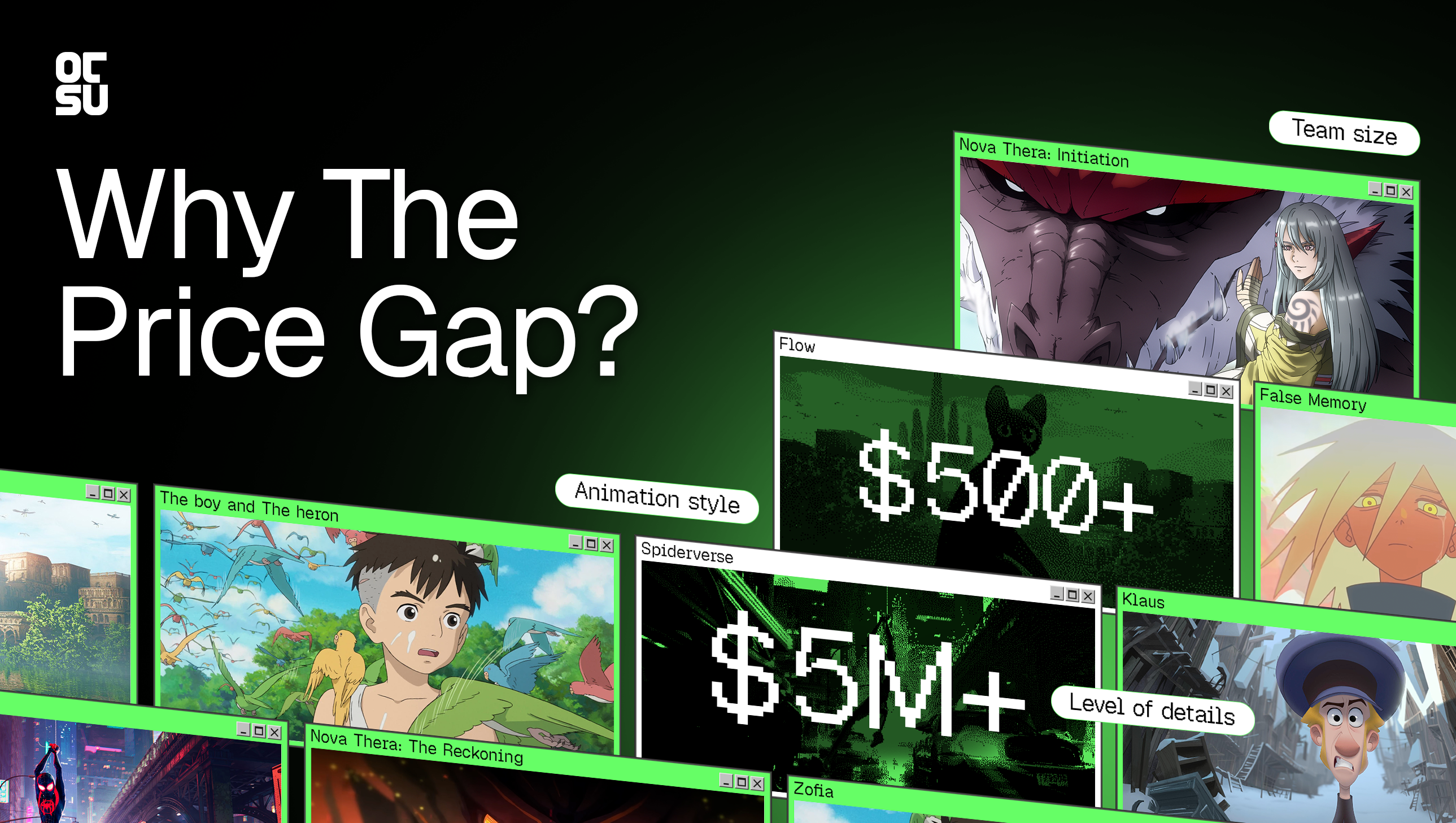
2D animation costs can vary across different budget tiers - and the price gap could be even massive. To help you understand what this price actually covers before kicking off your next animation project, we’ll break down the key factors that shape animation cost so you can maximize your budget with any animation studio or freelance artists.
How Much Does 2D Animation Cost in 2026?
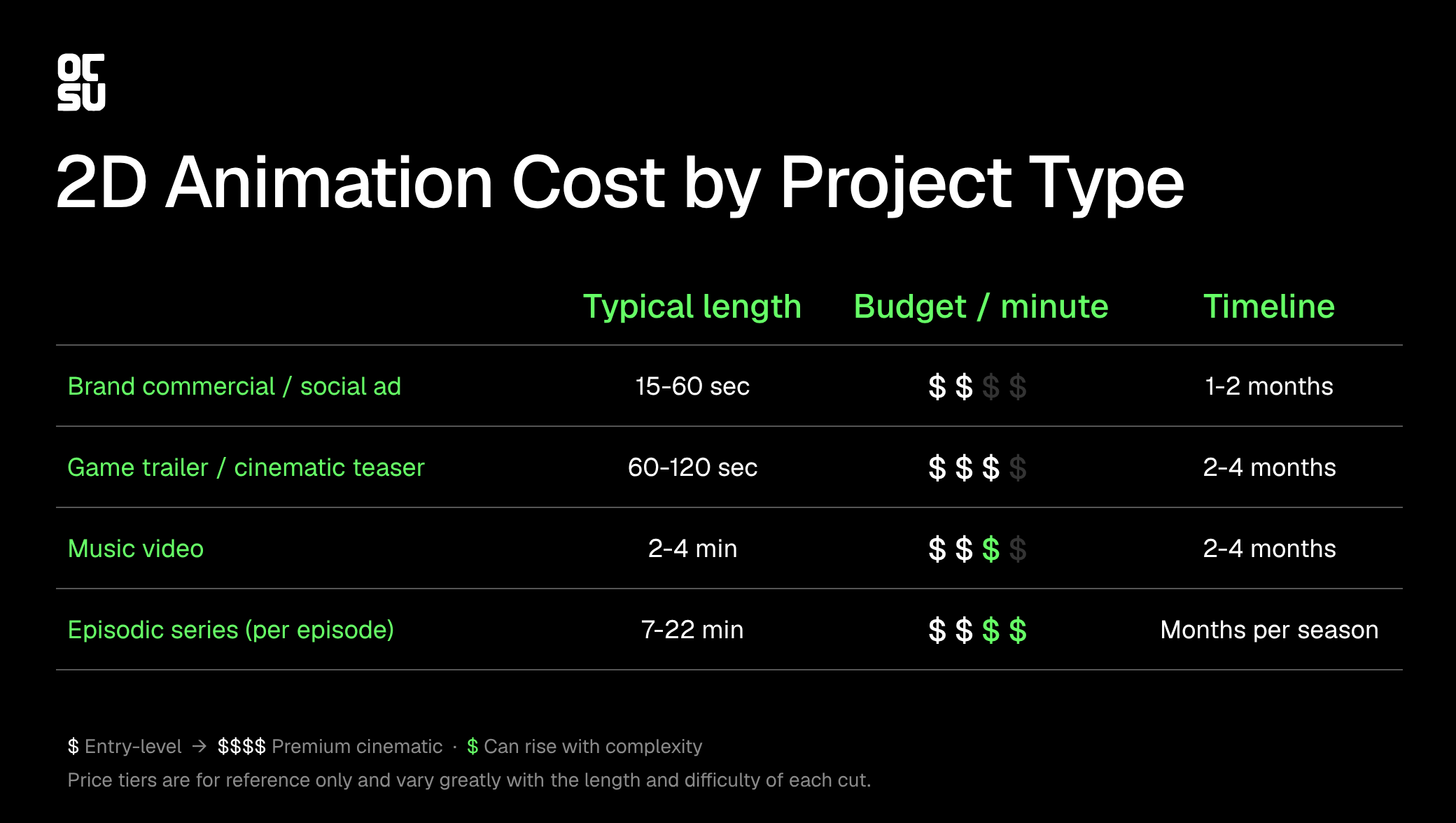
There is no single price list for 2D animation. Studios rarely publish theirs because every quote is built around a specific brief. What we can share is how budgets scale. Most studios price per finished minute (or per second for short spots), and the biggest jumps come from how much original work is needed, how many drawings per second the style requires and how fast you need delivery. The table below shows where common project types usually sit relative to each other.
What Creates the Massive Animation Price Gap?
2D animation is a slow, hands-on craft. Every project needs its own team, timeline, technique and level of detail, so there is no one-size-fits-all price list. Is it the studio's reputation that pushes the price up? Not really. Well-known studios may have more resources and a proven track record, but animation cost mainly comes down to the labor behind the screen. You are paying for the skills, experience and hours of the artists who make it happen. A bigger budget gives you access to more senior artists and a team that can handle more complex, demanding work.
Price is one of the biggest factors when choosing an animation partner. So, instead of getting lost in studio jargon, let’s keep it simple. When you strip away that reputation factor, animation cost usually comes down to three core factors: project purpose, quality output and production time.
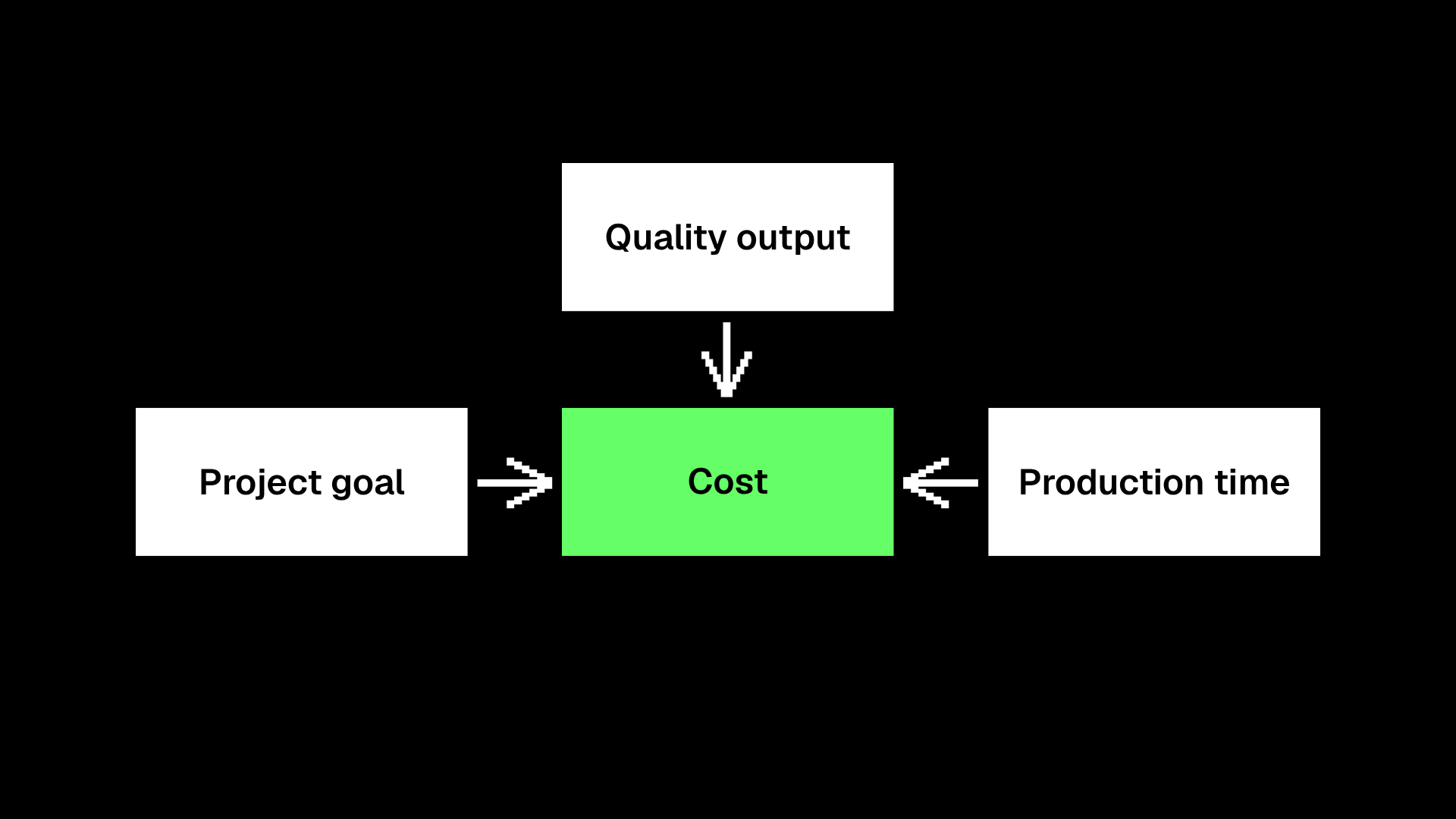
The higher the quality you want, the more work it takes. The faster you need it, the more people are needed to keep that quality. So, what does each factor actually mean for your budget? Let’s break it down.
How Your Animation Project Goal Directs the Production Cost
Do you agree that starting everything from scratch takes more time and money than working from an existing model or asset? Whether you are making a 60-minute feature film or a 30-second commercial, the more the studio has to create from scratch, the more work goes into the Pre-production stage.
This includes building the world, defining the visual style, designing characters and setting the rules for how everything should look and work. How much of this work is needed depends a lot on what the project is for and how much needs to be created from the ground up.
For Long-Form Animation Projects
Long-form projects mainly include feature films and episodic series.
Either way, as you can see, is a huge amount of work to prepare before animation begins.
- Feature films (often running over 40 minutes) demand the highest commercial standards. They require a large amount of original work. So, the pre-production must be built 100% from scratch. Even for IP-based films, new material still needs to be created specifically for the movie. All character sheets, concept art and backgrounds still need unique designs - both for aesthetic reasons and to protect the IP from legal issues down the road. Also, feature films have a very high bar for storytelling. Fine-tuning the story and script to match the visuals direction takes massive effort. This is why feature film budgets can vary so widely, ranging anywhere from a tight, bare-minimum execution to the most luxurious standards.
- Episodic series operate differently. While the initial setup is heavy, they don't always require cinema-level commercialization. Their main advantage is asset reuse. Many studios use this strategy across episodes to avoid animating everything all over again. Once those core assets are built, studios can reuse them across multiple episodes. This creates a standardized pipeline that keeps cost per episode controllable. Take a look at our latest project Knights of Guinevere.
For Short-Form Animation Projects
Short-form projects mainly include trailers, teasers, commercials and promotional videos.
They require less overall time than long-form, but a shorter runtime doesn't mean a lower budget. Because these videos serve marketing and branding goals, they must deliver immediate visual impact.
- Commercials and branding projects, in particular, often start with an existing product, service, or brand. This means the studio may already have real-world assets, existing models, brand guidelines, or clear visual references to work from. Having these references gives the team a starting point and can reduce the amount of work needed in re-production. In our Bucket Man project, for example, the Otsu team adapted existing references into an anime visual language instead of starting from scratch. However, some projects may require more original work. If a commercial needs a new visual world, original characters, or a specific visual direction, the studio may need to develop these elements before production. This follows the same principle as feature films.
- Similarly, adaptation projects carry their own unique complexities: creating an anime-style ad based on existing anime IP is relatively straightforward, but adapting a live-action film or converting 3D assets into a 2D anime style - like what was done in Cyberpunk: Edgerunners requires a lot more time for the studio to take the brief, digest the concept and execute the translation.
Quality & Aesthetic Standards
The visual standard you set for your project directly dictates how much labor goes into every single frame. Higher quality means more specialized artists, more iterations and naturally, a higher price point. Here is how quality impacts your final invoice:
Frame rate
- On-ones: 24 unique drawings per second → smoother movement, but much more manual work.
- On-twos: 12 drawings per second.
- On-threes: 8 drawings per second.
- Fewer unique drawings generally mean less labor, while skilled artists can still achieve a cinematic look at lower frame rates.
Visual complexity
- Detailed character designs, complex costumes, dynamic lighting and painterly backgrounds require more time to draw and render.
- Simple silhouettes and clean designs are faster to produce.
- Complex line work and realistic shading add more work, especially during clean-up and coloring.
Animation technique
- Traditional frame-by-frame animation requires artists to redraw movement manually, making it highly labor-intensive.
- The chosen technique can significantly affect both production time and cost.
Time & Production Schedule
In the commercial world, time is money. If you’re making a trailer or a commercial spot, it’s usually tied to a specific launch date or marketing campaign. And that’s where things get tricky.
Deadline
- A shorter deadline does not reduce the amount of work. It compresses the same workload into a shorter period.
- If a project normally takes three months with five artists, completing it in one month may require a larger team to handle more work in parallel.
Larger teams
- More artists also mean more communication and coordination.
- Additional leads or supervisors may be needed to maintain quality and keep different departments aligned.
Revisions
- A comfortable schedule leaves more room for client feedback and story changes.
- With a tight deadline, even small changes can affect multiple departments and require completed work to be redone.
Time, quality and scope
- These three factors are closely connected.
- If the deadline is short and the quality standard stays high, the studio may need to add resources or reduce the scope.
- The balance between these factors directly affects the final production cost.
How to Get Your Brand an Accurate Animation Cost?
The good news is that you have more options than ever, at every price tier. Freelancers, small boutique teams and full-scale studios can all compete for your budget. But the only way to compare them fairly is to give everyone the same clear picture of what you need.
Before you reach out, prepare a short brief that answers these questions:
- Purpose: Is this a commercial, a trailer, an explainer, or the first episode of a series? Where will it be shown?
- Length: How long should the final video be?
- Existing assets: Do you already have characters, brand guidelines, models, or references, or does the studio need to create everything from scratch?
- Visual direction: Share two or three reference videos that show the style and level of detail you're aiming for.
- Deadline: When do you need the final delivery and is that date fixed?
- Budget range: Even a rough range helps the studio suggest the right technique and scope, instead of guessing.
With this brief, the studio can give you a quote based on your real needs, not a generic price list. Since every studio operates with a unique animation production pipeline, make sure to ask for a stage-by-stage breakdown. This allows you to see exactly how your budget is allocated across their specific workflow and where you have room to adjust.
Not sure where your project fits? Send us a short brief and we'll come back with a stage-by-stage estimate. Contact us now!
How much does a 30-second 2D animation cost?
Anywhere from about $500 to $50,000+, depending on original work, visual complexity, technique and deadline.
Should I hire a freelancer or an animation studio?
Freelancers suit small, simple projects with flexible timelines. Studios suit projects that need several specialists, consistent quality, or a fixed launch date.
How long does 2D animation take?
A short commercial can take a few weeks to a few months. Series and feature films take much longer.
How can I lower the cost without losing quality?
Lock the script early, share existing assets, consider on-twos or rigged animation and allow a realistic deadline.