Adaptation Vs Original Anime: Which Company Should Invest In?
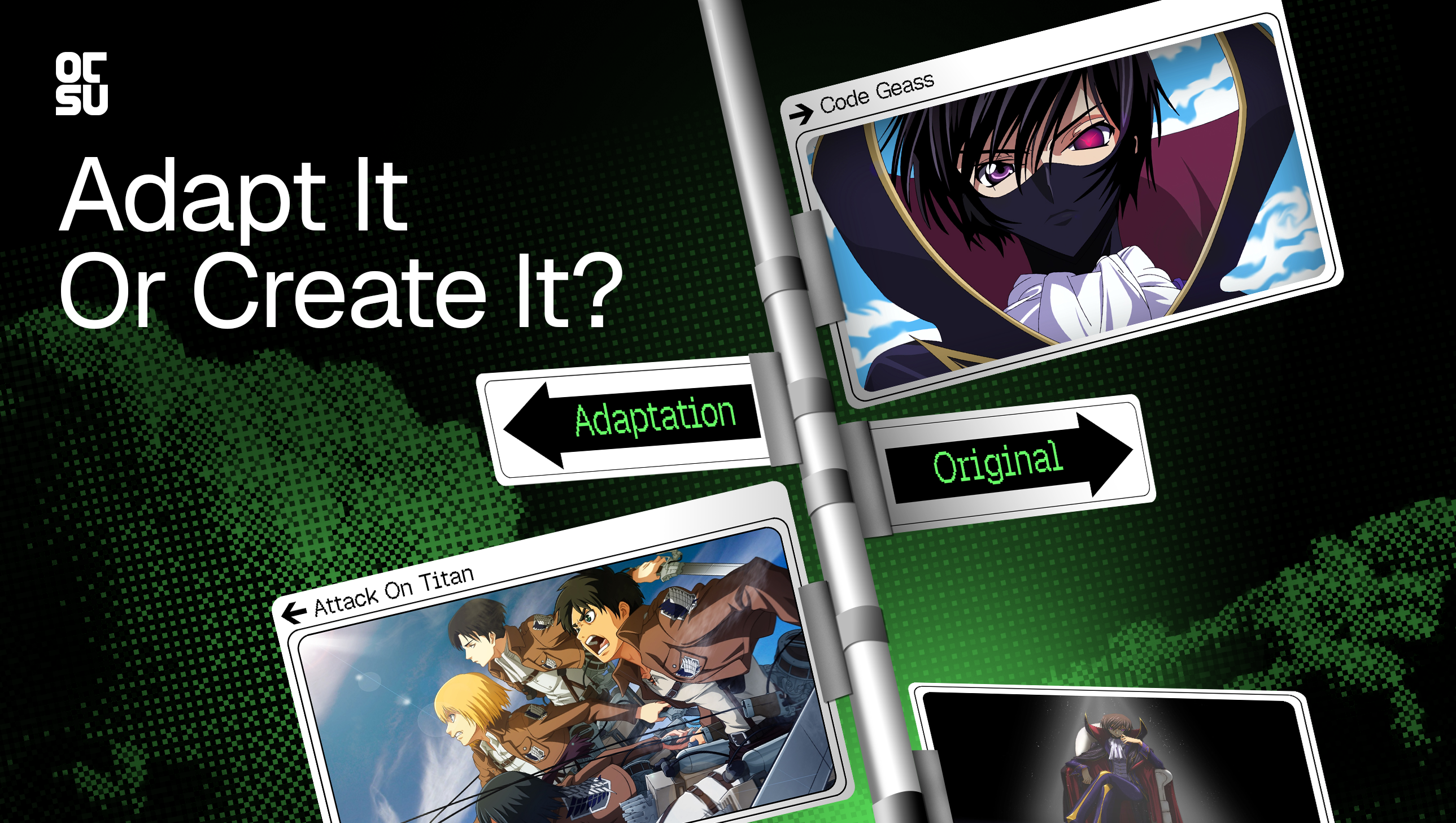
Should you rent an existing story or build one you’ll own forever? It’s one of the biggest decisions behind any anime, yet neither path guarantees success, execution does. We break down the risks, IP ownership, and production differences between adaptation and original anime to help you choose.
What Is an Anime Adaptation?
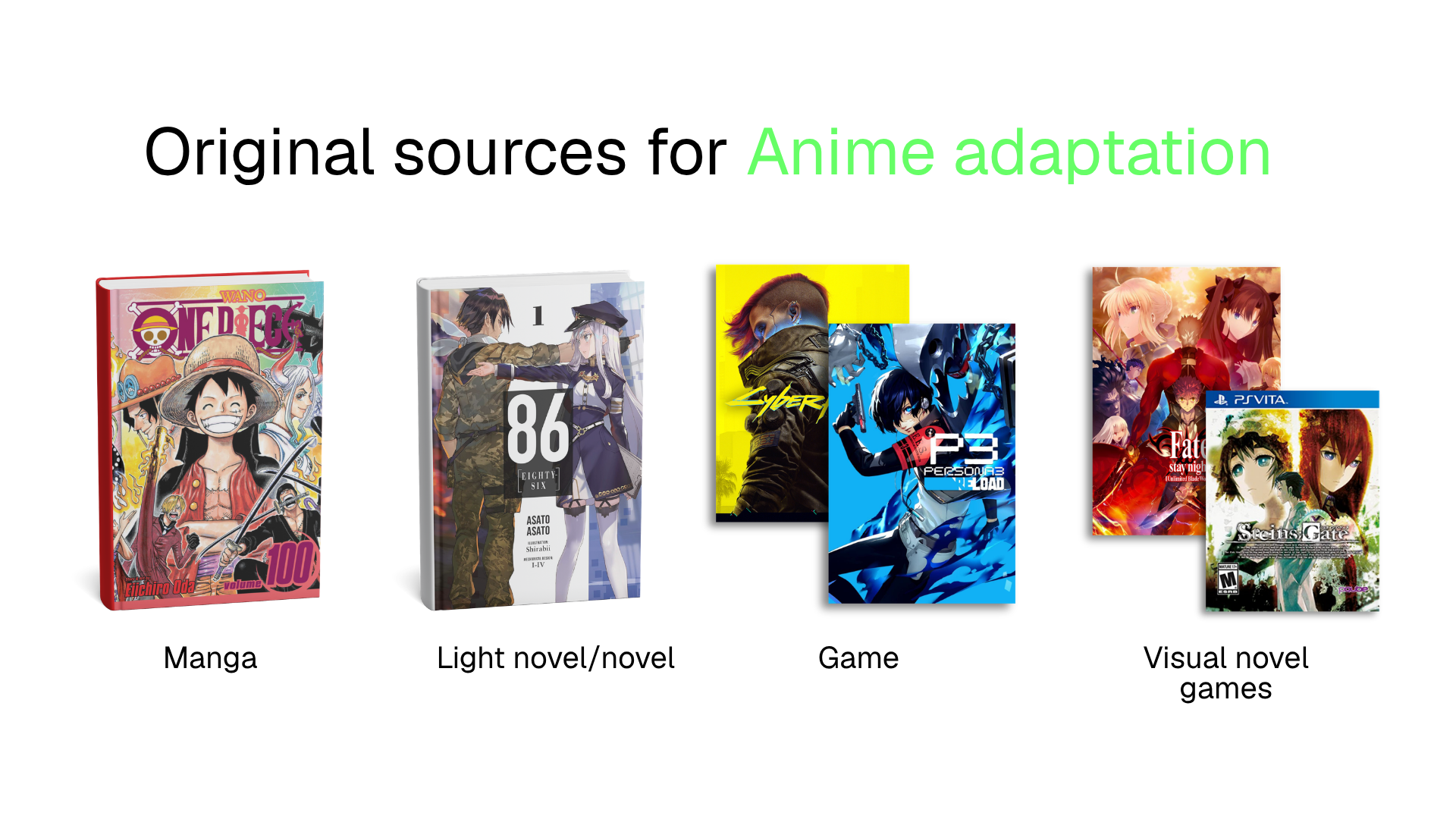
An anime adaptation is built on a story that already exists, most often a manga, but also light novels, novels, or even games. The anime takes that source material and brings it to the screen through a detailed script, character performance, dialogue, visuals, and sound.
Most adaptations stay close to the original storyline, but they’re rarely a one-to-one copy. Episode runtimes, pacing, and the nature of animation itself all push the story to change in small ways. We’ve covered why the same story can feel so different across the two formats in our earlier article on manga versus anime, click here to have a full read. Or if you are curious how games get adapted to animation, you can also read it here.
Built-In Audience, Built-In Leverage
The biggest advantage of an adaptation is that it doesn’t start from zero. The source material already has a fanbase: people who have followed the story, care about the characters, and are ready to spend time and money on anything connected to it. By the time an adaptation is announced, it already has a level of awareness and reach that an unknown title would struggle to earn.
That’s also why one of an adaptation’s key roles is to boost the original work. The anime isn’t competing with its source, it’s a lever that drives sales of the manga, novel or game behind it, along with merchandise and other spin-off products.
Demon Slayer is the textbook example. When its anime premiered in April 2019, the manga had around 3.5 million copies in circulation. To be real, this number is not what a megahit manga will have, instead, Demon Slayer manga is mid-tier on Jump at that time.
However after the Demon Slayer anime finished, the manga sales record had passed 150 million by February 2021, roughly 43 times higher in under two years. The anime turned it into one of the best-selling manga ever. And we cannot skip the fact that much of that comes down to execution: ufotable’s storytelling and visuals turned a solid manga into a phenomenon.
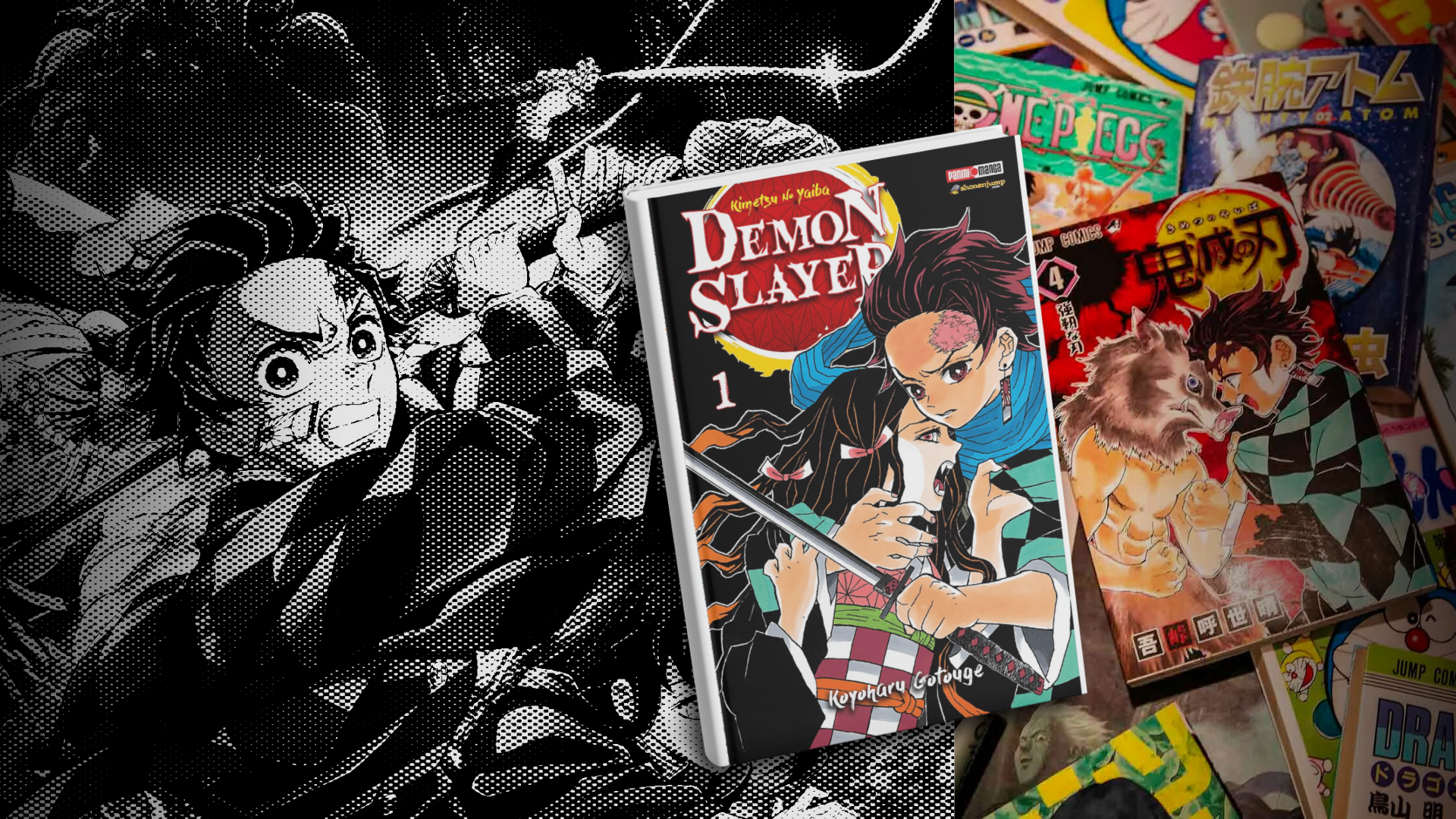
It’s no surprise, then, that investors tend to adapt works that have already proven themselves with an audience or at least they know how the story is going to see if there is a potential to develop it more.
But “lower risk” doesn’t mean “no risk”. Fans come with high expectations, and an adaptation that doesn’t live up to the source can face serious backlash. The more popular an IP is, the more it costs to license and the more competition there is for the rights. And the production is always tied to the original: changes often need the rights holder’s approval, and the anime can only move as fast as the source material allows.
What Is an Original Anime?
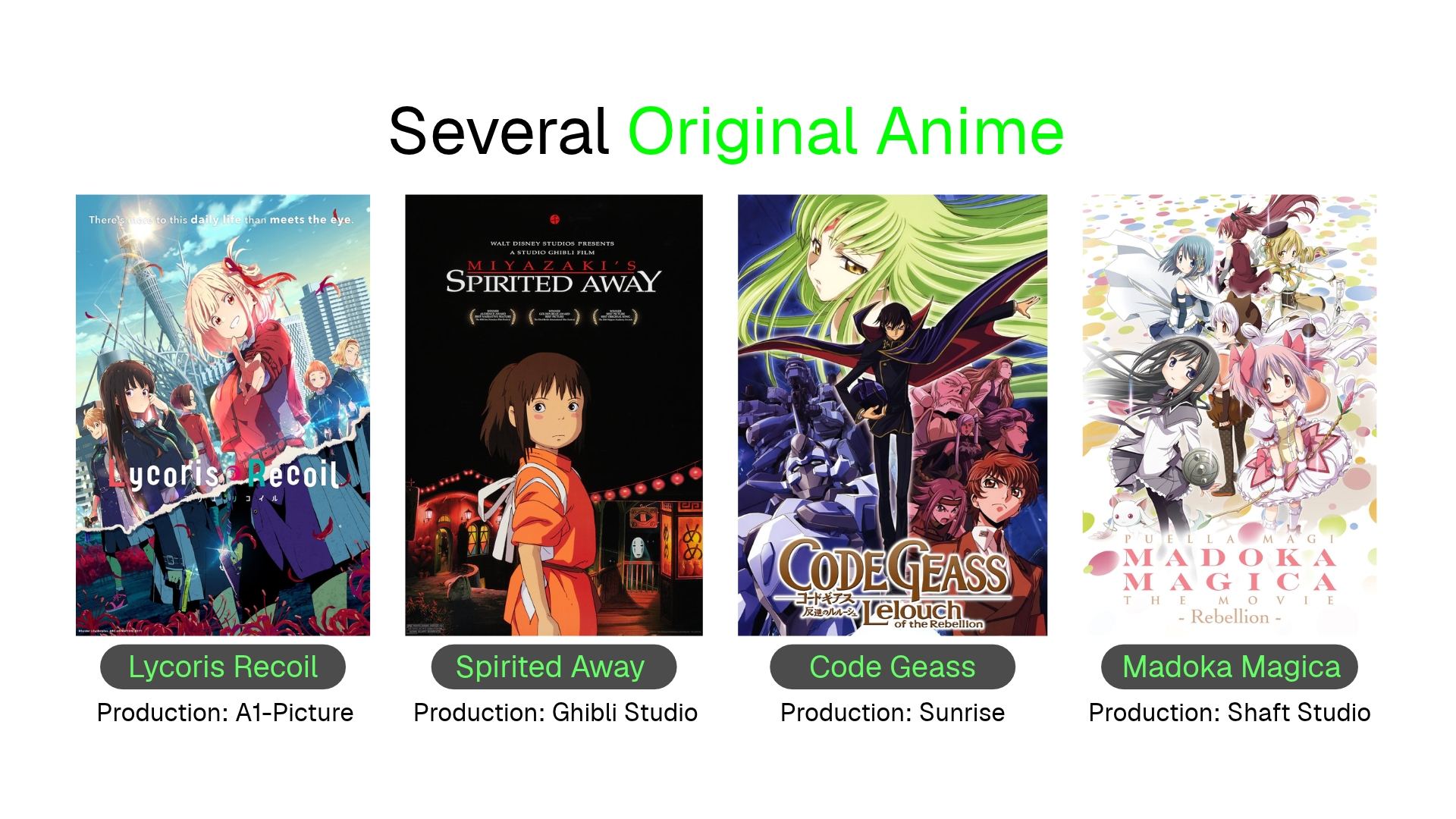
An original anime is created from scratch, without any existing source material. Here, the anime is the original work. The worldbuilding, characters, plot, and script are all developed from a blank page, telling a story that has never been published in any other form.
Starting From Zero
This is where the risk comes in. An original anime has no existing fanbase to rely on. When it launches, it has to build its audience from the ground up. For investors, that makes it like a hit-or-mis gamble. There’s no way to know for sure how audiences will react, how well the show will spread, or whether it can turn into a hit that drives sales.
On the other hand, that blank page comes with real creative freedom. An original isn’t bound by what fans expect from a source, so it can take a distinct position in a crowded market. And if it succeeds, it has the potential to grow into a long-running franchise.
Higher Risk, But You Own the Story
The trade-off for that risk is ownership.
With an adaptation, the rights belong to the original creator, usually managed together with the publisher. The production side licenses the IP, which means major decisions about the story and its future use often need the rights holder’s approval, and the value it creates is shared with them.
With an original anime, the IP belongs to whoever invests in and initiates the project. In Japan, that’s often a production committee or a lead producer: Aniplex, for example, is behind originals like Puella Magi Madoka Magica and Lycoris Recoil. Some studios own their originals because they fund them, the way Sunrise (now part of Bandai Namco) built Gundam. Whoever owns the IP decides what happens to it next, from sequels and spin-offs to games and merchandise.
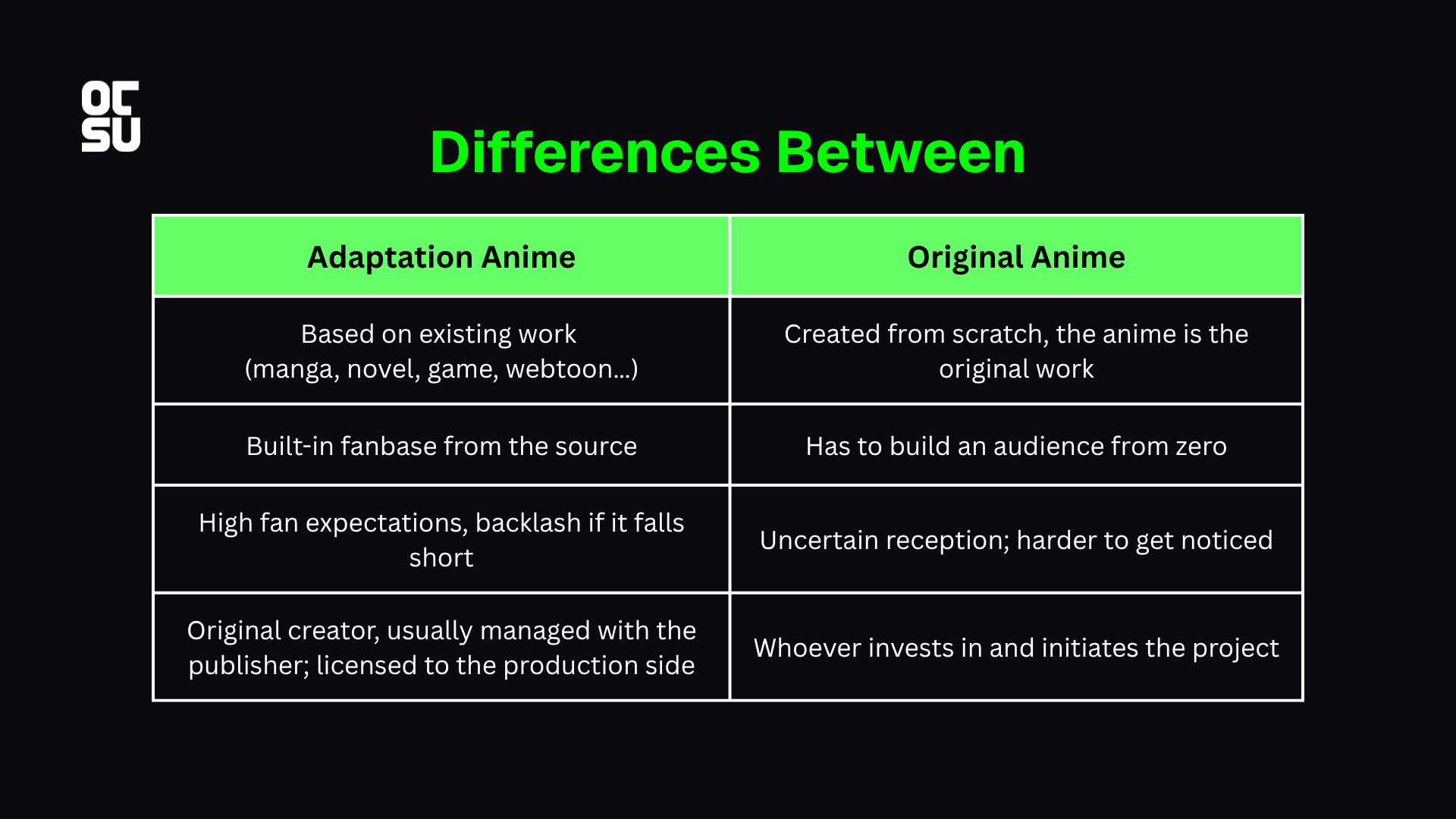
In Short: An adaptation comes with an existing fan base, which lowers the risk of failing to find viewers, but the value it creates is shared with the original rights holder. An original anime has a harder time reaching its first audience, but if it succeeds, the IP belongs to the people who invested in it.
Which Path Should You Choose?
There’s no universal answer. The right path depends on what you want the anime to do for you.
Many projects end up somewhere in between. What matters most is being clear about your goals, your timeline, and how much creative control you want before production begins.
Both adaptation from original IP or building original story from scratch, as long as you got a story, Otsu Animation can execute it to be real. Conversation is open for more detailed talk. Let’s get in touch with Otsu Animation.