How To Animate A Crowd In 2D?
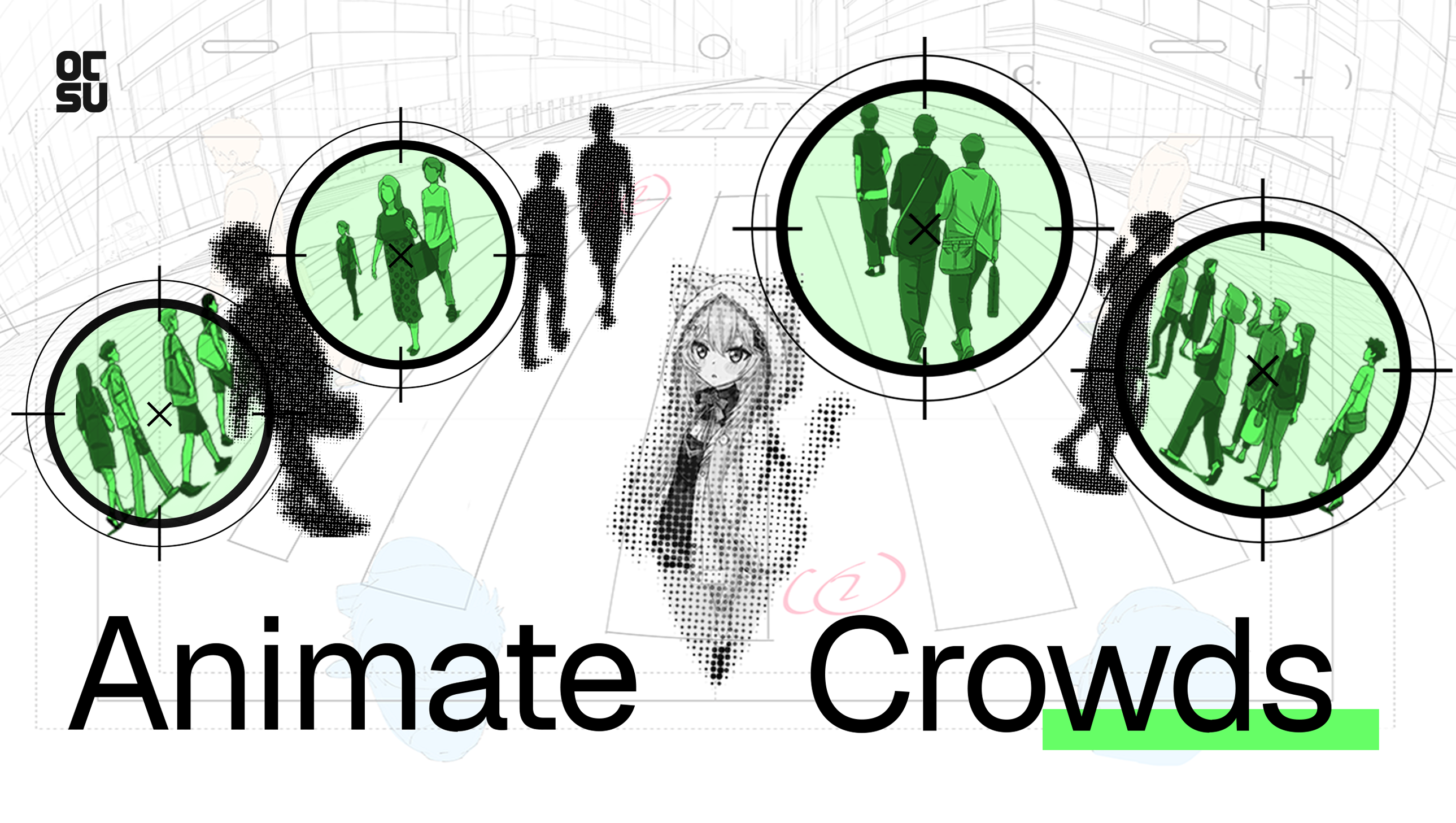
In 2D animation, every person in a crowd has to be drawn frame by frame, which makes crowd scenes one of the most time-consuming shots in any production. Below, we share what has worked for us: what crowd animation is, when it’s better not to animate a crowd and the techniques that save the most time.
What Is Crowd Animation?
What is A Crowd In Animation?
A crowd scene is a scene that puts many characters on screen at once and makes them read as a group. That group is part of the setting or the action, rather than one or two characters carrying the moment alone.
In 3D, studios often rely on simulation software to generate and move thousands of characters automatically. In 2D, every figure starts as a drawing. That is why 2D crowd animation leans so heavily on planning, reuse and clever staging, which the rest of this guide covers.
Two Types of Crowds In Animation
Every crowd is different, but most fall into one of two groups.
- The crowd that goes about its business: Everyone is busy with their own small story and ignores the main character, like passers-by on a street.
- The crowd that reacts to one thing: Everyone is focused on one event, but each person shows it in their own way.
When Not To Animate A Crowd
Live-action films can hire extras, but animation relies on human hands. More characters and more complex motion means more animators, more experience and more time.
That’s why our best advice is: to animate a crowd is to not animate a crowd. If you’re writing the film, it’s better to write the crowd out. If you’re not the writer, tell whoever is what that scene will cost in budget and time to produce an animation, because that alone often makes them think twice.
When the story really needs a crowd, the animation team has to pick the few shots where it has the most impact and make each one earn its place. A crowd shot is often the peak of a sequence, so it should never be something that could quietly disappear in the edit.
How to Animate a Crowd in 2D Animation
Though most productions can’t afford that amount of budget and time on a few seconds of animation, crowd scenes still matter. There are ways to keep them under control.
Uniform Characters
When the story allows it, animators always try to give the crowd matching outfits, like soldiers, students or robots. That way we only draw one character and duplicate it along the line. It’s the fastest crowd we know of. With armies or marching ranks, the sameness even works in the story’s favour: the group feels disciplined and powerful.
Ambient Sound
A crowd doesn’t always have to be on screen to be felt. Cheering, chatter or footsteps are often enough, because viewers fill in the rest themselves. For a concert, it’s better to stay on the stage and let the crowd’s roar carry the scene, or show a dark venue with a scattering of camera flashes, which is really just one flash duplicated at different timings.
Camera movement
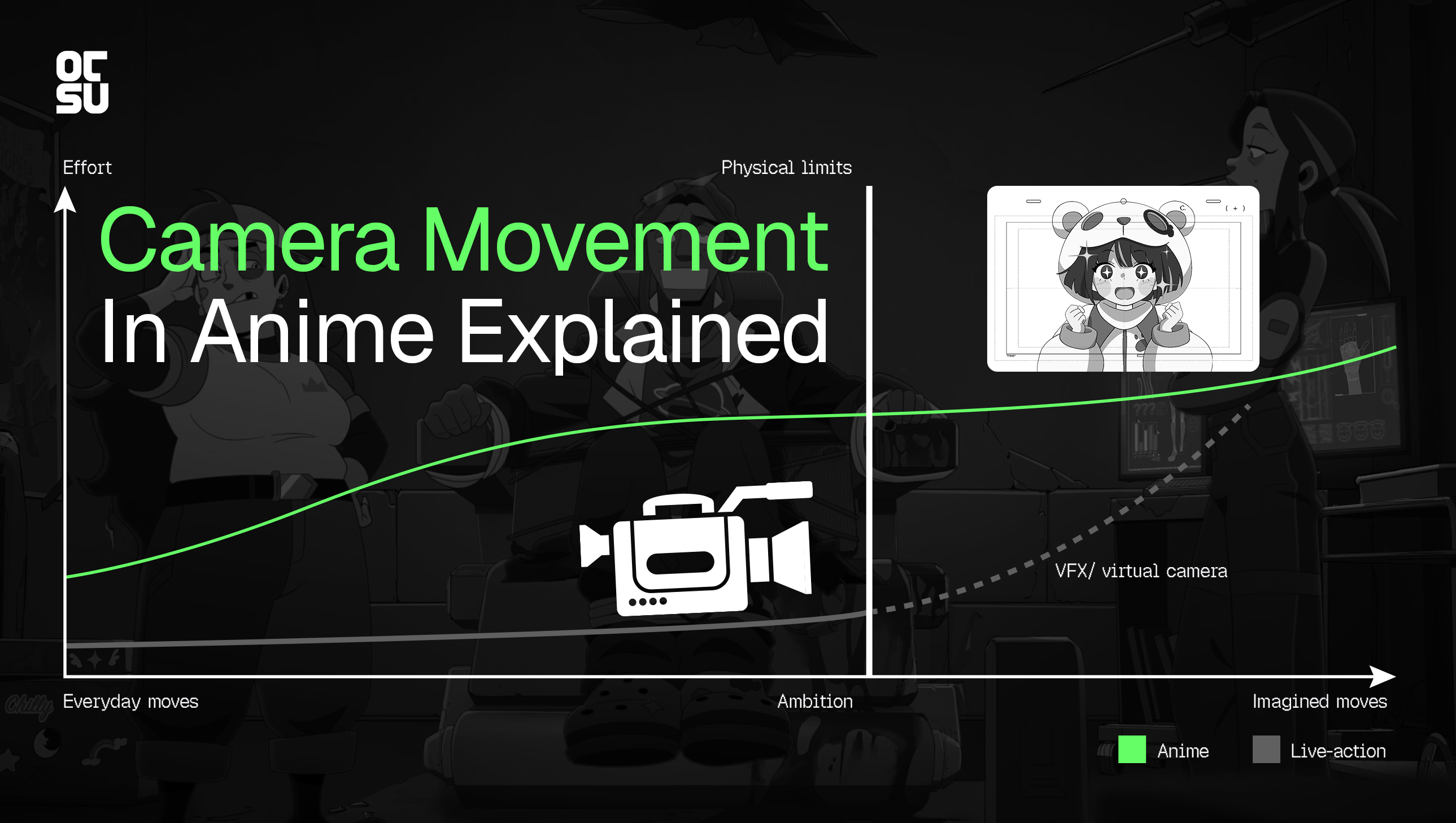
Camera movement in animation helps a lot too. A pan, tilt or truck gives a mostly still crowd a sense of motion. It also keeps each figure on screen so briefly that nobody notices how little detail is there.
Offset Timing
This is probably the trick that makes the crowd less chaotic. We animate one action once, copy it onto several characters, then start each copy on a different frame so they stop moving in sync. What we think is important is randomising the offsets by hand, because even spacing still looks mechanical.
Offset timing also helps us guide the eye. We got a chance to animate a group of frogs leaping out of the water. Instead of having them all appear at once, we let the central frog jump first and the others follow a few frames later, so the audience knows where to catch among a crowd.
Asset Variation
Rather than drawing new characters, it’s better to reuse a few and change small details like shirt colour, hair, props, pose or scale. In our experience, viewers take in a crowd as a whole and rarely compare individuals. TV anime like Pokémon gets away with reusing stadium crowds across episodes this way. If you can, choose a side-on (parallel) perspective, since reused figures then never need redrawing for a new angle.
Silhouettes
Not every character in a crowd needs to move or be fully designed. So, the figures nearest the camera deserve detailed animation. Meanwhile, the further back a figure is, the simpler we make it, often holding a single drawing for many frames, a core idea of limited animation.
For the farthest rows, figures are often turned into silhouettes: flat shapes with no line detail or interior colour.
Animating A Crowd Is Also A Creative Opportunity
Limits on time and budget can push a film toward more interesting design choices. In Ernest & Celestine, the police mice are not drawn as dozens of separate characters. When they gather, they blend into one shape, and the details of their uniforms are stripped away. The crowd becomes a single moving form, which is easier to animate and also more striking to watch.
Wolfwalkers by Cartoon Saloon takes a similar idea in a wilder direction. When Robyn and Mebh run through the forest with the wolf pack, the wolves move almost as one fluid shape, yet each animal stays readable. Director Ross Stewart has said it took painstaking work to strike that balance. What impresses us most is that the team drew almost all of it frame by frame in TVPaint, saving only a few shortcuts for the biggest crowd shots.
When Animating A Crowd Is A No-life Option
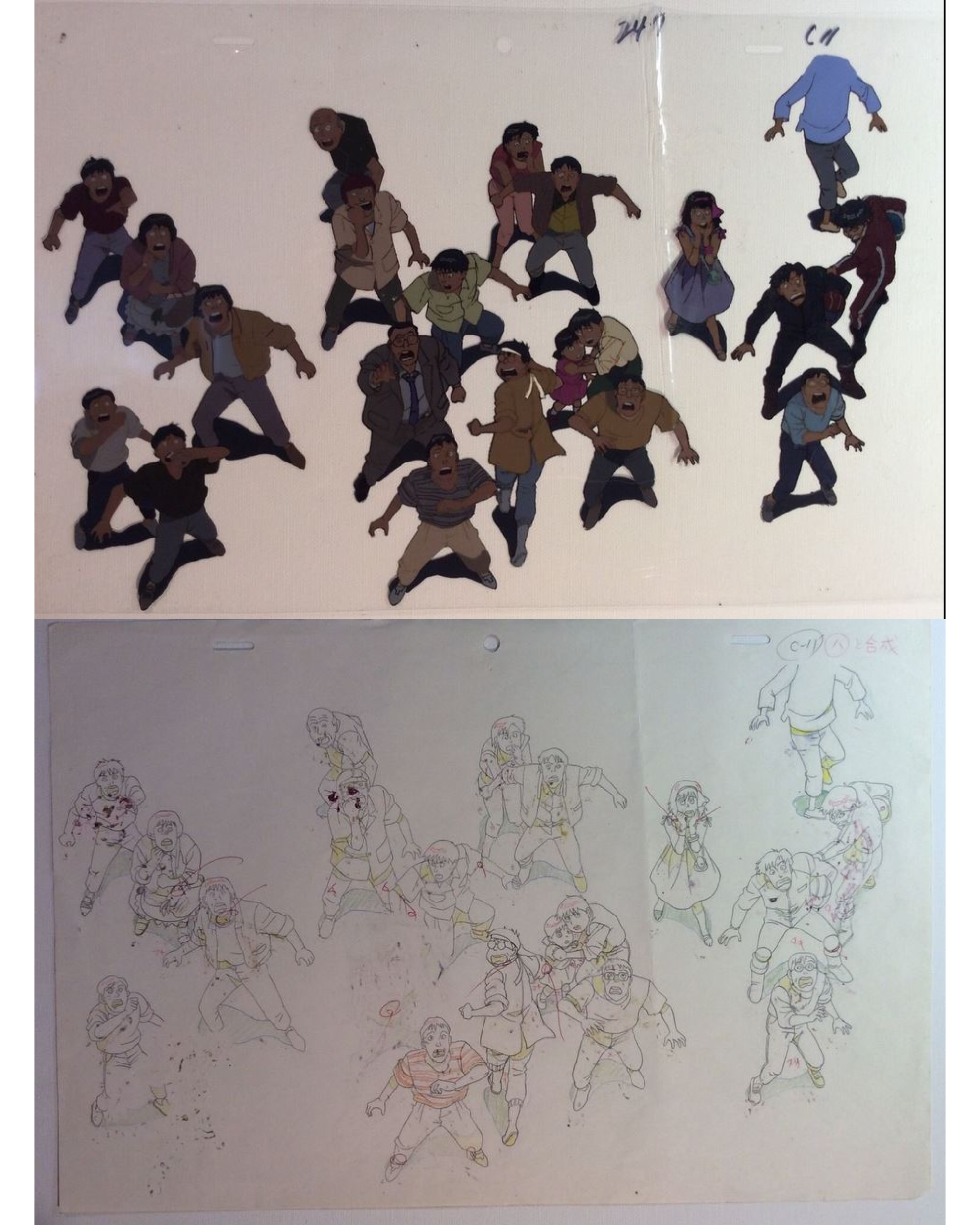
Then there are films that refuse every shortcut. In The Wind Rises, every person in a crowd has a pose of their own. One four-second shot reportedly took animator Eiji Yamamori 15 months to draw. Akira is another landmark, with crowds drawn individually at a density that took a huge team to achieve.
We admire these films enormously and they’re worth studying frame by frame. But for most productions, spending a year on four seconds isn’t realistic, especially when you consider “how long to make a full anime episode?”. In our view, that time is usually better spent telling more stories and the techniques above are how we get there.
Special Note on Animating a Crowd
If there’s one thing we hope you take from this, it’s that a great crowd scene is rarely about drawing more. It’s about deciding what the audience actually needs to see. Find your main character, cut the crowd if the story allows and when you can’t, lean on uniform designs, sound, offset timing, asset variation and silhouettes to suggest far more people than you draw. And if you have the chance, treat the crowd as a creative problem. Some of the most memorable crowd scenes in animation came from exactly that.
If solving animation problems like this sounds fun, we’re hiring animators.
What is crowd animation?
It’s animating many characters on screen at once so they read as one group.
How do you animate a crowd in 2D?
Animate only the characters that matter. Suggest the rest with reused cycles, offset timing, variations, silhouettes and sound.
Is 2D harder to animate than 3D?
For crowds, usually yes. 3D can use simulation software, while in 2D every figure has to be drawn.
What’s the difference between 2D and 3D crowd animation?
2D crowds are drawn and reused by hand. 3D crowds are generated and moved by simulation software.