Anime Studio Outside Japan: How a Word Outgrew Its Borders
In Japan, anime just means animation. Outside Japan, the word narrowed into a style, a visual language, a whole category. And the work no longer stays inside borders: studios in Seoul, Shanghai and Hong Kong share the same pipelines now. So what defines an anime studio now?
- 01Before It Was a Style: What Anime Meant in Japan
- 02How Anime Became a Visual Language
- 03Camera and Rhythm: The Anime Studio's Real Signature
- 04Why Japan Cannot Staff Its Own Anime Studio Boom
- 05South Korea: The Anime Studio Network Japan Was Built On
- 06China: From Anime Studio Subcontractor to Rival
- 07Hong Kong: Original IP From Nowhere
- 08What Defines an Anime Studio Now
Before It Was a Style: What Anime Meant in Japan
The word carries far less mystique in its home country than abroad. Japanese writes the English word animation in katakana as アニメーション (animēshon). The shortened form アニメ (anime) emerged in the 1970s as a simple abbreviation of it. Before that, Japanese audiences generally called the medium manga eiga, meaning manga film.
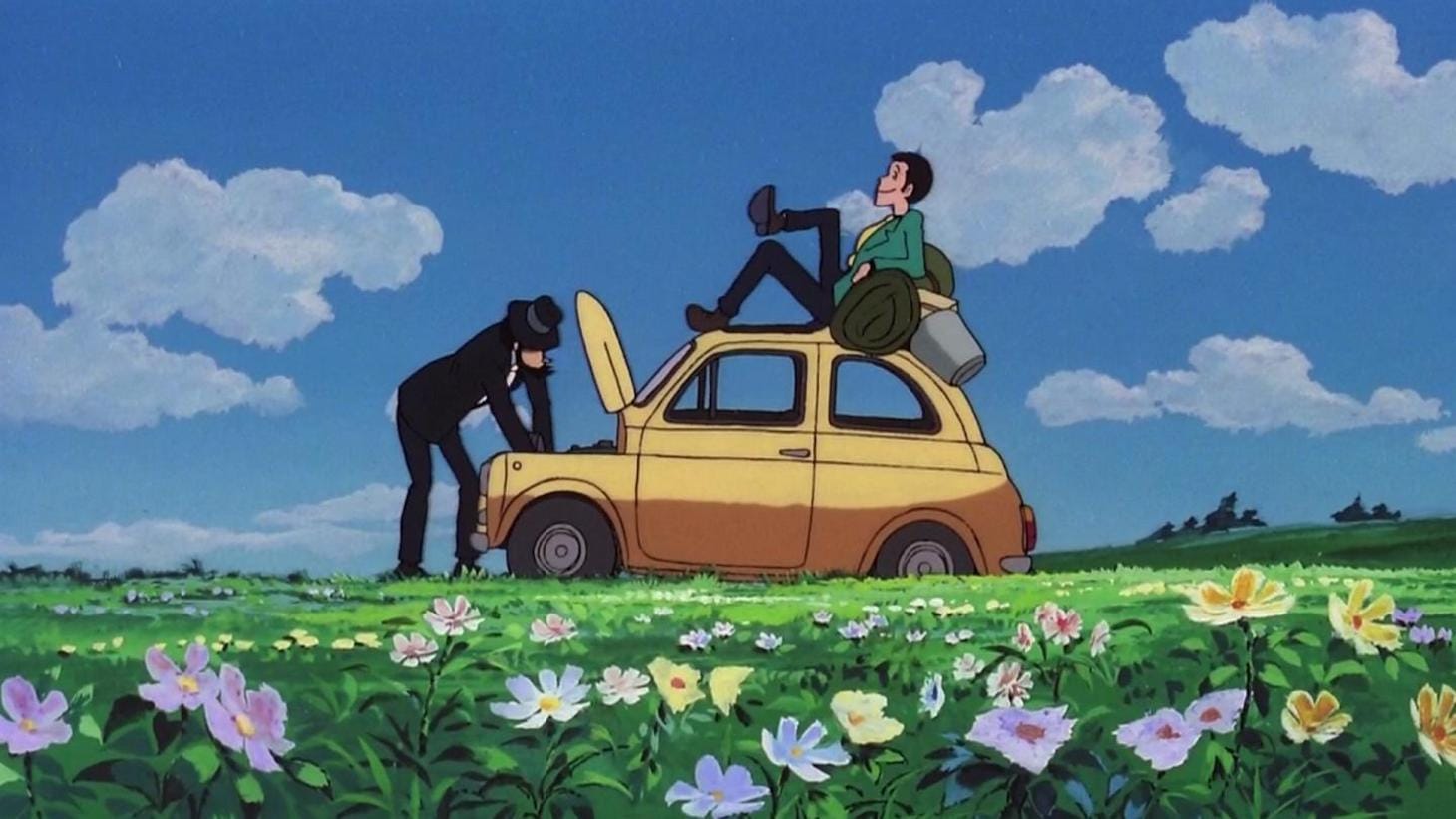
Here is the part that matters. Inside Japan, anime describes all animation regardless of where it was made. A Pixar feature, a Cartoon Network series and a Studio Ghibli film are all anime to a Japanese viewer. By that original logic, an anime studio in Tokyo and an anime studio in California are the same category of business. The word is a category of medium, not a passport.
You may have heard that anime comes from the French dessin animé. It is a persistent story. Most researchers now treat it as a myth that grew out of anime's enormous popularity in France during the late 1970s and 1980s. The simpler explanation holds up better. Japanese routinely clips imported English words and the full form animēshon follows English pronunciation rather than French.
The narrower meaning was invented outside Japan. When the medium reached Western fans in the 1980s, they needed a word for this specific thing that looked and moved unlike anything on domestic television. They borrowed anime and quietly redefined it. Two competing definitions have coexisted ever since. One is based on origin, where a work must be produced in Japan to qualify. The other is based on style alone. That unresolved split is exactly where every argument about whether a non-Japanese anime studio counts as the real thing begins.
How Anime Became a Visual Language
A word only becomes a style when the work behind it develops recognisable rules and rules are something any anime studio can be measured against. Osamu Tezuka is the figure most often credited with setting them. Working from Disney influence, he drew characters with large heads, large eyes and expressive mouths, then built stories with long character arcs and genuine emotional stakes. The look spread because the storytelling worked.
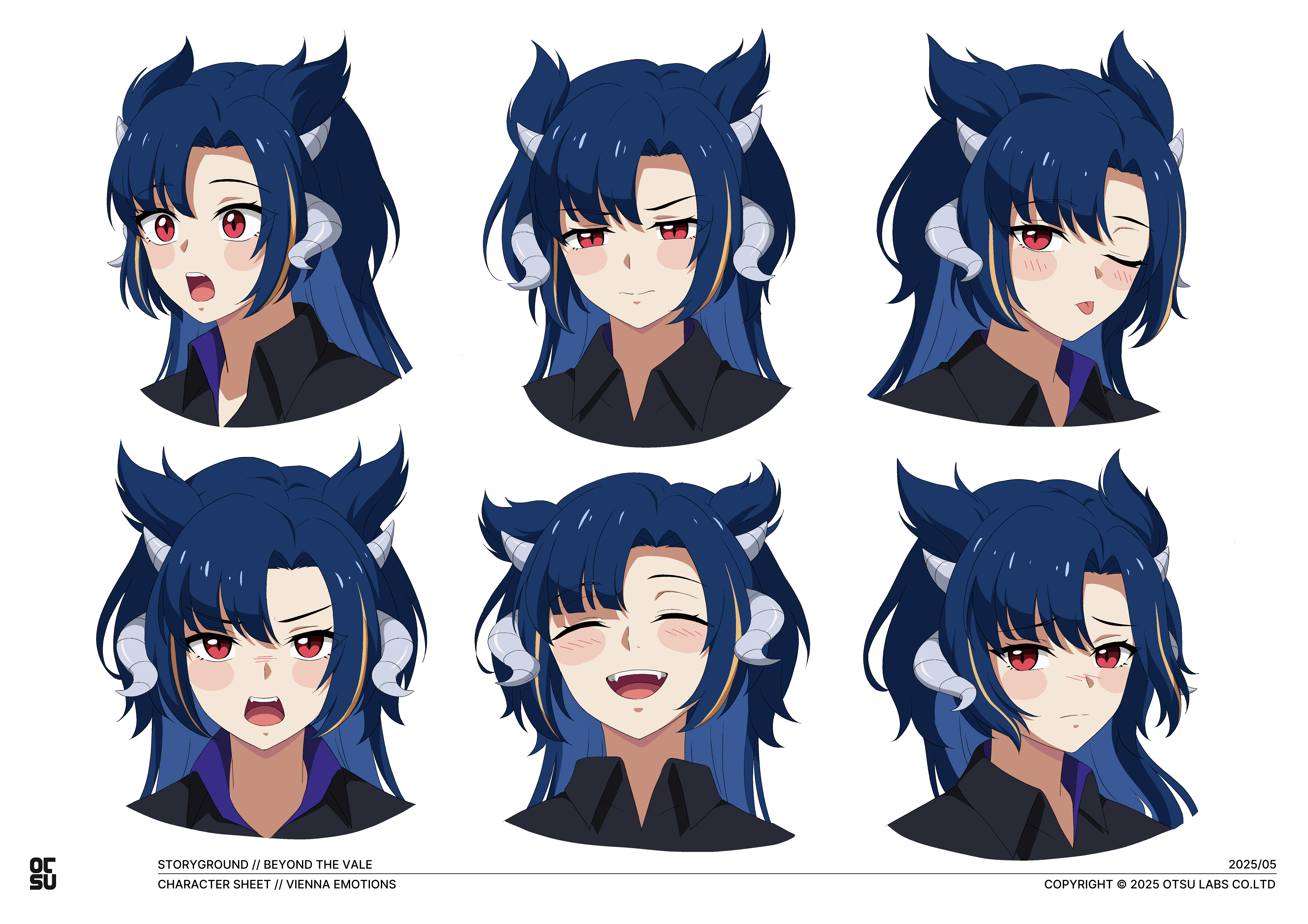
The surface markers are easy to list. Large eyes that carry most of the emotional load. Hair treated as silhouette and personality rather than physics. Bold colour that signals tone before a line of dialogue lands. Exaggerated shapes that push past realism on purpose.
But the surface is the least interesting part. Copying it is how so much anime-inspired work ends up feeling hollow and it is the trap most newcomers to the form fall into. The deeper grammar sits in how the frame is constructed and how time is spent. That grammar came from constraint. Television schedules and budgets forced Japanese studios into limited animation, which then forced a hard question onto every shot: where does the movement actually need to go?
Camera and Rhythm: The Anime Studio's Real Signature
Ask an experienced animator what makes a sequence read as anime and you rarely hear about eye size. You hear about the camera.
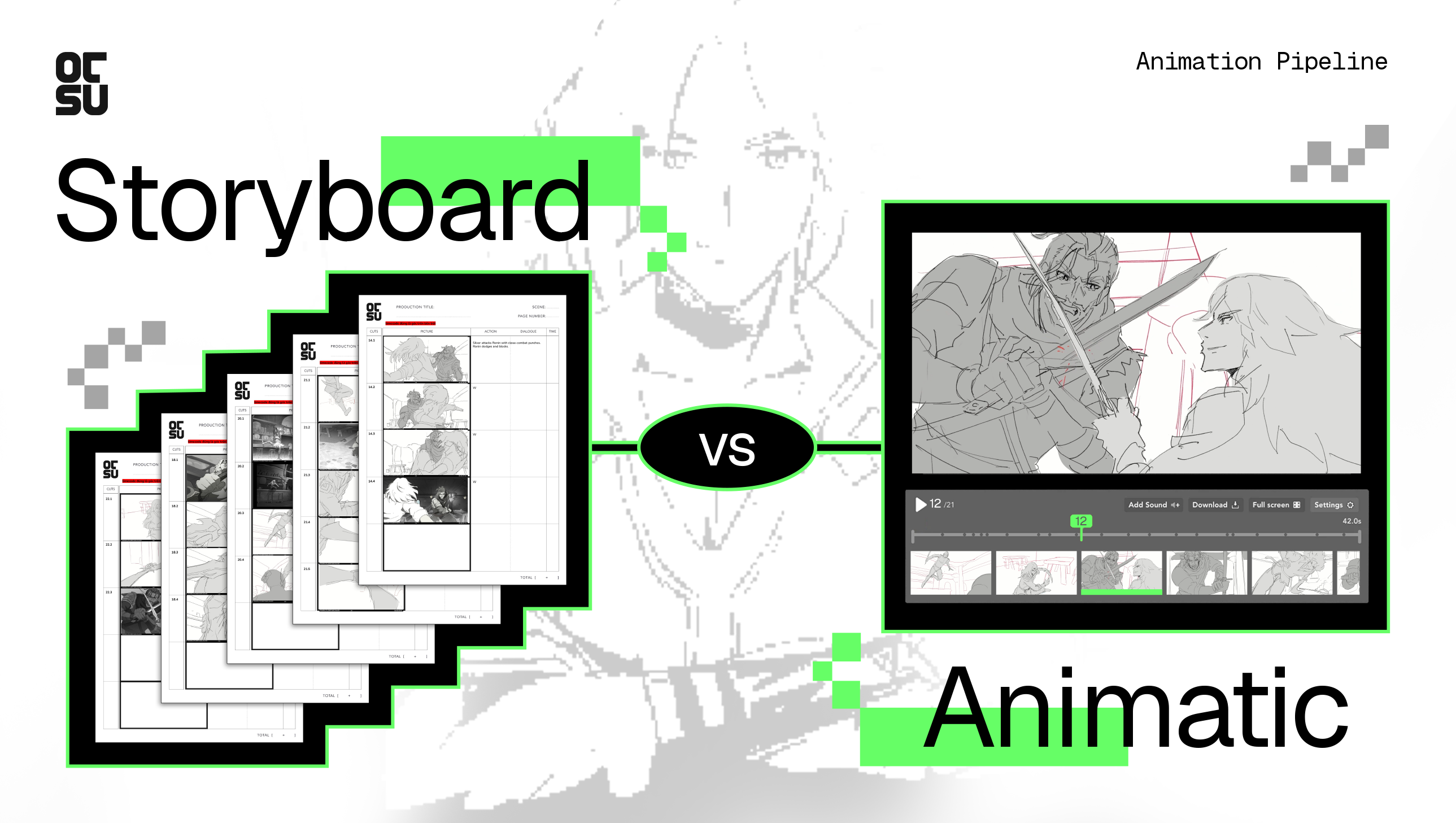
The decisive document in any anime studio is the e-konte, the storyboard. Framing, shot length and pacing are locked there, long before a single key drawing is finished. It is where an anime studio makes its most consequential choices.
Certain moves became part of the vocabulary. The Dutch angle, where the camera tilts so vertical lines run diagonal, was popularised in anime by director Osamu Dezaki on The Rose of Versailles. He paired it with quick cuts and his signature stylised freeze frames to jolt a scene into heightened drama. Attack on Titan uses off-kilter framing to make Titan attacks feel physically disorienting. Death Note leans on tilted angles as Light Yagami's moral footing slips. In each case the tilt is not decoration. It tells the audience that something is wrong before the script says so.
Worth noting for anyone attempting this: a Dutch angle in 2D is not a rotated image. Rotate the drawing and perspective breaks, because objects near the camera and far from it should not shear the same way. The tilt has to be drawn or constructed in 3D. This is one of the small technical truths that separates studios who understand the language from studios imitating it.
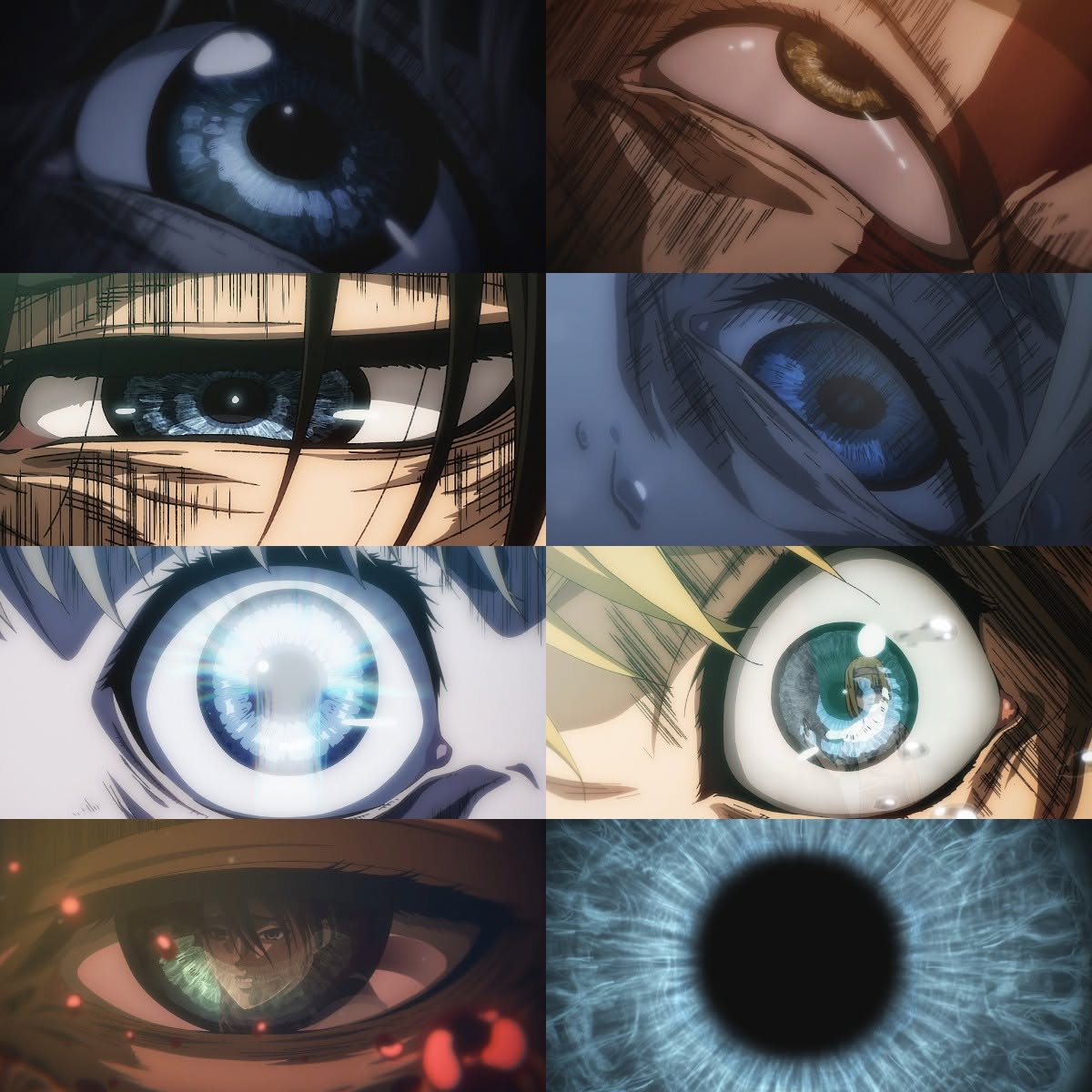
Then there is rhythm, which is where the craft becomes most misunderstood. Limited animation is often dismissed as fewer frames. It is better understood as allocation. A held pose can hit harder than continuous motion. A cut can carry more force than a movement. Silence, a held eye line and a slow push-in can build more tension than a dozen animated actions.
The counterpart is concentration. When a moment has to explode, resources pile into it, which is what international fans point at when they use the term sakuga to mean a standout passage of animation. The trade is intentional. Stillness buys the budget for impact. An anime studio that cannot manage this rhythm produces work that is either flat throughout or exhausting throughout.
Why Japan Cannot Staff Its Own Anime Studio Boom
Anime has never been more valuable. Industry researchers valued the global anime market at roughly $37.7 billion in 2025, driven by streaming demand and global box office, with Japan holding about 43% of that revenue (Grand View Research, 2026). And yet the production base underneath it is under real strain.
The wage picture is the clearest signal. A 2024 study by the Nippon Anime & Film Culture Association found roughly 40% of the animators it surveyed earning under ¥2.4 million a year, around $15,400, against a Japanese average of roughly ¥4.6 million by National Tax Agency figures. A 2023 survey by the Japanese Animation Creators Association put animators aged 20 to 24 at about ¥1.97 million, roughly 20% below the national average. Entry-level in-between work has been reported at hourly rates that fall under minimum wage. Around 40% of production staff work freelance, without the protections of employment.
The consequences are predictable. Roughly 30% of studios have reported difficulty hiring key animators. Studios including MAPPA and Madhouse have faced public criticism over punishing schedules. A 2024 United Nations Human Rights Council working group report on business and human rights in Japan flagged conditions in the anime and idol industries directly. Japan's declining birth rate shrinks the incoming talent pool further. Many 3D artists who might once have joined an anime studio now choose games instead, where pay is better.
Meanwhile the same boom keeps demanding more titles per season. That gap between demand and domestic capacity is not a temporary scheduling problem. It is structural and it has been filled from abroad for fifty years.
South Korea: The Anime Studio Network Japan Was Built On
Outsourcing is not a recent development. By the mid 1970s, Toei Doga was already routing work to Korean studios, partly to sidestep domestic labor disputes. Japanese studios then sent experienced staff to train partners overseas, building a network that anime has depended on ever since. Historian Jonathan Clements has estimated that roughly a third of the labor pool for Japanese animation sits outside Japan.
South Korea became the anchor of that anime studio network. Studios such as DR Movie and JM Animation built strong reputations for in-between work and clean linework, contributing to major franchises including Demon Slayer and My Hero Academia. Rough Draft Korea has been in the pipeline for decades.
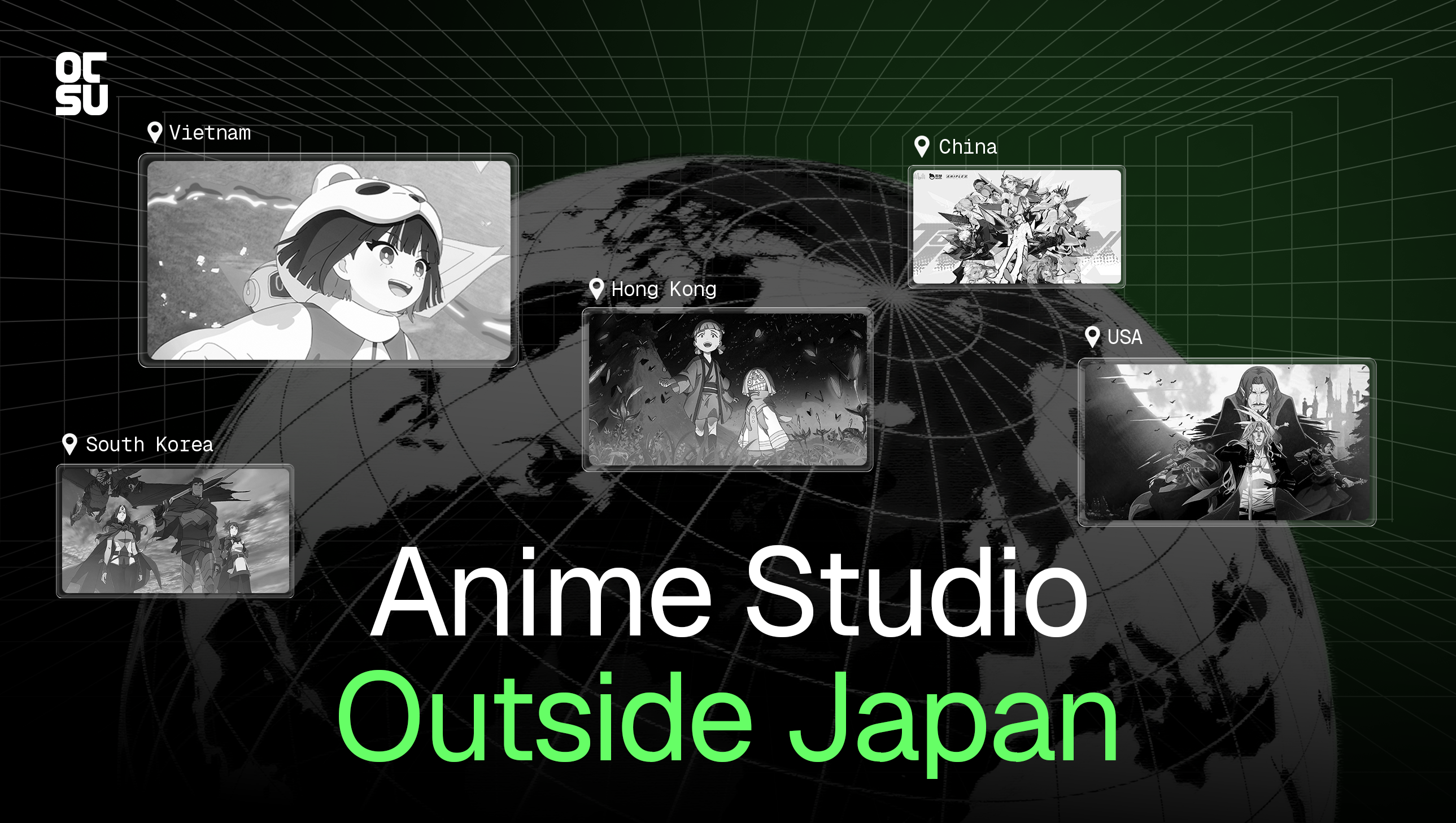
What changed is ambition. Studio Mir, founded in Seoul in 2010 by a veteran of Avatar: The Last Airbender, handled the bulk of animation on The Legend of Korra, then Voltron: Legendary Defender, The Witcher: Nightmare of the Wolf and X-Men '97. In December 2022 it delivered Lookism for Netflix, an adaptation of a Korean webtoon produced entirely in Korea. Korean media described it using the term aeni, their own word for domestic animation, precisely because the origin-based definition of anime does not fit.
The counter-example is just as instructive. Tower of God is also a Korean webtoon, but its anime adaptation was animated by Japanese studios. The source material, the anime studio capability and the label can all sit in different countries now.
China: From Anime Studio Subcontractor to Rival
The Chinese anime studio sector entered the pipeline the same way, absorbing background art and digital painting at scale. It did not stay there.
Chinese animation, donghua, now produces original intellectual property rather than servicing someone else's. Studios including Colored Pencil Animation, B.CMAY Pictures and NICE BOAT build series at an estimated third of Japanese production cost, supported by heavy investment from platforms like Bilibili and by state cultural programmes. The stories lean into Chinese folklore, xianxia cultivation and martial arts traditions, which gives donghua a cultural identity of its own instead of a borrowed one.
Two studios show how far the model has travelled.
AHAVERSE, the Shanghai company behind Scissor Seven (伍六七), built the first Chinese original animation to launch as a Netflix Original. The series debuted in China in 2018 and reached Netflix globally in 2020, since then playing in more than 190 countries with dubs in five languages and subtitles in twenty-nine. Its identity is intentionally local: Lingnan art direction, dialect dubbing and comedy that never sands off its regional edges. Founder Aiken Zou has pushed the property into a feature film, a spin-off series, publishing and a self-developed game, keeping creative control in house rather than handing the IP to licensees. That is the behaviour of an IP owner, not a vendor.
BeDream makes the point from another angle. Founded in 2013 by director Li Haoling, with offices across China, Japan and Korea, it merged with Bilibili in 2021. Its series To Be Hero X premiered in April 2025 as a co-production between BeDream, Bilibili and Aniplex, broadcast on Fuji Television in Japan, with music from Hiroyuki Sawano and Kohta Yamamoto. BeDream led production while PB Animation, Studio LAN and Paper Plane Animation Studio worked alongside it. The anthology structure lets each arc shift visual style, moving between 2D and 3D without the seams showing.
Read that arrangement carefully. A Chinese anime studio directing a co-production with a Japanese partner, airing on Japanese television. That is not subcontracting with a different postcode. It is the pipeline running in the other direction.
The numbers are still modest against Japan. China accounted for roughly 6.2% of the global anime market in 2025 and its market is forecast to grow faster than Japan's over the coming decade. But the direction is unmistakable and the competitive pressure runs both ways. Chinese companies have actively recruited Japanese animators, offering the pay their home studios cannot match.
Hong Kong: Original IP From Nowhere
Hong Kong makes the case from an unlikely direction. The city has almost no animation industry to speak of, with fewer than twenty animated features to its name in total. But in 2025 Another World (世外), directed by Tommy Ng Kai-chung and produced by his studio Point Five Creations with Silver Media Group, became the most successful anime ever made in the territory. It was the first Hong Kong animated feature selected for the Annecy International Animation Film Festival since My Life as McDull in 2003. The film is adapted from a Japanese novel and openly draws on Studio Ghibli, but it stays rooted in Hong Kong, with Cantonese dialogue and Buddhist ideas of reincarnation running through its structure. It is proof that the anime language can be spoken fluently by a small studio far outside any established pipeline, so long as the choices behind the frame are the right ones.
Bucket Man, a vibrant Hong Kong original anime IP created by filmmaker and actor Stephen Fung out of the Azuki universe, set to debut at ComplexCon Hong Kong 2025. Inspired by classic Hong Kong local humor, specifically childhood memories of playing with iconic Red A plastic buckets, the character features a humorous design where a bucket serves as a magical source of superpowers.
What Defines an Anime Studio Now
There is a distinction inside all of this that decides who actually benefits. It rarely gets discussed publicly.
Subcontracting means a Japanese studio keeps 100% of the intellectual property and pays the offshore anime studio a fixed work-for-hire rate. The offshore studio has no rights and no revenue participation. Co-production means shared IP, shared financing and shared creative contribution, with royalties flowing to the non-Japanese partner. Most anime outsourcing history is subcontracting. Genuine co-productions with Southeast Asian partners remain rare, which is exactly what makes an arrangement like To Be Hero X worth studying.
That is why, under the subcontracting model, key animation, direction and character design have stayed in Japan. It is an intentional strategy to keep the defining artistic signature of a property from ever transferring offshore, not simply a judgment about skill.
Which brings the argument back to where it started. If anime began as a plain Japanese word for animation and then became a style built on specific choices about framing, timing and emotional allocation, then those choices are the thing worth protecting. They are learnable by any anime studio willing to do the work. They are also easy to fake badly.
The question for any studio working in this language is not whether it holds a Japanese address. It is whether it can solve the e-konte before the drawings start. Whether it knows which shot deserves the frames and which shot is stronger held still. Whether it can carry an idea from storyboard through genga, clean-up, compositing and sound without the intention leaking out along the way.
This is the standard Otsu Animation works to as an anime studio outside Japan. Anime-inspired animation is not a look to be applied at the end. It is a set of decisions made from the first board.
Looking for a studio based outside Japan that works in the anime language, frame by frame, in 2D, 3D or hybrid? Get in touch with Otsu Animation.
What does the word anime actually mean in Japan?
Inside Japan, anime is short for animēshon and refers to all animation regardless of country of origin. The narrower meaning of Japanese-made animation was adopted by Western fans in the 1980s.
Can an anime studio exist outside Japan?
Yes, depending on the definition used. Studios in Korea, China and Southeast Asia produce work in the anime visual language, though origin-based definitions reserve the term anime for productions made in Japan.
Why do Japanese studios outsource anime production?
Domestic capacity cannot meet demand. Low wages have driven talent away, roughly 30% of studios report trouble hiring key animators and overseas production can cost significantly less.
Which countries produce the most anime work outside Japan?
South Korea leads in traditional animation services, followed by China, which has moved well beyond service work into original donghua. The Philippines and other Southeast Asian studios handle significant outsourcing volume, while Hong Kong is a newer case, producing original anime IP rather than service work.
Is donghua the same as anime?
No. Donghua is Chinese animation with its own cultural identity, drawing on folklore, xianxia and martial arts traditions, even though it shares visual influences with Japanese anime.
What makes animation look like anime?
More than large eyes and colourful hair. The defining elements are storyboard-driven camera work such as Dutch angles and extreme close-ups, plus a rhythm that holds poses and concentrates frames where impact matters most.