Why Is Anime Adaptation Different from Manga?
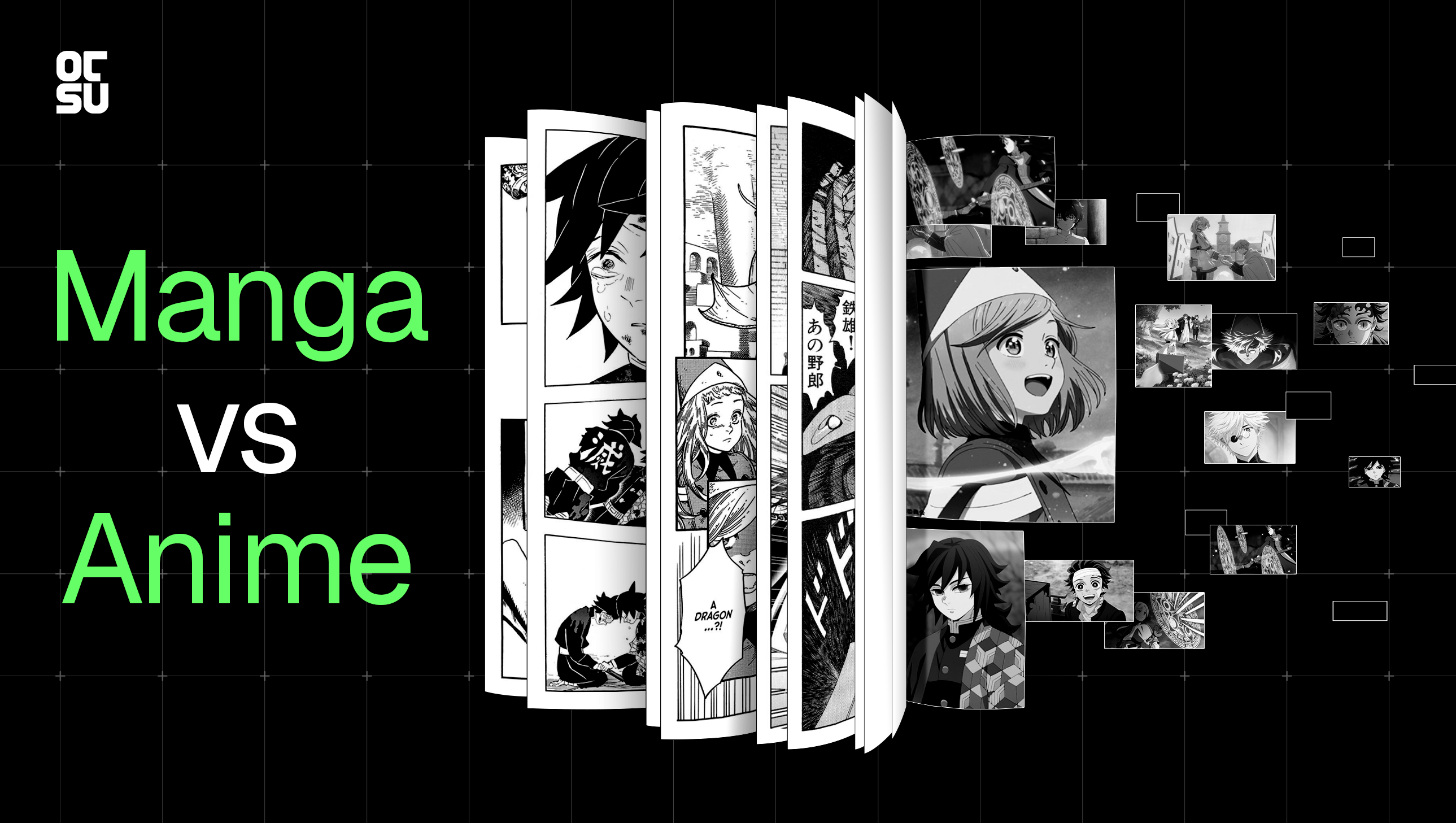
It has become a common thing whenever an anime adaptation is announced, people will wonder whether they can adapt the original manga. From the story even little changes in details can make a big difference on how people judge the “alternative” version. Most of the time, anime versions can not adapt perfectly 100% to the manga, and today we will explain why they have to do so.
Why Do The Characters Look Different?
Character redesigns are more common than you think.
One of the first things fans notice in a new adaptation is that the characters don't always look exactly like they do in the manga. Hair may be less detailed, clothes may have fewer folds, and facial features can look cleaner or simpler. At first glance, this might seem like the studio is "cutting corners," but there's actually a good reason behind it.
The biggest reason is that manga and animation are fundamentally different mediums.
A manga artist only needs to draw a single illustration for each panel. They can spend hours refining tiny details, adding texture, drawing individual strands of hair, or filling a page with beautiful line work. On the other hand, an anime has to create movement. A short two-minute sequence can require thousands of drawings across key animation, in-between animation, cleanup, coloring and compositing. Every detail that exists on the character has to be drawn consistently over and over again from different angles and expressions.
Imagine drawing hundreds of tiny hair strands once, that can be manageable with a mangaka. Now imagine doing it tens of thousands of times throughout an entire TV series. The workload would quickly become unrealistic for the animation team.
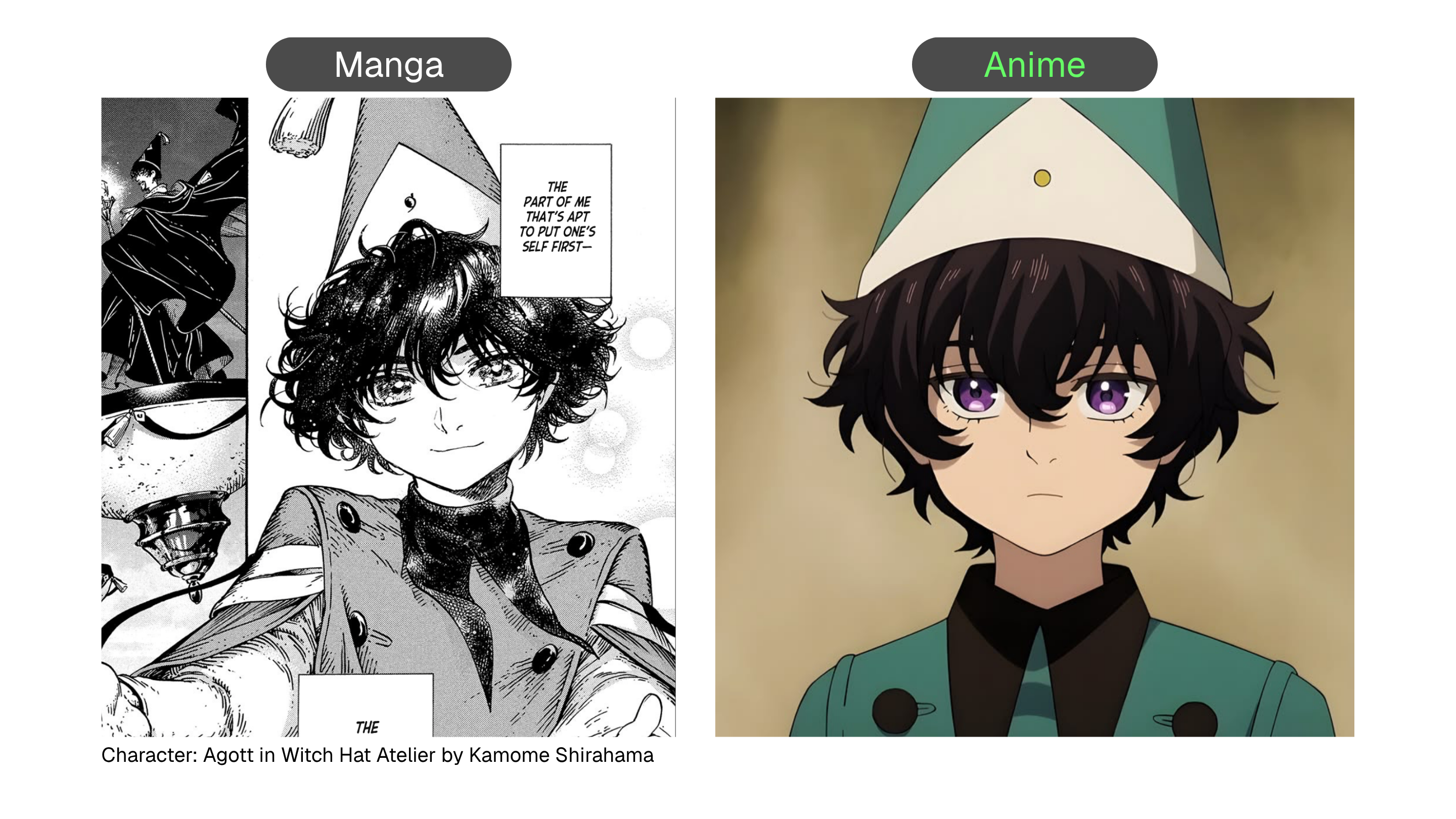
That's why anime character designs are often simplified. Individual hair strands may be grouped into larger hair shapes. Clothing wrinkles are reduced. Small decorative details that don't affect the character's identity are removed. The goal isn't to make the character "less detailed" but to make them practical to animate while still being instantly recognizable.
A great example is Agott from Witch Hat Atelier. In the original manga, her distinctive curly hair is drawn with countless individual lines and textures. In the anime adaptation, many of those tiny strands are combined into larger, cleaner hair shapes. Even though the design is simpler, you can still know that is Agott from the manga. This approach not only makes the animation process more efficient, but also makes coloring and compositing much easier throughout production.
Another Important Reason Is Consistency
Unlike manga, which is usually drawn by one artist (or a small team), an anime episode involves dozens or hundreds of people - episode directors, animation directors, key animators, in-between animators, color artists and many others all contribute to the final product. To make sure every artist draws the character consistently, the studio creates character sheets that define exactly how each character should look from different angles and with different expressions.
A cleaner design makes it much easier for everyone on the production team to stay on model throughout an entire season.
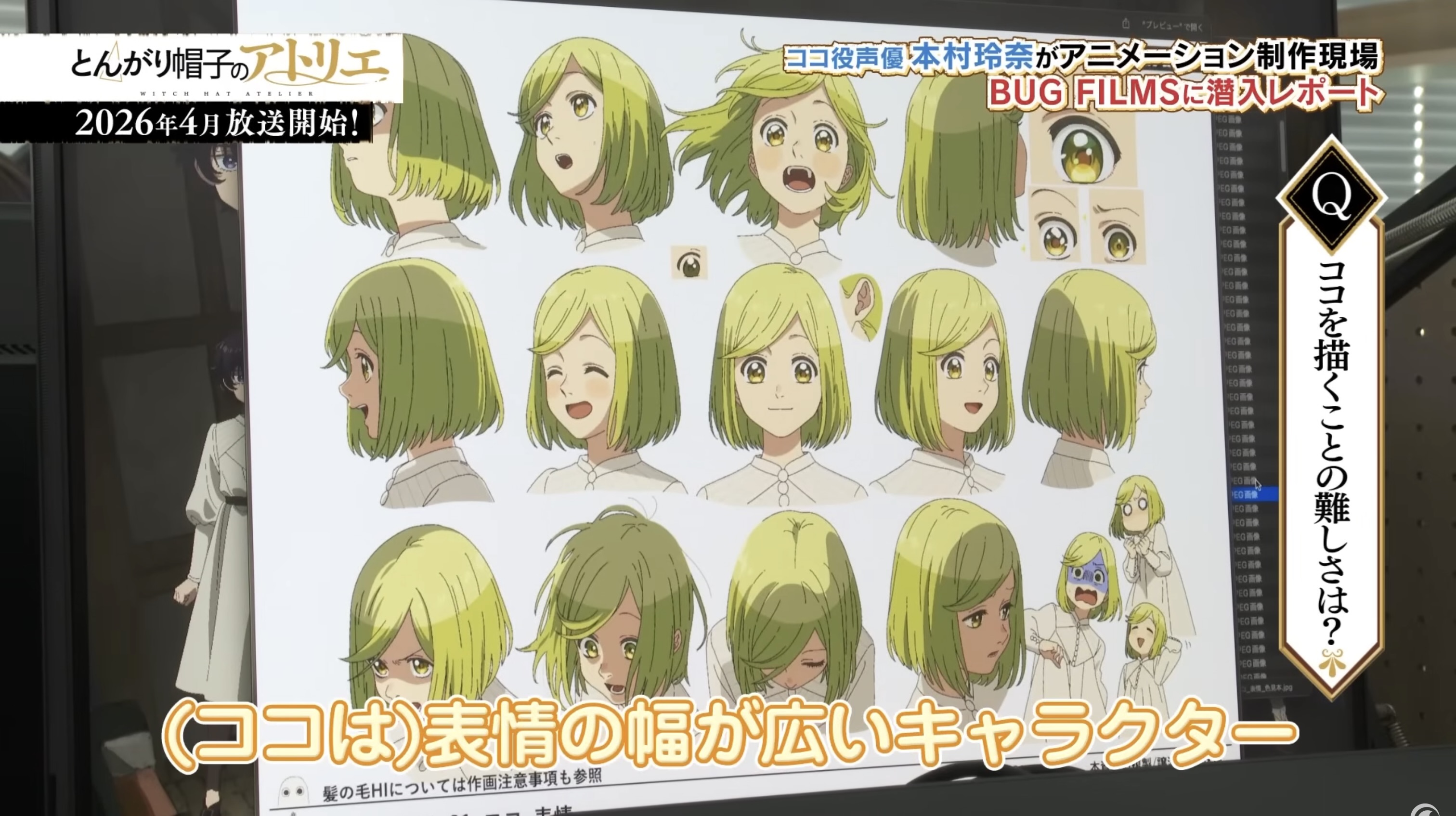
Simplifying details also improves readability during animation. When characters move quickly, excessive line work can make the image feel noisy or difficult to read. By reducing unnecessary details, studios create stronger silhouettes that help viewers recognize characters instantly, even during fast action scenes.
At Otsu Animation, we experienced this firsthand while adapting Kamen America into an animated promotional video for Kamen America: The Manga. We also redesigned the characters from the original comic version, simplifying certain details while preserving their unique identity. The goal wasn't to change who they were, it was to optimize the production. We’ve already discussed the importance of silhouette in character design, you can discover more here.
At the end of the day, a successful character redesign isn't about removing details. It's about deciding which details truly define the character and which ones can be simplified without changing their personality or identity.
Why Do Anime Sometimes Change Or Add Scenes?
Character designs aren't the only thing that changes during adaptation. Story scenes are often adjusted as well, and this is usually where fans become the most concerned.
Many viewers worry that their favorite scenes will be cut, or that the anime will "ruin" the original story. While this does happen occasionally, most story changes are made for practical storytelling reasons rather than out of disrespect for the manga.
Anime productions have to work within many boundaries. They have a fixed number of episodes, a limited runtime for each episode, production schedules and budget constraints. Because of this, studios often have to rethink how the story is presented on screen.
Some scenes may be shortened, rearranged or removed entirely if they don't significantly affect the overall narrative or if they interrupt the pacing of an episode. A manga can spend several pages on a quiet moment because readers control the pace themselves. Anime doesn't have that luxury. Every minute on screen must fit into a carefully planned episode structure.
At the same time, anime also creates opportunities that manga simply doesn't have.
A single moment that lasts only a few manga panels can become an unforgettable sequence through animation, voice acting, music, sound effects, cinematography and character acting. Rather than copying every panel exactly, the studio can expand the emotional experience.
Witch Hat Atelier provides another great example. During the scene where Coco's group escapes from the dragon, Agott falls from the tower before being rescued by Qifrey, who then defeats the dragon with magic. In the manga, this sequence takes only a couple of pages. In the anime, however, Studio BUG FILMS expands the moment into a much longer action sequence with richer animation, stronger emotional beats and more dynamic storytelling. Instead of feeling like unnecessary filler, many manga readers praised the adaptation because it enhanced the original scene while remaining faithful to its intent.
Of course, not every change receives a positive reaction. Some anime’s original scenes divide fans, especially when they adjust the tone of the story or remove moments that readers consider important. These discussions remind us that adaptation is a delicate balance. A successful adaptation should offer a fresh viewing experience while still preserving the heart of the original work.
Being faithful doesn't always mean recreating every panel. Sometimes, being faithful means preserving the emotions, themes and spirit of the story, even if the way those ideas are presented has changed.
A Good Adaptation Is About More Than Budget
When people criticize an adaptation, the first explanation is often: "The studio didn't have enough budget."
Budget certainly plays a role, but it's only one piece of the puzzle.
The quality of an anime adaptation also depends on production schedules, available time, the experience of the staff, production management and the overall goals of the project. Even talented animators cannot produce exceptional work if they're given impossible deadlines. Likewise, a well-organized production with a reasonable schedule can often achieve impressive results without having an unlimited budget.
That's why it's worth considering the production circumstances before judging an adaptation too harshly. Creating animation is a massive collaborative effort, and every creative decision is influenced by both artistic vision and real-world production constraints.
Perceive Each Medium The Way It Deserves
Alright, here’s our final thoughts.
Anime adaptations are not meant to be perfect copies of their original manga. They are reinterpretations of the same story through a different medium.
Some details are simplified so characters can move more naturally. Some scenes are shortened to improve pacing, while others are expanded to take advantage of everything animation has to offer: from movement and voice acting to music and cinematography.
Apparently, not every adaptation succeeds. Some changes genuinely improve the story, while others may disappoint loyal fans. That's part of the challenge of adaptation. Every studio has to find the right balance between respecting the source material and creating an anime that works on its own.
The question is not - “Does it look different from the manga? "Why did they change it?", but "Why did they choose to change it?". More often than not, the answer lies in the unique art of bringing a static page to life.
Should anime adaptations look the same as the manga?
No, anime and manga are two different mediums, which provide the audience with unique watching experience. The anime still preserves the core visual and story of the original manga while adjusting the details for production optimization.
What are the key factors that affect the changing decision?
There are a lot of reasons that can decide how the anime should be adapted. Some of the frequent factors like budget, production efficiency, studio schedules, human factors, authority, etc.
Can an anime adaptation change the original story?
Depending on the author's permission. Most of the time, anime will keep the story of the manga as well as it can. However, anime can skip some minor parts of the original to fit with the season scheduling.