Animated Advertisement: Why Brands Still Bet on Animation for Commercials in 2026
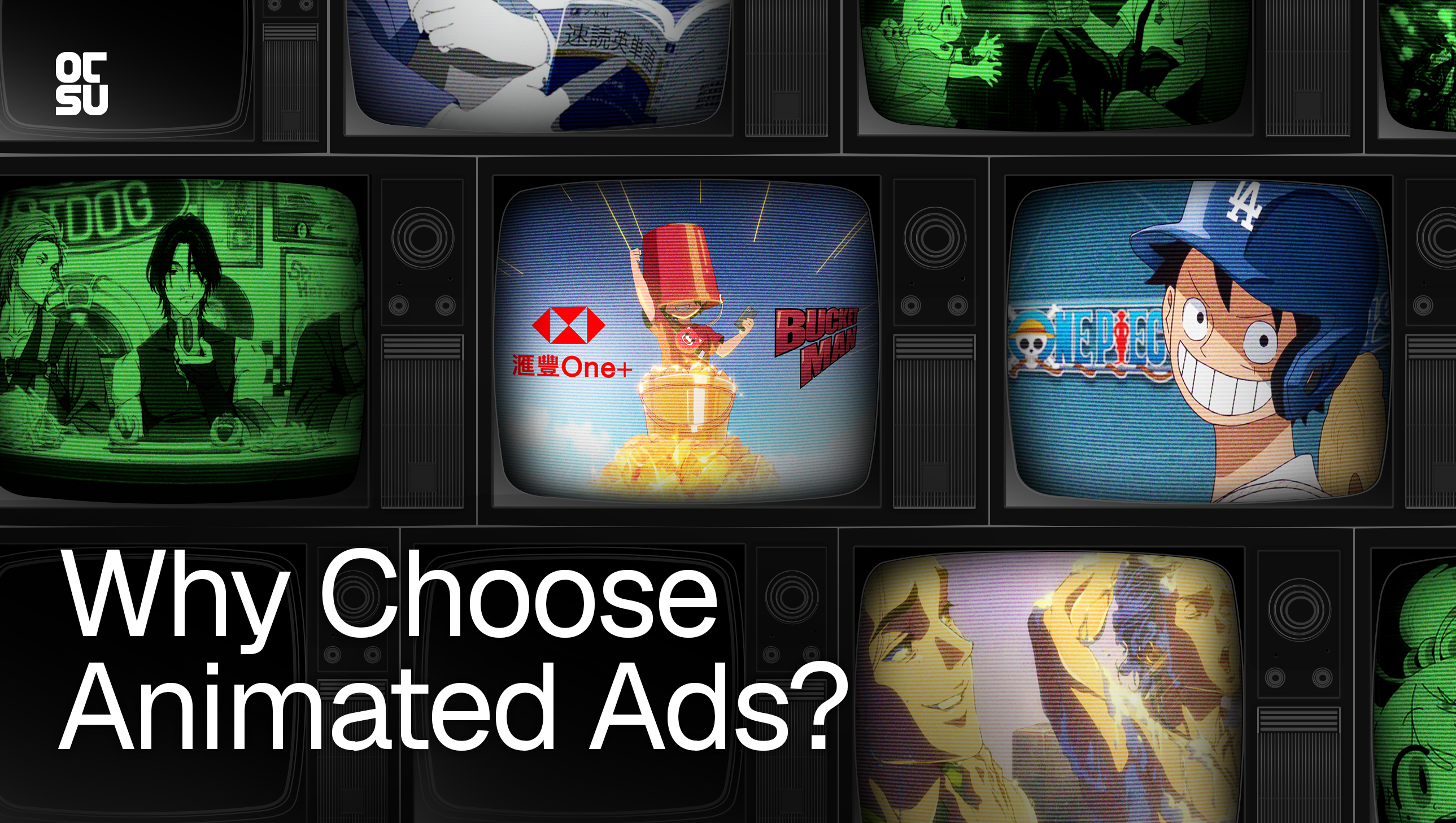
As AI tools spread through film and animation, one question keeps coming up: Why do brands still choose animation to tell their stories? In this article, we look at why animation has stayed one of advertising’s most powerful tools for over a century, and share a case study of how Otsu Animation turned Stephen Fung’s anime IP BUCKET MAN into a wealth-building story for HSBC One+.
This holiday season, two of the biggest names in fashion made the same unexpected move.
In late October, Prada released Drawing Prada: Animated by Hand, a campaign where veteran Disney animator John Pomeroy drew foxes and mice that steal the spotlight from the house's handbags. About a week later, Dior answered with Christian Dior's Night in Color, an animated short directed by Sylvain Chomet of The Triplets of Belleville, with Robert Pattinson and Rihanna among the voices.
Luxury houses that usually sell through supermodels and glossy photography chose cartoons for the most important sales season of the year. Why?
The honest answer is that they're joining a very old tradition. Brands have been selling with drawings for more than a hundred years. To understand why Prada, Dior and other brands choose animation for commercials in 2026, we need to start at the beginning.
Since When Did Brands Use Animation for Advertising?
Animation and advertising grew up together. In many countries, some of the very first animated films were not stories at all. They were ads.
In Germany, producer Julius Pinschewer started making advertising films in the early 1900s and made more than 100 of them in the 1920s alone. He hired avant-garde artists like Walter Ruttmann, whose 1922 commercial for Excelsior tires was pure abstract animation. In Brazil, animation first appeared mostly in short advertising clips, starting in 1907.
Why did brands bet on such a new, strange medium? Because a moving drawing did something nothing else could. It stopped people in their seats. A cinema audience that ignored a printed poster would watch a dancing tire or a talking toothpaste tube.
By the mid-20th century, that novelty had turned into strategy. Brands discovered they could create characters that belonged to them: Tony the Tiger for Kellogg's Frosted Flakes in the 1950s, the Pillsbury Doughboy in the 1960s. These mascots gave products a face, a voice and a personality, and some of them are still working today.
That's the first thing we have to know about animation, it was never just a visual decoration for ads. From day one, it was a way to make a product memorable. But that’s not the reason why brands still choose animated advertising till now. Here’s why.
What Animation Does That A Camera Can't Promise
“Isn't it easier to just use a celebrity or human for advertising?” the fact that for some commercials, brands can still choose live-action advertisements rather than animation. However, there are some human downsides that animation can fill the gap perfectly.
Animated characters don't age: Tony the Tiger has looked roughly the same for over 70 years. And to be honest, you can still collaborate with century characters like Mickey Mouse, Hello Kitty till this day and still captivate the audience at first glance. No human ambassador can offer that.
Animated characters don't get cancelled: When a celebrity face lands in a scandal, the brand inherits it overnight. A drawn character has no private life and no old posts waiting to resurface. The brand writes every word it says without worrying about potential risk they cannot control.
Animation can show the invisible: How does a savings plan grow? What does a vitamin do inside your body? Live action needs metaphors and expensive effects, which animation can just draw without executing limitations.
One honest caveat: animation is not automatically cheaper. A polished 2D spot with rich character acting can cost as much as a live shoot. The real advantage is control. Every frame does exactly what the brand intends, and the asset can keep working for years.
Who Are You Talking To? Picking The Right Characters
Building a beloved character takes years. Borrowing one takes a good partnership. That's why so many brands today introduce themselves through characters their audience already loves. There are three main ways to do it.
3.1 Collaborating with anime characters
Anime is no longer a kids' thing, and these collaborations mostly speak to teens and young adults.
Back in 2010, razor brand Schick Japan teamed up with One Piece specifically to reach men in their teens and twenties. In 2026, Popeyes launched its first anime collaboration with One Piece, timing ads around cities hosting anime conventions. When telecom brand au partnered with Suzume, it borrowed the film's road-trip story to talk about connecting regions across Japan. And Suntory's Premium Malt's beer brought back Chibi Maruko-chan, now shown in New York 20 years later, to reach adults who grew up with her.
As one marketer at esports brand G2 put it: "Anime fans were never niche. They were just underserved and underestimated”.
The catch: the deeper the fandom, the higher the bar. Fans spot a lazy imitation instantly, and they say so loudly.
3.2 Collaborating with IPs beyond anime
Here, the brand borrows less of a fandom and more of a value. The question becomes: which character already stands for what we want to say?
Bluey, the most-streamed show in the US in 2024, is a great example. Optician chain Specsavers partnered with Bluey on prescription glasses for kids, and LEGO launched Bluey sets in its DUPLO and 4+ ranges for preschoolers. Nappy brand BabyLove described its own Bluey partnership as a shared ethos of modern parenting and everyday family joy.
These campaigns speak to two audiences at once: the child who loves the character, and the parent who trusts what it stands for.
3.3 Creating original characters with anime studios
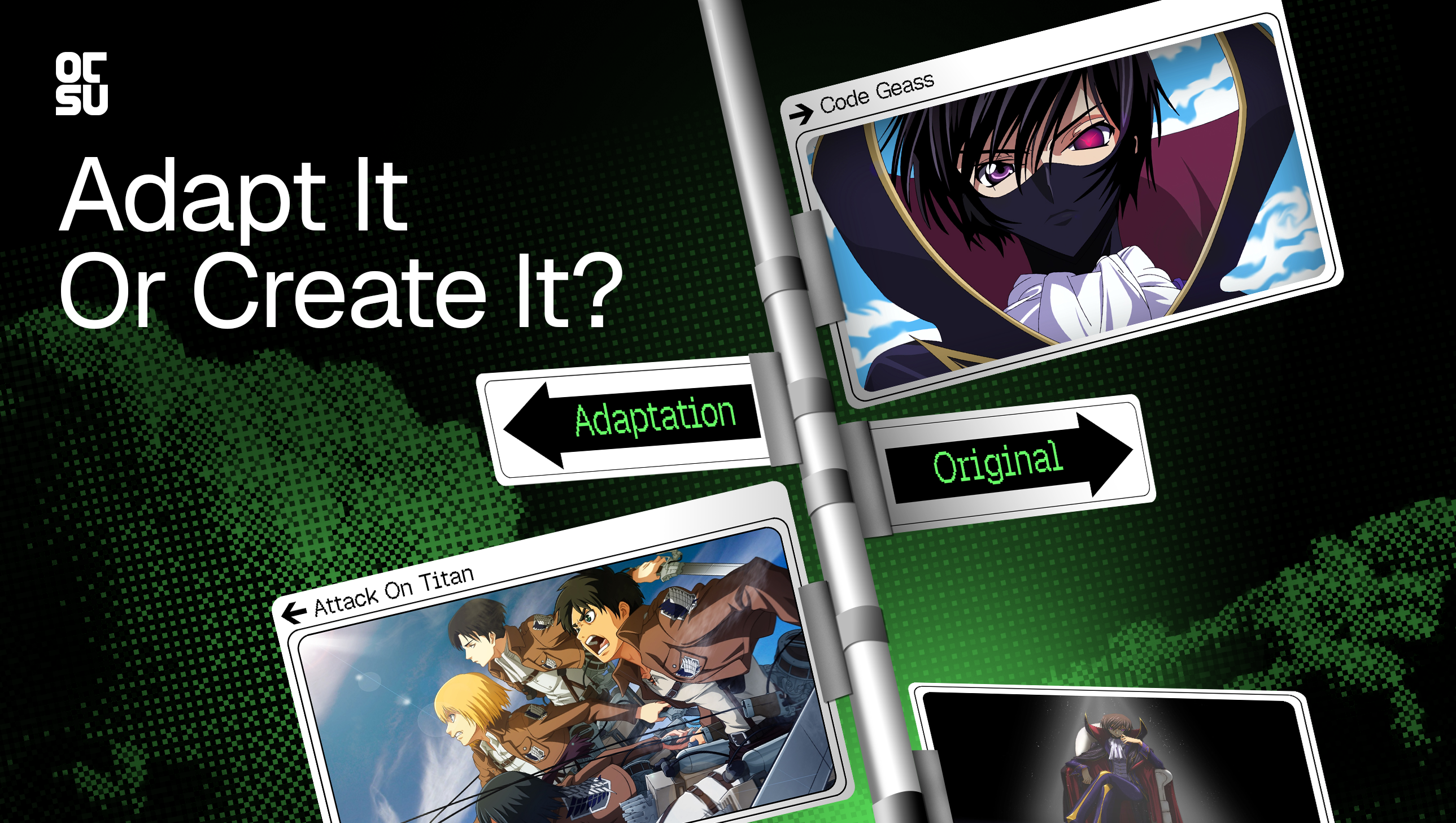
Some brands go one step further. Instead of borrowing someone else's characters, they hire an anime studio to create their own.
Men's hair care brand MARO17 worked with MAPPA, the studio behind Jujutsu Kaisen and Chainsaw Man, on a series of anime commercials. Star voice actors Yoshimasa Hosoya and Mamoru Miyano lead the cast. The first spot won Bronze in 2D animation at the Shots Awards Asia Pacific 2024, and by the third installment, viewers were asking when the full anime would come out.
McDonald's Japan took a similar route in 2023 with a series of anime-style ads drawn by illustrator Urachan, with a soft, nostalgic look and lo-fi music. They went viral. The global WcDonald's campaign in 2024 followed the same logic: Studio Pierrot, the studio behind Naruto, created brand-new characters and stories instead of borrowing existing ones.
This is the old mascot strategy from section 2, updated for the anime era. The brand speaks the visual language its audience loves, and it owns every character. MARO17's three ads with the same cast are, in effect, a brand building its own IP.
Case study: BUCKET MAN x HSBC One+
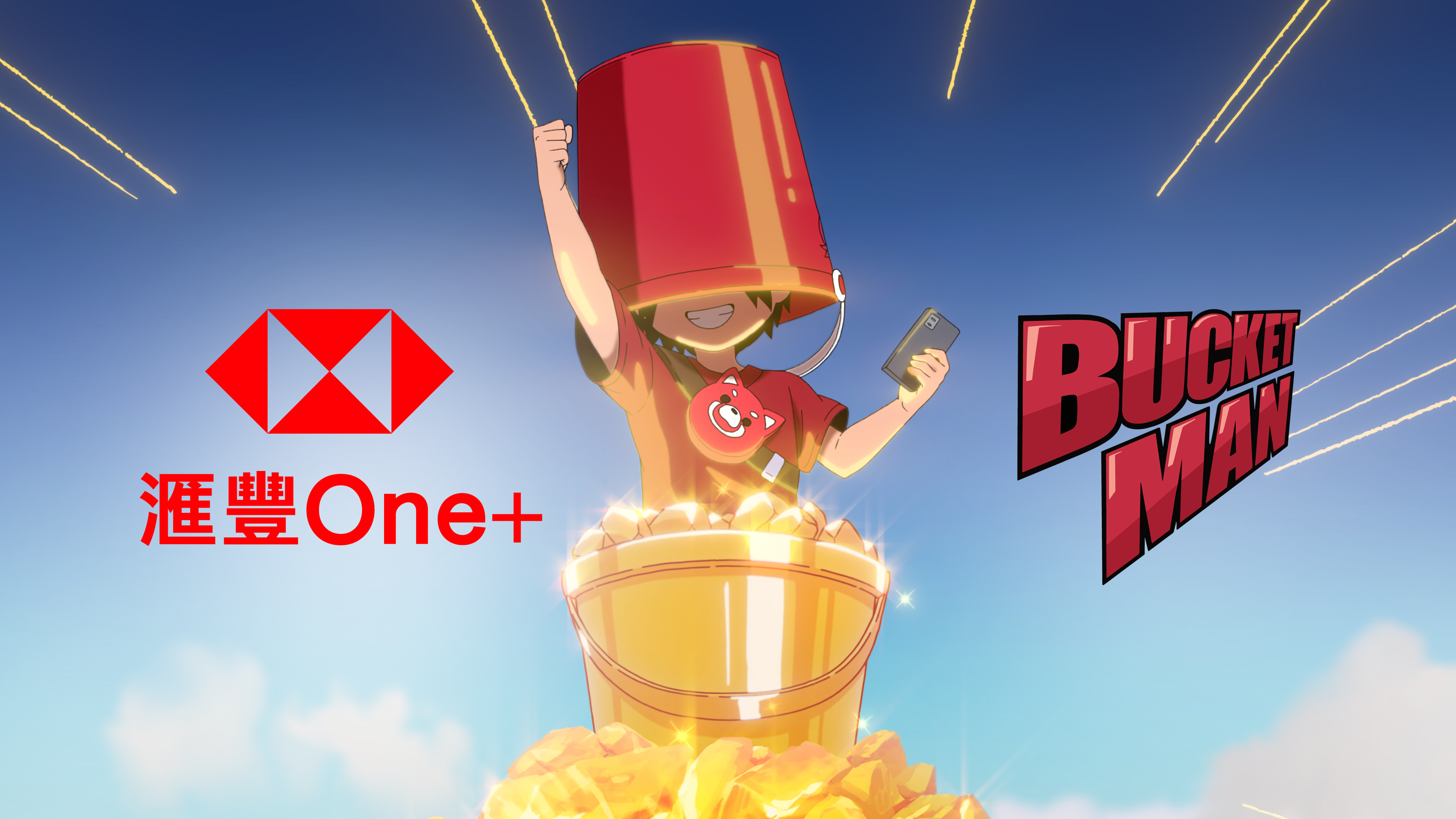
This case sits right between borrowing and building. Bucket Man is an existing IP created by Stephen Fung, but a rising one rather than a global giant like One Piece. Banking is not an obvious match for anime since it's a category built on trust and careful wording. That's what makes this case worth a look.
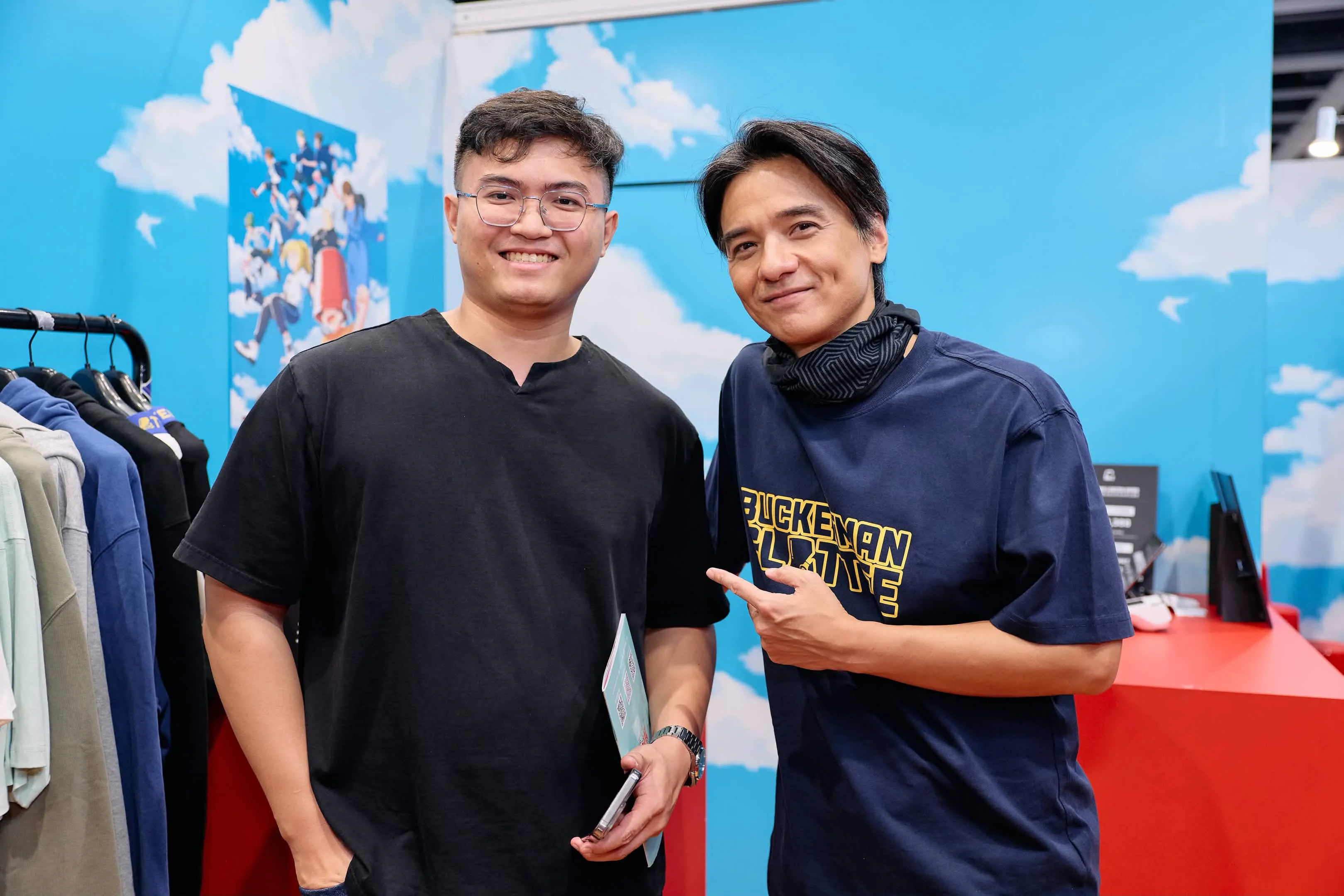
In late 2025, HSBC One in Hong Kong partnered with Bucket Man to launch HSBC One+, a membership program for young, emerging affluent customers. In the story, Bucket Man climbs toward a mountaintop where a bucket of gold waits, with HSBC One+ supporting each step.
• The audience fits: Young professionals who follow anime IPs are exactly who HSBC One+ wants to reach.
• The metaphor explains: "Building wealth" is abstract. A character climbing a mountain is not.
• The IP lives beyond the ad: New customers could win a limited-edition BUCKET MAN x HSBC One+ trading card.
When Animation Gives The Unique Artistic Value Into Brand
Since most of our examples so far come from Japanese anime ads, you might think animated advertising only targets anime lovers or an IP’s existing fandom. That’s true to some extent, but it isn’t the whole picture.
Believe it or not, high-end luxury brands value animation highly too, because animation is seen as a “premium” handcrafted art form. Thereby, using animation in brand communication adds a distinct artistic layer to what these brands already stand for.
Now back to Prada and Dior. Neither needed a mascot or a fandom. They chose animation for the reason we mentioned above: its artistry matches who they are.
Luxury sells craftsmanship, things made slowly by skilled hands. Hand-drawn animation is one of the few art forms that works the same way. Every second of film can take dozens of drawings and many hours of an artist's time. When a luxury house puts hand-drawn animation next to its products, the medium itself tells the brand story.
Prada: the craft matches the claim
Prada brought in John Pomeroy to lead a team of artists, with every character and animated environment drawn by hand. The campaign title says Animated by Hand, and the work delivers on it. Audiences responded warmly, because what Prada promised and what Prada made were the same thing.
Dior: when the promise and the process don't match
Dior's idea was just as strong on paper. Critics noted how Chomet's pencil texture echoed the handwork of the seamstresses in Dior's ateliers. Creative director Jonathan Anderson told WWD the film was all hand-drawn, using techniques going back to the 1940s.
Then viewers started pausing frames. They pointed to visual inconsistencies, including a character with six fingers. Chomet and producer Aton Soumache denied that generative AI created the artwork. But they also acknowledged that software generated some of the in-between frames.
Here's the thing: automatic in-betweening is not a crime. Plenty of studios use digital tools to speed up repetitive steps. The problem here is the untrustworthy. Dior keeps telling the film is fully hand-drawn craft, meanwhile, people can easily realize “something’s wrong here”. Using animation's artistic reputation as a prop, while assuming viewers won't notice the shortcuts, is considered as a lie and you are treating your customer like a fool. It is even harder since they are a luxury brand, the audience felt “betrayal” and it seems like high-end brands try to reduce the production for “cheaper” cost. And this is not surprising that in 2026, that bet loses.
Why This Matters More Now
This is where the age of AI really changes animated advertising. Generative tools have made "animated-looking" content cheap and fast. The IAB expected about 39% of video ads to use gen AI tools in 2026. Several brands, including Coca-Cola, have faced public criticism for AI-made holiday ads.
The result is an audience with sharper eyes than ever. Viewers now examine animated ads frame by frame, and they care how the work was made. That makes genuine craft more valuable, and makes over claiming it more dangerous.
What This Means For Brands In 2026
From Pinschewer's tire ads to Prada's pencil-drawn foxes, the reasons brands choose animation have stayed remarkably steady: attention, control, characters people love, and art that says something about the brand.
Before commissioning your next animated ad, ask four questions:
- What job does animation do here? Explaining a product, building a mascot and reaching a fandom are different jobs.
- Who is the audience? Kids, young adults and nostalgic grown-ups respond to very different characters.
- Does the art style match your brand? The right style tells your story before anyone reads a word.
- Can you stand behind how it was made? Whatever tools you use, make sure your claims match your process.
Animation has sold products for over a century, and it isn't slowing down. In 2026, it simply asks one more thing of brands: respect for the audience and for the craft.
That's the work we care about at Otsu Animation. If you're planning an animated campaign, see how our pipeline works or talk to our team here.