THE DIFFERENCE BETWEEN CUT - SCENE - SEQUENCE
Working animation is not about drawing and only drawing. In fact, there are units that the animators must follow to organize the production and productively work on their responsible job.
Have you ever wondered how hundreds of animators can work together to produce a full-length animated series?
Animation isn't just about bringing drawings to life. Behind the creative work, the industry relies on a structured workflow and clearly defined units to keep large-scale productions organized.
In this article, we'll break down three key storytelling units you need to know in animation: cuts, scenes, and sequences. We'll go over what each term means and why they matter in the production pipeline.
You might sound this familiar in film production: Shot - Scene - Sequence. These are the level of units for production and narrative purposes. Kinda similar to how animation works but there’s a bit different, and we're gonna find it out below.
Disclaimer before we jump in. All the information we are sharing below came from research, related documents from other studios and our studio working experience. The explanation will be conducted majorly from Japanese animation, which may match with some studios or not, so it depends. Consider this as add-in knowledge to understand more about the animation industry.
**WHAT IS CUT - SCENE - SEQUENCE?**
**1. CUT**
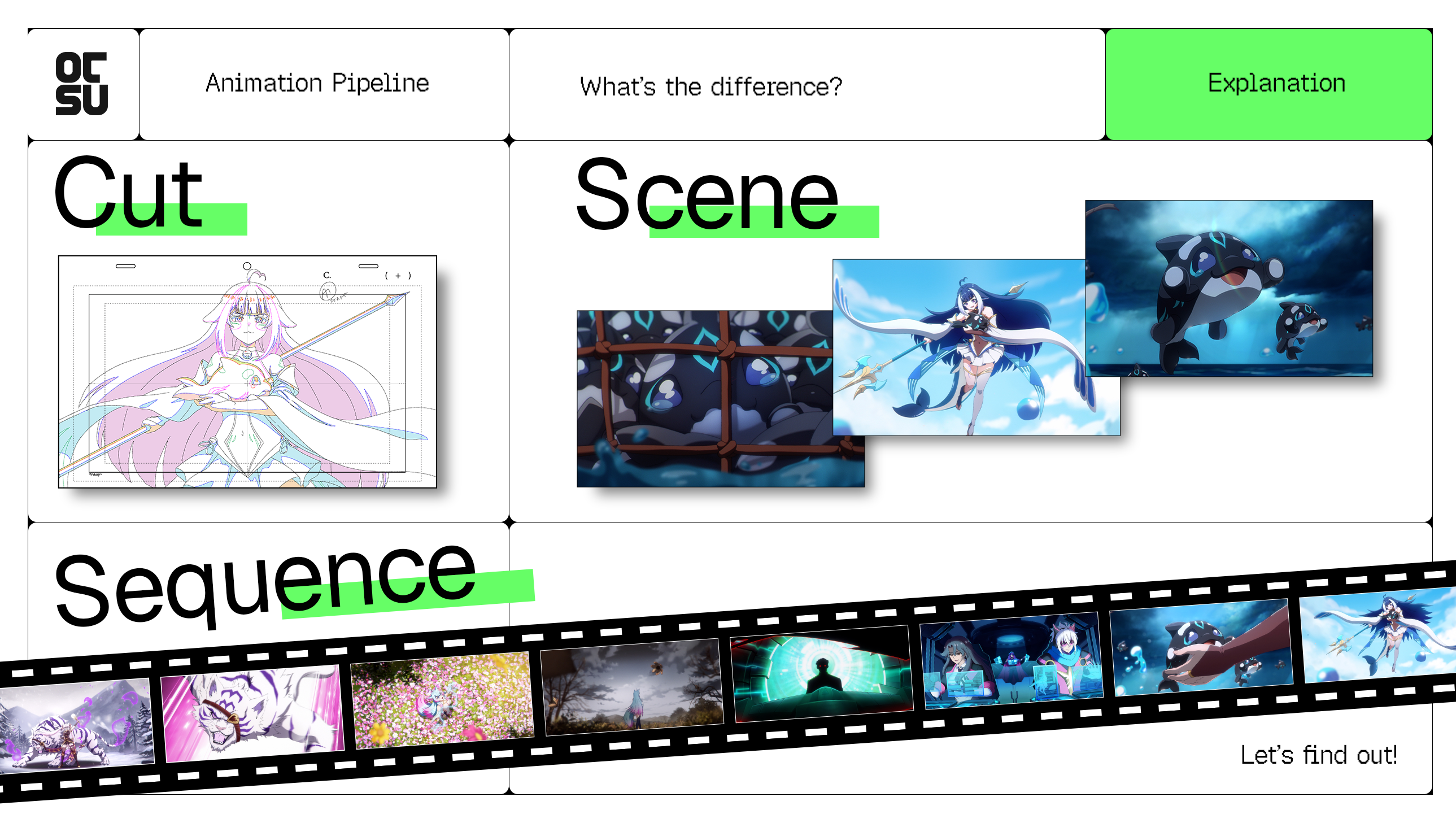
Technically, a cut (or カット - katto) in animation is equivalent to a shot in film production. A cut is a single continuous movement that happens when the camera starts and ends. Or basically, an animator will draw frames to create the animation without interruption.
So a new cut happens whenever that camera setup changes: a new angle, a new framing, or a reset in movement. It doesn't necessarily mean the character or location has to change dramatically. Even two different angles of the exact same conversation, same characters, same room, still count as two separate cuts. If you saw the camera angle or the character suddenly change, it means you’re watch different cuts putting together.
One thing worth noting: in film production, a "cut" usually refers to the cutting point between two shots. It's an editing term that describes the transition itself. Meanwhile in anime, "cut" refers to the shot itself, not the transition. That's the key difference to keep in mind.
**2. SCENE**
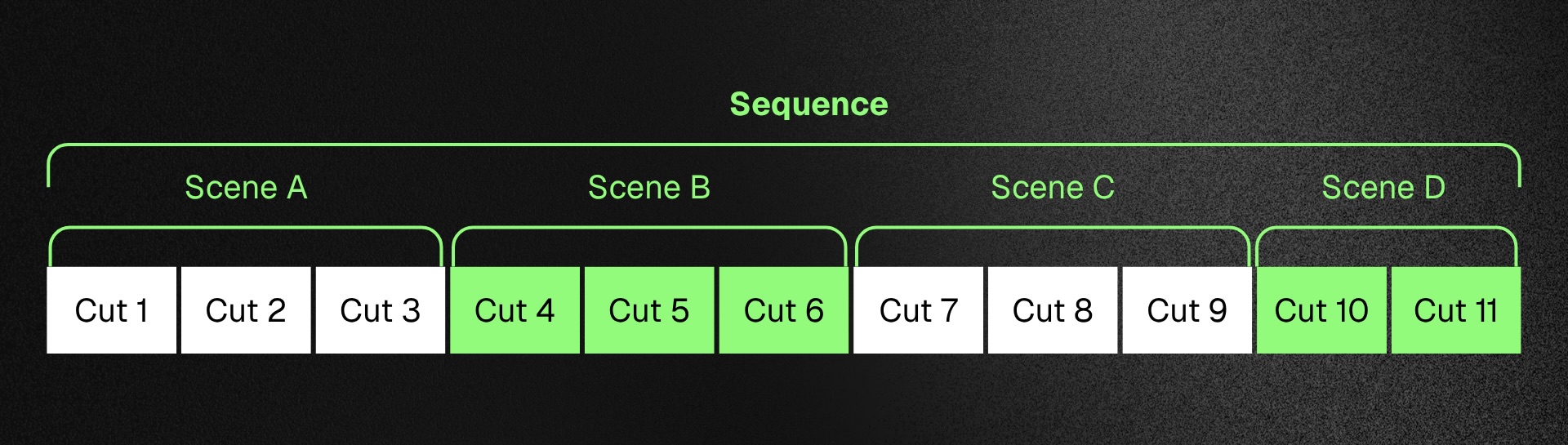
A scene is a group of multiple cuts that happen in the same location or situation.
For example, in our animation trailer for Beyond The Vale, we have separate scenes for each character that appears. If you break down one of those, let's say CaseOh's scene, you'll notice it's actually made up of several different cuts, each showing a different angle or moment, all working together to tell that one piece of action.
**3. SEQUENCE**
When multiple scenes are working toward the same narrative purpose, they come together to form a sequence. Think of a sequence as the "parent group" of scenes. You've probably heard terms like "opening sequence" or "ending sequence" before, that's exactly this.
Unlike a cut, which is really a production unit, a sequence works more like a narrative unit. It helps a studio think about and organize the story structure logically, rather than just tracking who's drawing what.
If you have read the storyboard document from feature films like Hayao Miyazaki, you might notice that the storyboard is divided into sections like “Opening part”, “A part”, “B part”, etc. Each part serves for each arc of the story, instead of reading through a hundred pages storyboard continuously, divide it into parts to help you organize the story flow better. It also shows where the story is going, a premise, climax, settlement, etc.
So to sum it all up: animation is built from cuts, those cuts get grouped into scenes, those scenes get grouped into sequences (some call them "sections"), and those sequences make up an episode.
**WHY THEY ARE IMPORTANT?**
Alright, definition done. Now let’s see how it works in reality.
The reason why you have to understand the cut is that if you are an animator, a cut is counted as a work unit that you take responsibility for. Every single cut goes through the entire pipeline: Layout, Key Animation, In-betweens, all the way to Finishing (Shiage). So the cut will be assigned to each animator to work on. Often your salary will be paid based on how many cuts you’ve done if you are not working on a fixed salary.
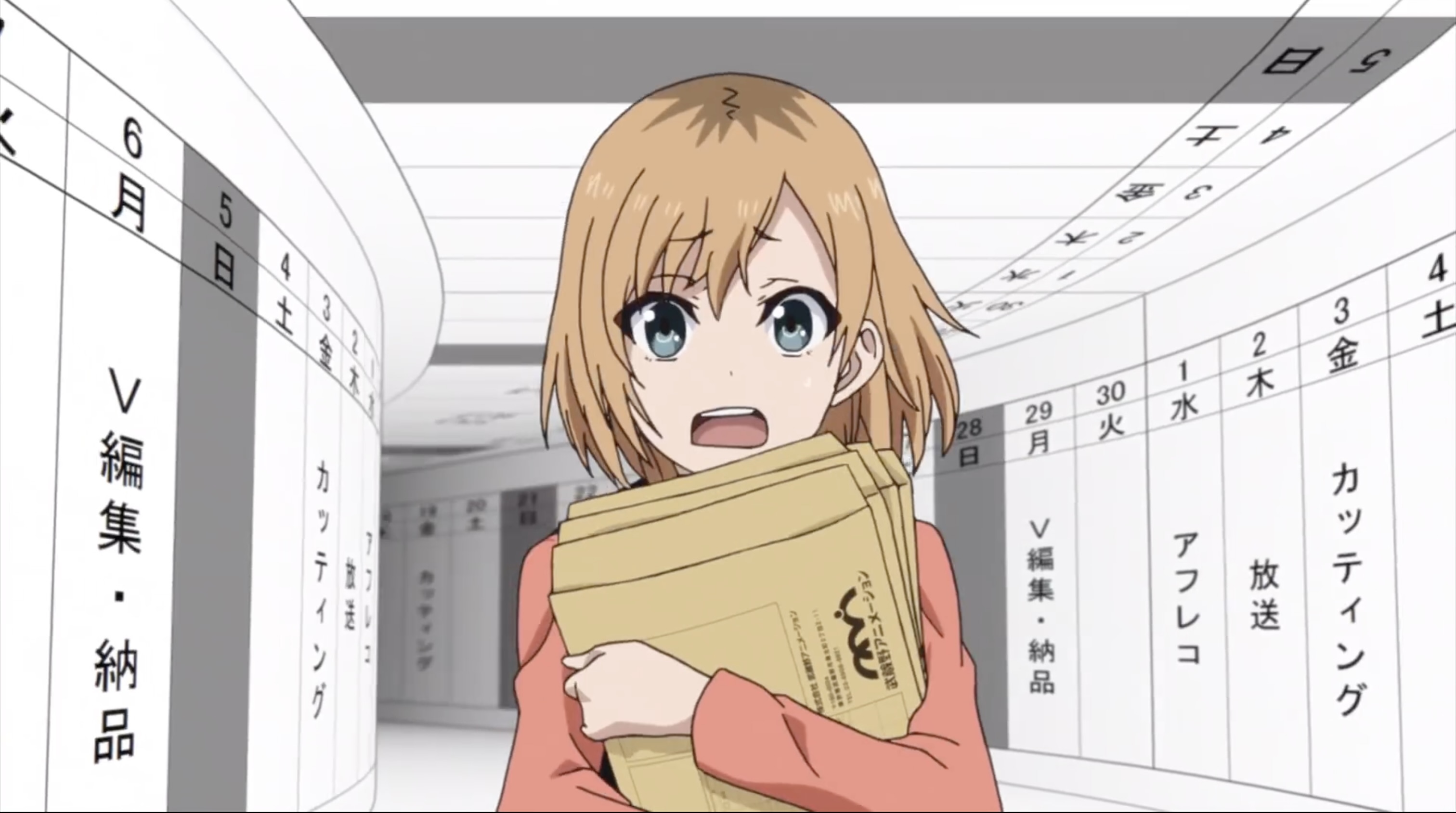
On the production perspective, the PA (production assistant) will organize all the work in order to manage a huge production. And that's no small task, since a single 20-something-minute episode can easily run 200 to 300 cuts.
Looking at the animation sheet, you will see animators have to take note of the cut number the drawing belongs to, sometimes they also include the episode number too. And it’s not compulsory for animators to specify what scene and sequence the drawing is.
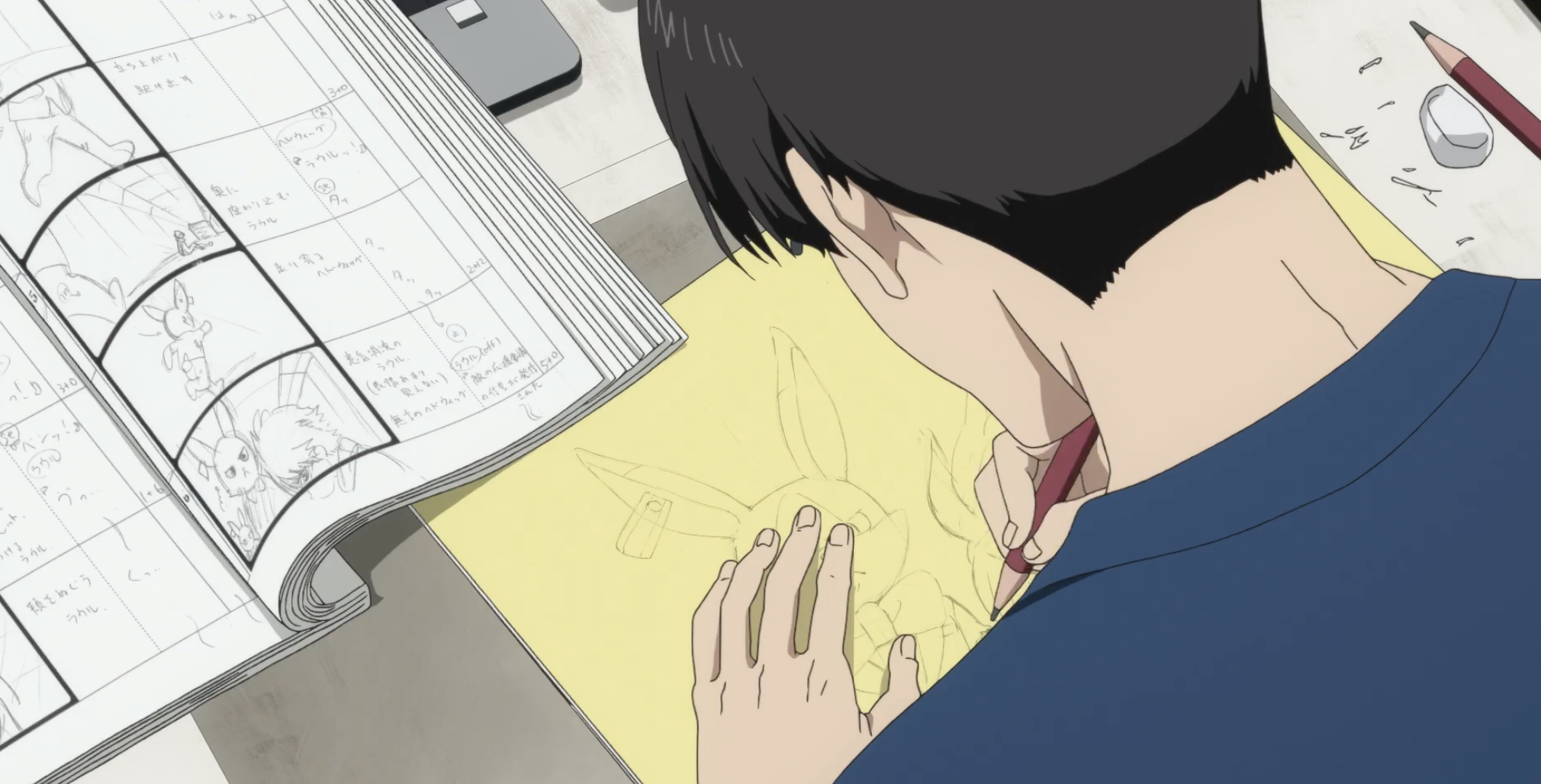
The scene and sequence will be clarified on the storyboard instead, where there are columns to note down Scene + Cut. And when you end a sequence and move on to the next one, there will be a transition part to note down like “A part, B part, C part” representing each sequence. And then you can start the cut number from 1 again.
Okay let us explain it simply like this. You have an opening sequence, which includes 50 cuts, you will have to count it from 1 to 50. And when you move on to the next sequence, you will start counting the number again at 1.
At the end of the day, cut-scene-sequences are the production metric/units so the studio can break down a massive, chaotic production into manageable pieces, while still keeping the bigger story intact. They can categorize it differently, as long as every animator in the studio understands what they have to do.
Want to learn more about how animation works? We cover it all on the Otsu Labs blog. Dive in here.