Background Explained Throughout The Animation Pipeline
How many steps does it take to make a background? Is it just drawing, coloring it in and putting the picture behind the characters? Not really. This article opens up a more complex and interesting side of making backgrounds in animation.
What Is Background in Animation?
A background is one part of an animation shot, besides characters and effects. A background doesn’t always stay behind the characters. Sometimes part of it sits in front of them too.
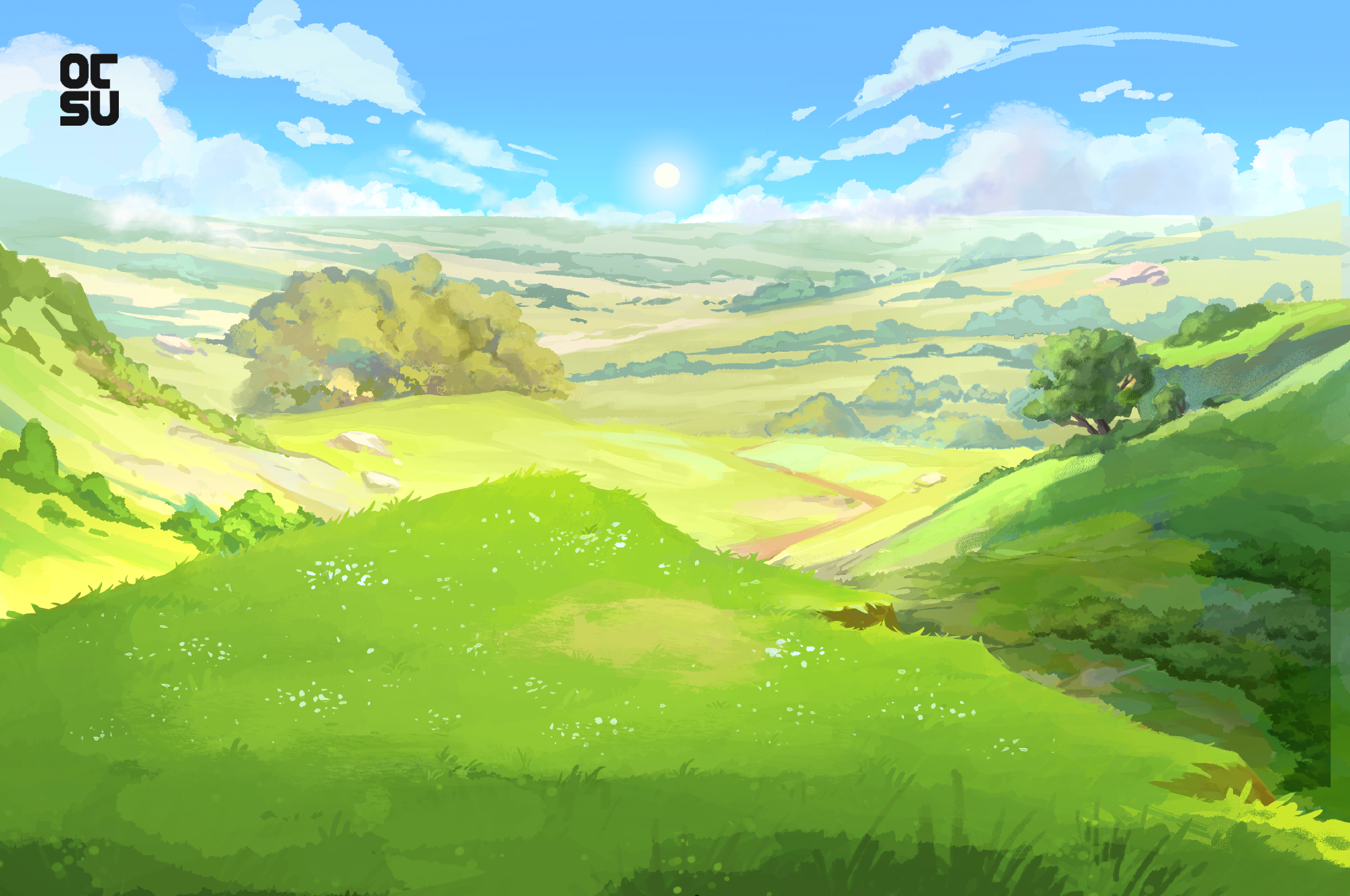
Most of the work falls on background artists. They’re the ones who draw and paint the backgrounds. But depending on how complex the animation is, other people - animators, compositing artists - get involved too. They all shape how a background finally looks on screen.
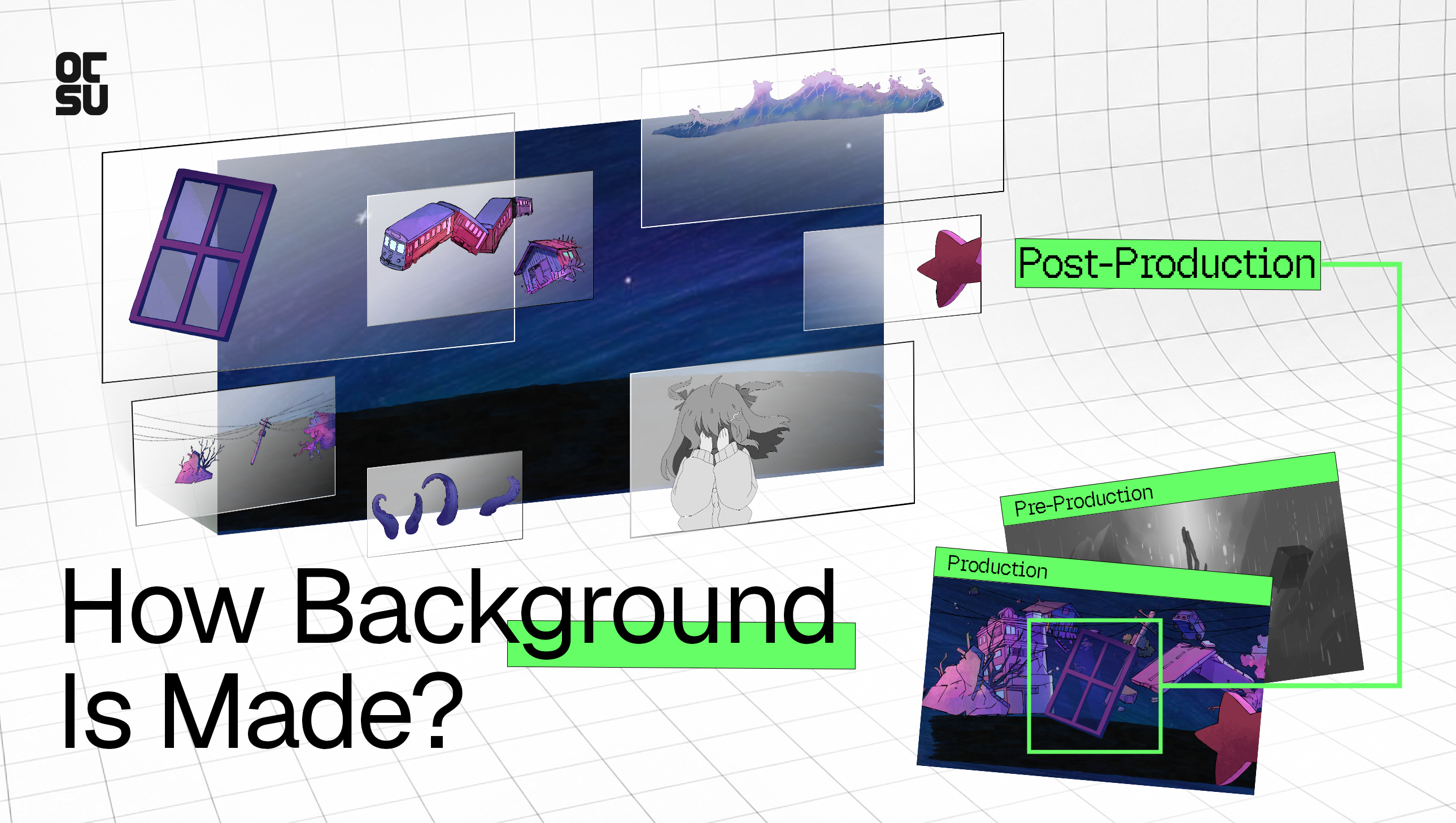
Here’s how the pipeline works at Otsu Animation:
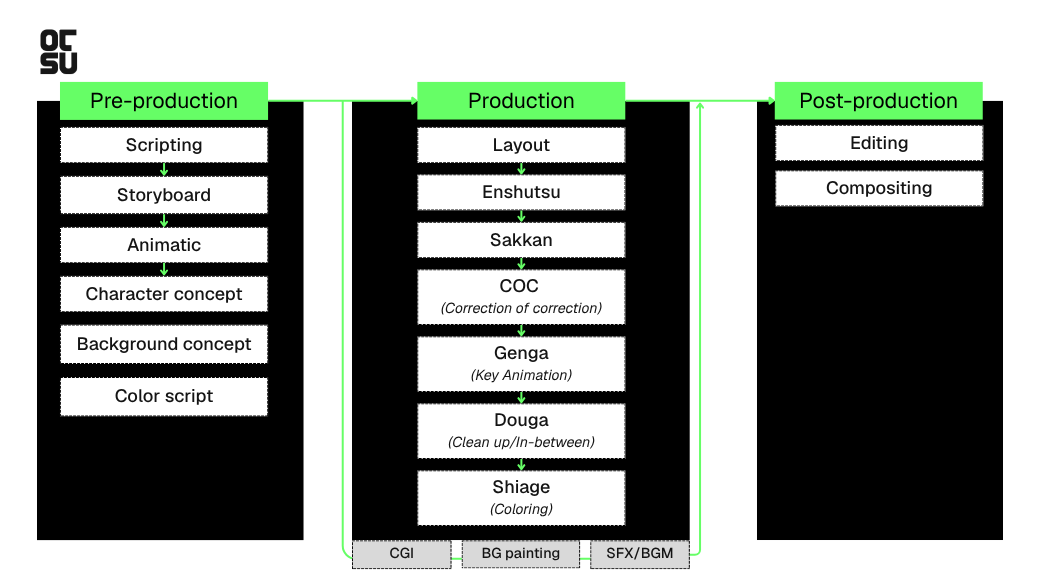
A background gets planned, built and finished across three stages: pre-production, production and post-production. It’s better for you to know well what happens to a background at each stage.
Let’s start with the first one.
Background in Pre-production
At this stage, the background doesn’t exist yet. Not as a finished piece, anyway.
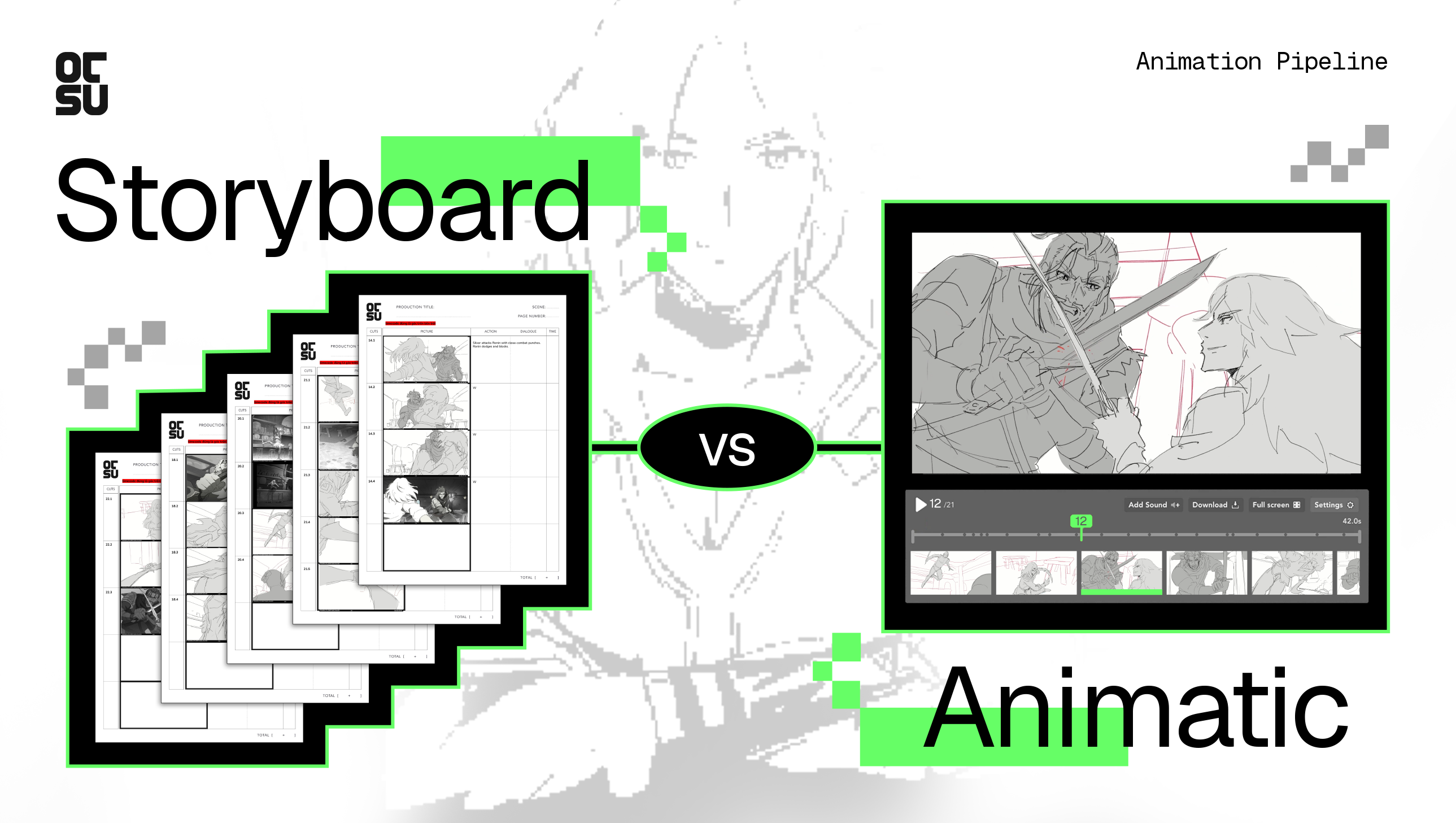
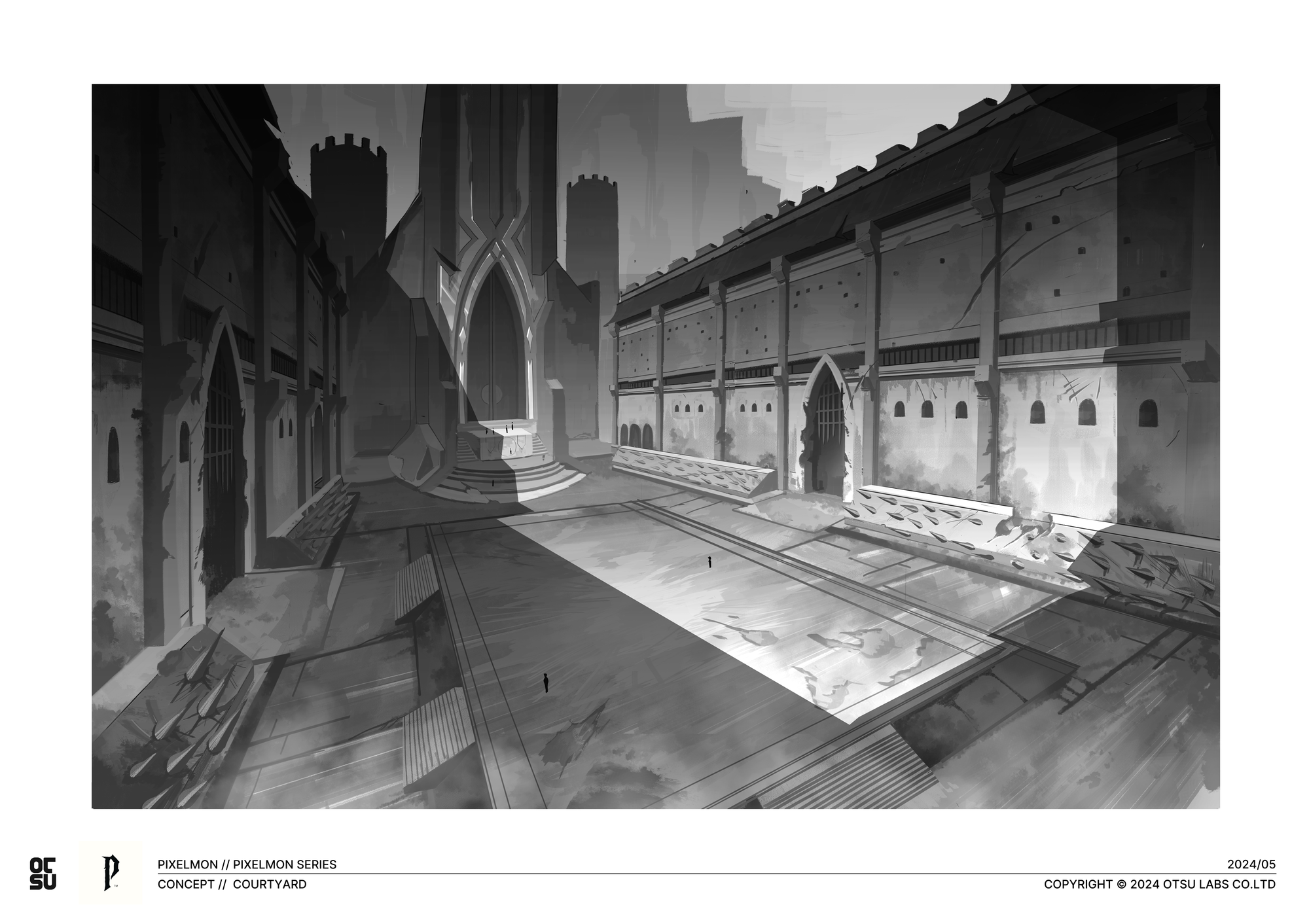
Once the team gets the storyboards or animatics from the director, the concept team (belongs to the Art Department) pulls together all the settings - the places where the story happens. From there, they figure out exactly which locations - inside each setting - will actually show up on screen. These early drawings help the whole production team picture the story’s world before anyone commits to final art.
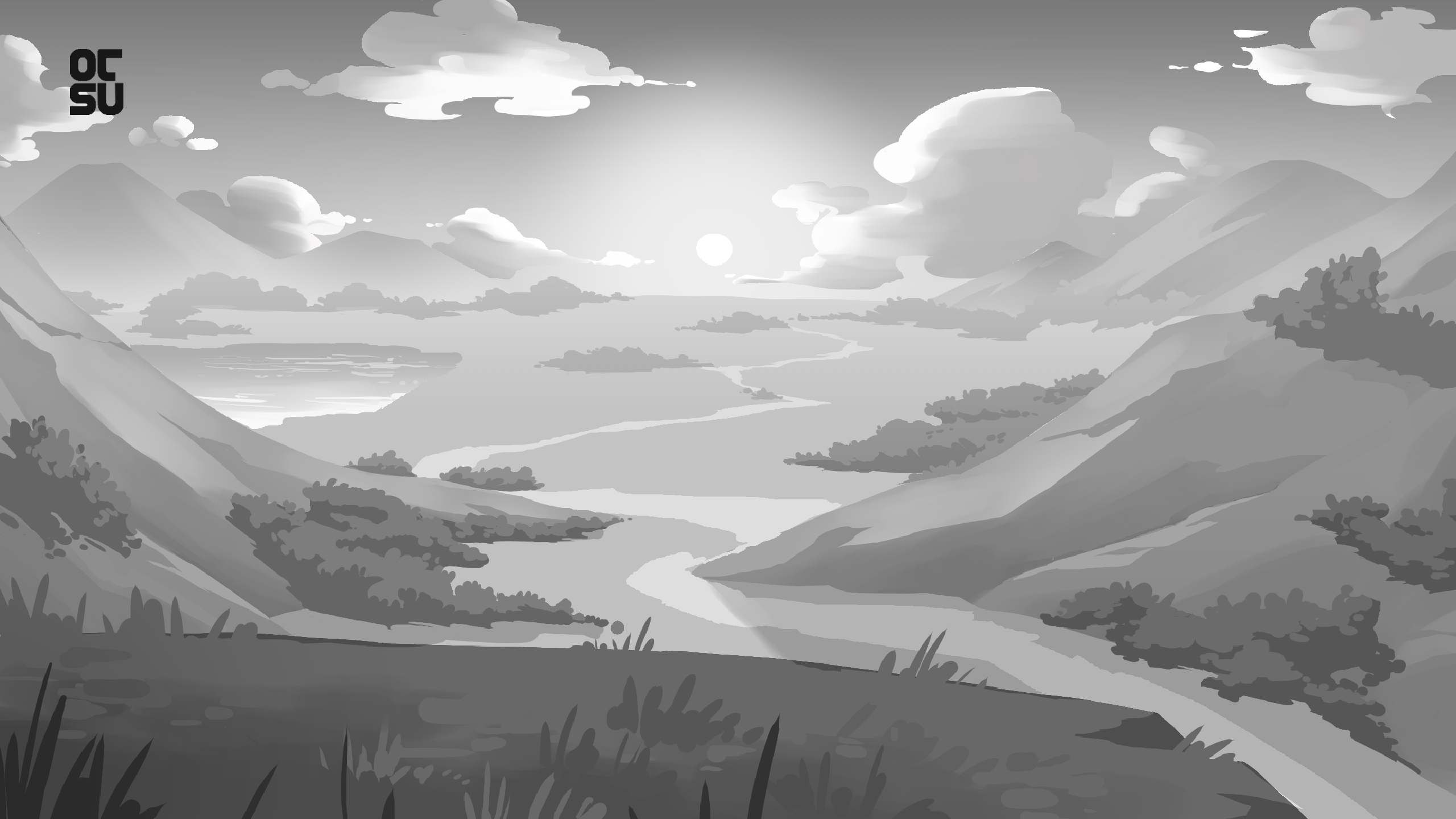
This stage has a name: Concept Background. The background has an idea behind it.
A quick note here, because three words - settings, locations and backgrounds - get used almost interchangeably and they shouldn’t be:
- A setting: the bigger picture showing the location, the time period, the weather, the culture, the mood of a place.
- A location: the actual physical spot where something happens (e.g. the mountain landscape).
- A background: one piece that belongs to that location, sitting behind (or in front of) the characters (e.g. the cliff, the sky).
Background in Production
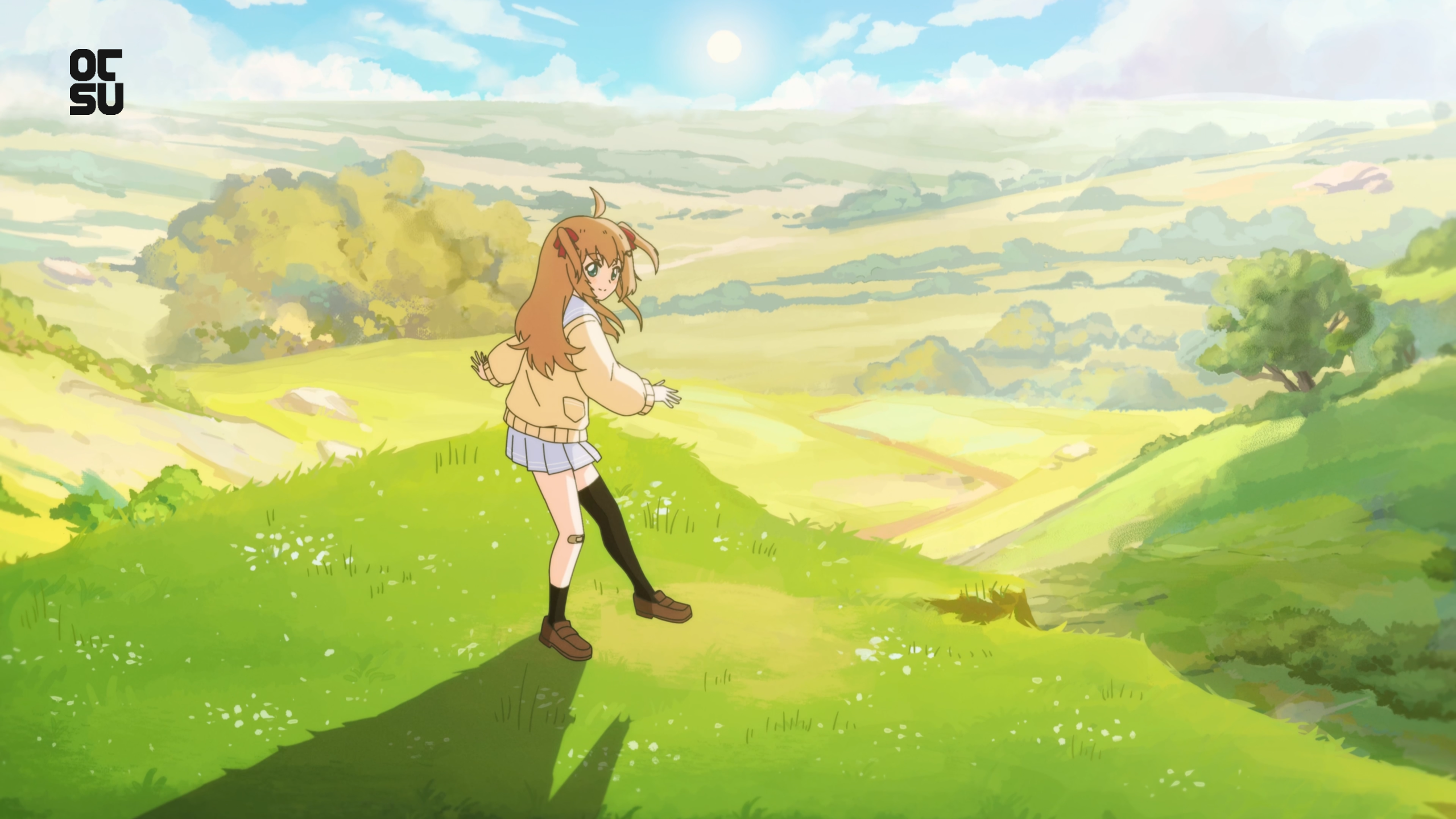
This is where the background shows up for real. Based on the concept work from before, background artists draw and paint the ones for each cut.
And depending on what the film needs, a background can be 2D or 3D. Static or layered for movement.
What Is The Difference Between 2D & 3D Background?
2D backgrounds are drawn entirely by hand on paper or digitally in software like Clip Studio Paint (CSP). 3D backgrounds get built inside 3D software like Blender, using actual 3D models to nail the depth and physical accuracy of a location. Studios that do 3D backgrounds usually have a separate 3D Department working closely with background artists of the Art Department.
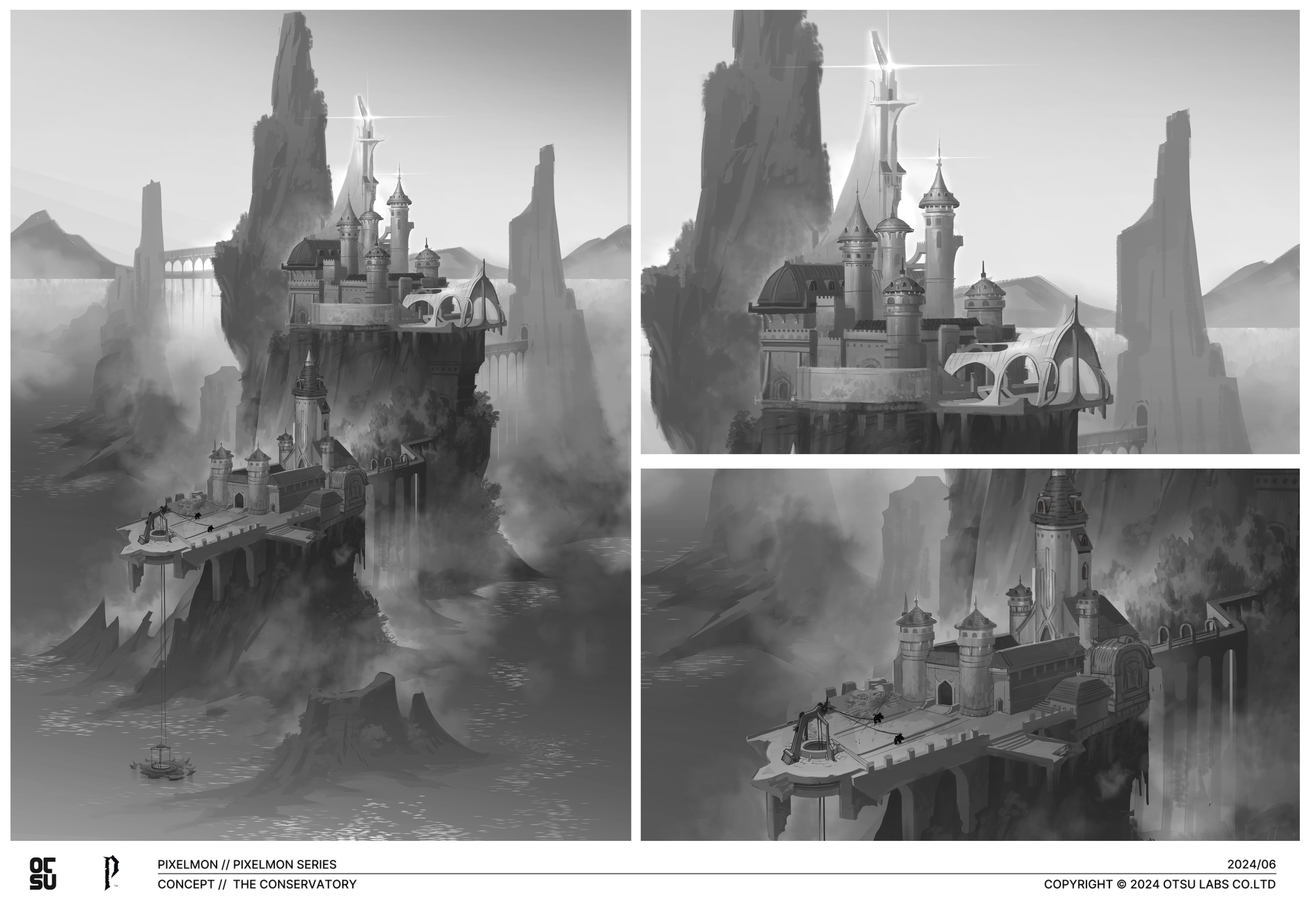
Here’s a problem, though: if you just color a 3D model directly inside Blender, it ends up looking stiff. The texture won’t match the 2D characters in the same frame. So the workaround most studios use is: the 3D model is there to set up the perspective and simulate the camera rig. Then, every angle that appears on screen gets captured as an image and brought into CSP to paint over. That keeps the color and texture consistent with everything else that’s 2D.
A film can use both 2D and 3D backgrounds at the same time. Every shot has different needs and a different budget. So really, the question isn’t “2D or 3D”. It’s how to combine them well, instead of treating them like rivals fighting to replace each other.
What Is a Book in Animation?
A regular background is one flat image sitting behind the character layer. That’s the version most people picture.
But some backgrounds get split apart instead. One static layer at the bottom and a few more layers on top of it, separated out on their own. Animators or compositing artists then move those separated layers left to right, or top to bottom, across the frame. That’s called a Book.
FYI: Some studios don’t use the word “Book” at all. They just call the layers as Foreground and Midground, to tell them apart from the bottom-most Background layer.
The point of a Book isn’t to animate anything. It’s to fake depth in a 2D world. The classic example is the parallax effect - layers moving at different speeds as the camera pans, so the scene feels like it has real distance among these layers.
What Is Background Animation, or Haikei Douga?
There’s a second way to separate layers and it’s a completely different idea.
These layers don’t move from point A to point B like a Book does. They stay in one place but they’re not still either. This is called Haikei Douga, a Japanese animation term that means background animation or moving background. Think of flowers swaying in the grass in the Colorful MV featuring Neuro-sama. In cases like that, animators aren’t just drawing and coloring movements for the characters. They’re doing the same Douga work for the flowers too.
So here’s the difference in one line: a Book is still art that gets moved. Haikei Douga is art that moves on its own.
Background in Post-production
This is where backgrounds get finished and pulled together with the other elements - characters, effects. The person in charge here is the compositing artist.
All those separated layers from the production stage get combined now. Some sit below the characters, some sit above. The goal is to make the background and the characters feel like they belong in the same space, reacting to each other, not just stacked on top of one another. That matters more than it sounds, because in production, characters and backgrounds usually get drawn on completely separate sheets.
The Importance of Background in Animation
None of this is just for fun. It actually matters.
If you’re a producer, knowing this pipeline changes how you brief a project and how you estimate cost and time. A 2D background costs and takes differently than a 3D one. A background split into five layers takes longer in compositing than just one layer. That’s not a small detail when you’re planning for an animated film.
If you’re getting into animation yourself, this breakdown tells you where in the pipeline you’d actually want to work. Concept art, 2D/3D background art painting, compositing, etc. These are different jobs, done by different people, at different stages.
A background should be treated more than a picture behind the characters. It demands a whole production process on its own and once you see the steps inside it, you can’t really go back to seeing it as “just a background” again.
All of the above observation comes from what we’re running at Otsu Animation: concept, 2D and 3D, layers, movement, all handled under one term “background”. If you’re looking for a studio that treats backgrounds with this level of care, talk with us about your next project.
What is a Background in animation?
It’s a part of an animation shot. It can sit behind or in front of the characters.
What is Concept Background?
It’s the rough version of a background made in pre-production to show the mood and shape of a setting.
What's the difference between 2D and 3D Background?
2D backgrounds are drawn by hand, on paper or digitally. 3D backgrounds are built in 3D software for accurate depth and perspective.
What is a Book in animation?
It’s a static background layer used to create a parallax effect and fake a sense of depth.
What is Haikei Douga?
It’s a background layer animated to create a lively background.
What's the difference between a Book and Haikei Douga?
A Book is static, while Haikei Douga is animated.