Anime Styles Explained: Kanada, Norio, Yutapon and More
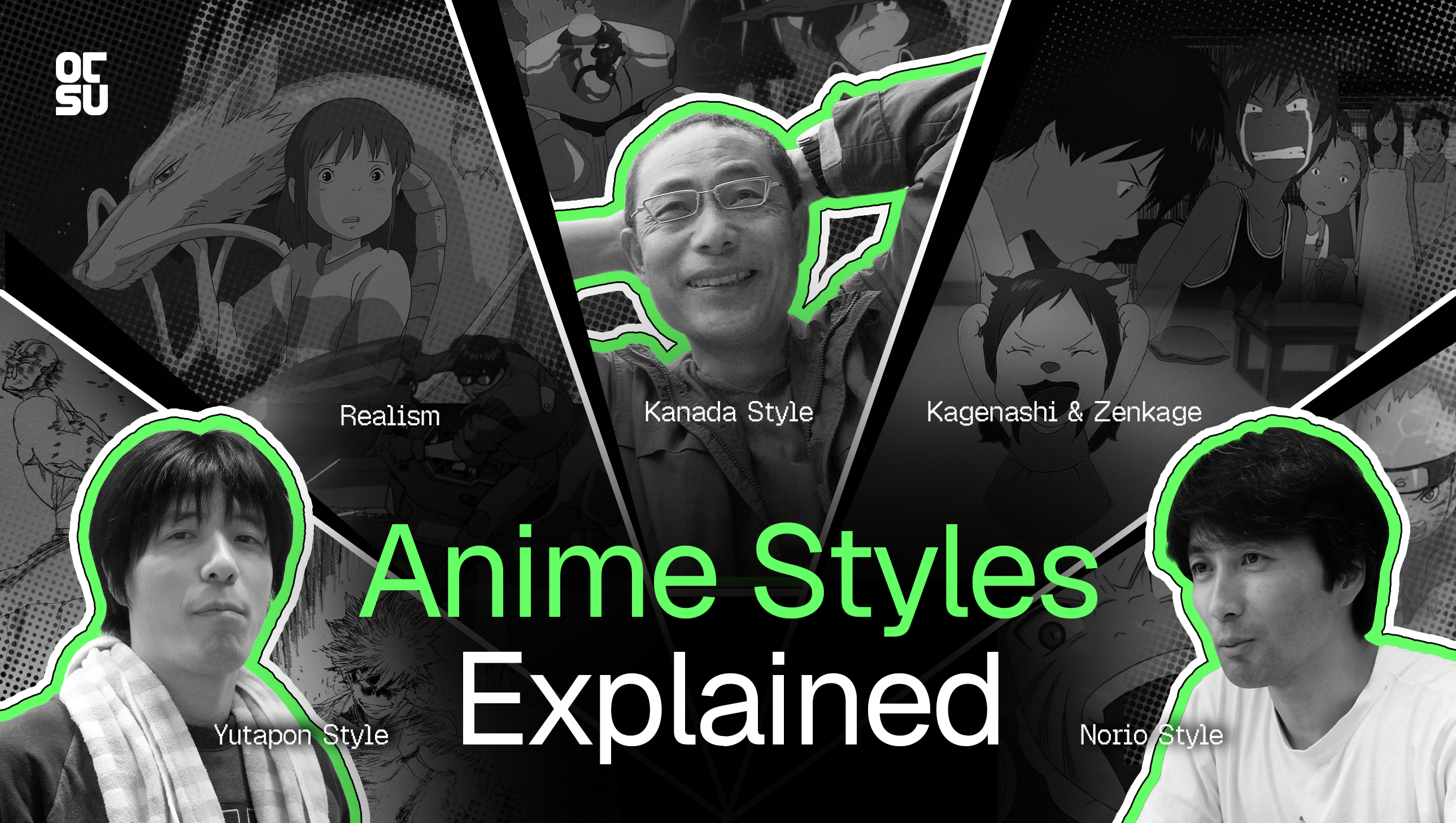
How do you tell one anime apart from another? The visuals, yes. But what about the animation itself? Two anime can look similar on paper yet feel completely different in motion. Across anime history, animators have developed very different approaches to movement - approaches that became styles in their own right and left a lasting mark on the medium.
Anime Styles Beyond Visuals
When people talk about anime styles, they often think about how anime looks. But style also lives in how things move. The way an animator constructs movement can give a scene a distinctive character, even when the underlying visual design remains familiar.
That is the focus of this article. We’ll look at anime styles rooted in animation - approaches that shape how movement is drawn and timed. Our goal is to give you enough context to understand what makes each style distinctive and help you start spotting these choices when watching anime. In doing so, we also hope to encourage a deeper appreciation of animation as a medium shaped by many creative artists and traditions throughout its history.
We’ll begin with Kanada Style, associated with Yoshinori Kanada, then move through the naturalistic traditions seen in Akira and Studio Ghibli, followed by Norio Style and Yutapon Style. We’ll close with Kagenashi and Zenkage, an honorable mention for the approach of simplifying or removing conventional character shading. These are not all anime styles, nor do they represent one neat classification system. Instead, they offer useful starting points for understanding how different animation traditions developed and how you can begin recognizing them in anime today.
Kanada Style
Kanada Style at a Glance
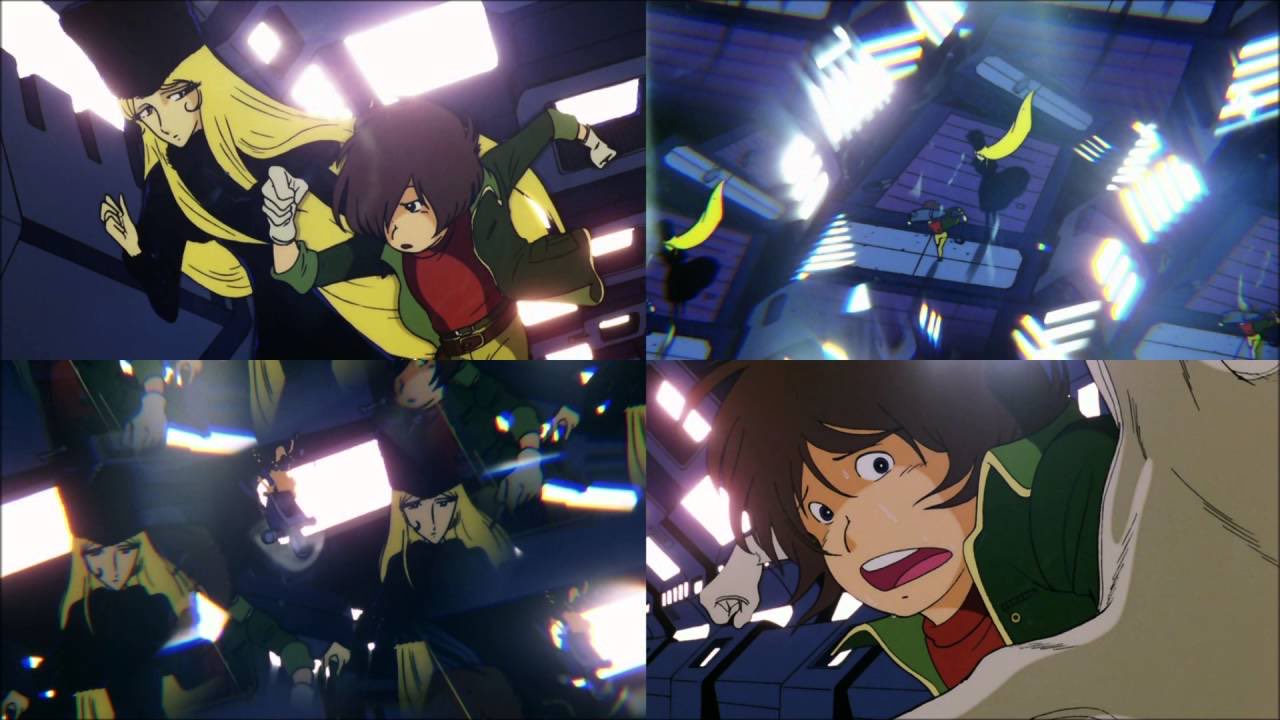
Kanada Style is one of the most influential traditions in anime animation, built around highly expressive poses, distinctive timing and energetic movement. It is closely associated with Yoshinori Kanada, whose work in the 1970s helped establish a new kind of animator-driven expression that became hugely influential through the 1980s. Its legacy is especially important because later generations would either carry Kanada's ideas forward or develop new approaches in response to them.
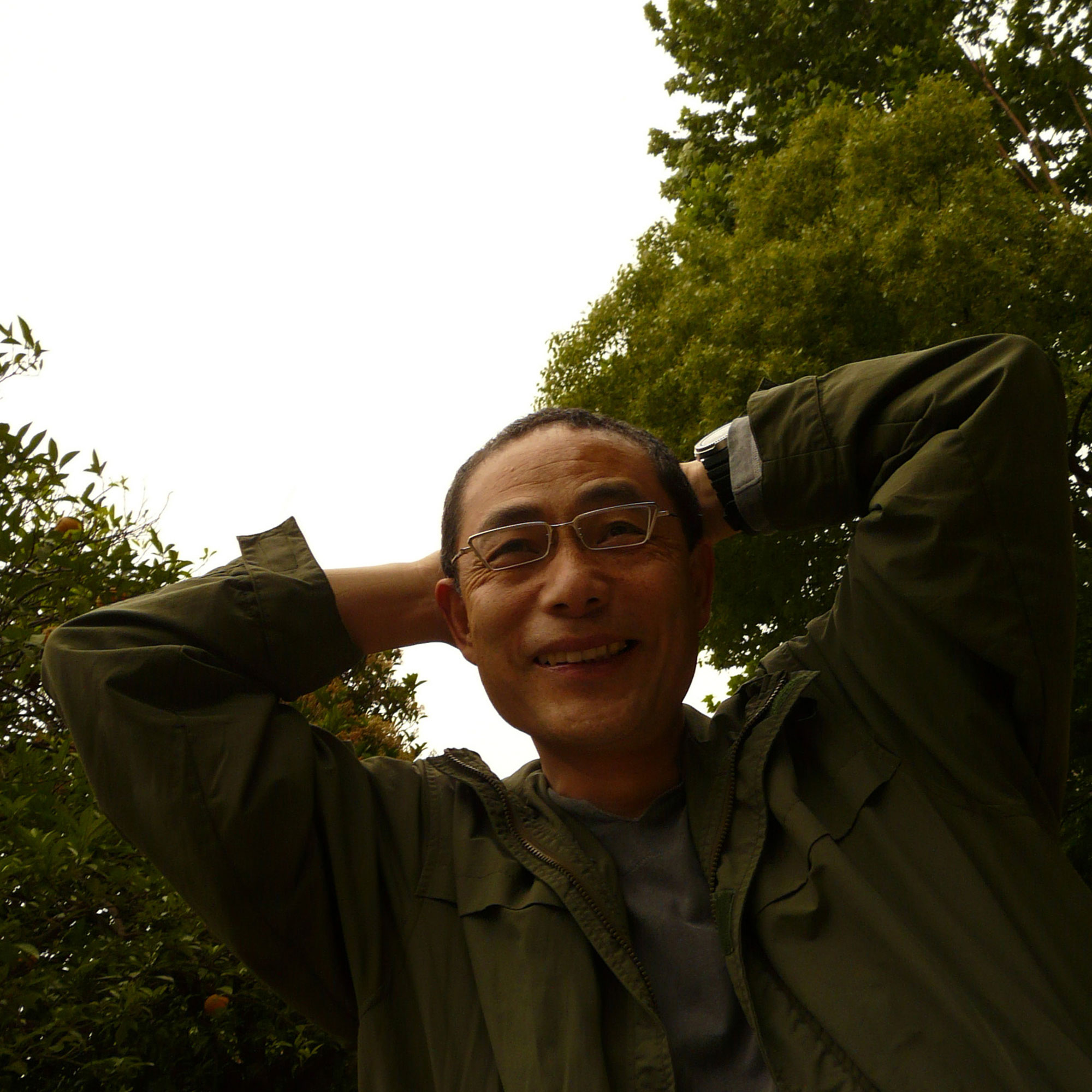
About Yoshinori Kanada
Yoshinori Kanada studied at Tokyo Designer Gakuin before joining Toei Doga in 1970, where he made his animation debut on Mako, the Mermaid. He later moved to Studio Z under Shingo Araki and then Studio No. 1 under Takuo Noda, becoming an animation director on Daikū Maryū Gaiking in 1976. His work on robot series such as Zambot 3 and Daitarn 3 brought him wider attention, followed by major theatrical work on Galaxy Express 999 and Genma Taisen.
Kanada also became closely involved with Studio Ghibli, working on Nausicaä of the Valley of the Wind, Castle in the Sky and My Neighbor Totoro. Later in his career he moved into digital and game production at Square Enix. He spent decades influencing and directly mentoring younger animators, leaving an unusually broad legacy within Japanese animation.
What Defines Kanada Style?
Kanada's animation places energy and expression ahead of strict visual consistency. His scenes can move between strong key poses, abrupt shifts in timing and exaggerated perspectives, using the drawings themselves to create impact rather than simply reproducing realistic motion.
Three characteristics are particularly useful when identifying it:
- Powerful posing: Characters and objects are often pushed into exaggerated angles and shapes, giving individual poses a strong visual impact.
- Irregular timing: Movement does not always progress evenly. Sudden changes in spacing can make an action feel explosive, tense or unexpectedly fast.
- Dynamic perspective and effects: Extreme perspective, speed lines and effects become part of the movement itself. Importantly, many techniques associated with Kanada had earlier precedents; his contribution was often in how he animated and timed them.
Kanada Style also became more varied over time. Kanada himself explored both highly stylized movement and more solid, physically grounded animation, showing that the style was never one fixed visual formula.
Its influence spread rapidly. Masahito Yamashita, Kazuhiro Ochi and Shinsaku Kōzuma became important figures in the Kanada lineage, while later animators absorbed Kanada's ideas in very different ways. Some, including Hiroyuki Okiura and Shin'ya Ohira, would move toward realism, illustrating how one animator's influence could feed directly into a different tradition. The Kanada lineage therefore works as an important starting point for understanding the stylistic changes that followed in anime animation.
Realist Style
Realist Style at a Glance
While Kanada Style dominated much of the visual conversation around anime in the 1980s, another tradition was developing alongside it: realist animation. Rather than concentrating on stylized poses and exaggerated movement, this approach places greater emphasis on physical credibility, volume and detailed character acting. Akira became a major turning point for the movement in the late 1980s, while Studio Ghibli developed its own naturalistic lineage alongside it.
Key Figures and Productions
Realist animation does not have a single founder, so this section is better understood through the artists and productions that shaped the tradition. Takashi Nakamura, Toshiyuki Inoue, Satoru Utsunomiya, Shin'ya Ohira, Hiroyuki Okiura and Mitsuo Iso became some of the most important figures in the realist school discussed by animation historians.
Among them, Takashi Nakamura became particularly important through Genma Taisen and later Akira, where he served as animation director. The production brought together a remarkable group of young animators, several of whom had either already been exploring realism or had developed through the earlier Kanada tradition. Akira became a major milestone partly because its unusually ambitious production allowed animators to push detailed movement and performance much further than was typical for TV anime.
Studio Ghibli represents a related but distinct naturalistic lineage. Animators connected to Yasuo Otsuka and Telecom Animation Film contributed to the development of detailed character acting, while works such as Only Yesterday pushed everyday movement and subtle performance in a different direction from the harder-edged realism associated with Akira.
What Defines Realist Animation?
The main priority is believable physicality: bodies should feel like solid forms with weight, balance and momentum. Realism in anime does not mean copying live action literally. Instead, animation can selectively exaggerate or simplify movement while still making the action feel physically convincing.
Three characteristics are especially important:
- Weight and volume: Movement reflects balance, gravity and the physical presence of the body.
- Detailed motion: Small changes in posture and secondary movement receive attention, allowing actions to unfold with greater physical continuity.
- Naturalistic acting: Performance is carried through believable body language and character movement rather than relying primarily on stylized effects.
This development was not a simple rejection of Kanada Style. In fact, several major realist animators had roots in the Kanada tradition. Hiroyuki Okiura and Shin'ya Ohira, for example, began with work influenced by Kanada before moving toward more realistic animation through the late 1980s. That overlap is important: anime's history is better understood as different approaches branching from and reacting to one another than as one style simply replacing another.
The same period also gave rise to artists who pushed realism in more experimental directions. Satoru Utsunomiya and Mitsuo Iso helped demonstrate that realism could include deformation, smears and highly individual movement rather than remaining tied to strict physical imitation. Their work helped open the door to the more flowing animation that became prominent in the 1990s.
Norio Style
Norio Style at a Glance
By the early 1990s, a younger generation of animators was taking lessons from both Kanada's expressive animation and the realism that had emerged in the late 1980s. Norio Matsumoto became one of the defining figures of this shift, developing an approach in which the continuity of movement itself became the focus. His work helped establish what animation historians commonly described as flow animation, a major thread in 1990s anime.
About Norio Matsumoto
Matsumoto trained through Tatsunoko's animator training program before beginning his professional career at Oh! Production, where he worked as an in-betweener. His early work included Robot Carnival, Grave of the Fireflies and Akira, placing him directly within the generation shaped by the realist boom of the late 1980s.
He later became a key animator on works including The Irresponsible Captain Tylor, Ranma ½ and Naruto. His scenes on Naruto, particularly those from the episodes directed and storyboarded by Atsushi Wakabayashi, became especially influential and are among the best-known examples of his animation.
What Defines Norio Style?
The priority of Norio Style is flow: movement should feel continuous, with one action naturally developing into the next. Instead of making individual poses the main attraction, Matsumoto often distributes the animation across many drawings so that the transitions themselves carry the performance.
Three characteristics stand out:
- Continuous movement: Actions are developed through many connected drawings, creating a strong sense of motion from one moment to the next.
- Deformation and smears: Bodies can stretch, compress or temporarily lose their normal shape to communicate speed and continuity.
- Economical but solid drawing: The artwork can look relatively simple while still preserving the body's volume and physical presence.
This style grew out of a particularly interesting point in anime history. Matsumoto began as a realist-influenced animator, while other members of the same generation had stronger roots in the Kanada tradition. Their work gradually moved toward animation that emphasized the overall evolution of movement, creating a bridge between the detailed realism of the late 1980s and the increasingly fluid character animation of the 1990s.
That influence continued through direct relationships as well as imitation. Atsushi Wakabayashi met Matsumoto during their Tatsunoko training period, while later animators such as Ryo-timo have described Matsumoto directly teaching them. Other young animators have pointed to Matsumoto's work as a reason they entered animation in the first place, showing how his influence extended well beyond individual cuts.
Yutapon Style
Yutapon Style at a Glance
The flow-oriented animation of the 1990s eventually fed into the modern action animation that became especially prominent in the 2000s. Yutaka Nakamura, known as “Yutapon”, developed a distinctive approach that combines the physical solidity of realism with fluid choreography, cinematic staging and highly readable effects. His style is often described as “gliding” animation, and it became an influential model for later action animators.
About Yutaka Nakamura
Nakamura graduated from Yoyogi Animation Gakuin and joined Ad Cosmo in 1988. He subsequently worked through studios including Art Office Sharaku and Anime ToroToro, doing substantial work for Sunrise productions before becoming closely associated with Bones. In an interview, Nakamura recalled being inspired by Kanada's animation even before he entered the industry, then developing his own approach through exposure to many different animators and productions.

His credits include major action work on Cowboy Bebop, The Vision of Escaflowne, Fullmetal Alchemist, Sword of the Stranger, Soul Eater, Star Driver, Space Dandy and My Hero Academia. His work on Cowboy Bebop in particular established a long-running collaboration with director Shinichirō Watanabe.
What Defines Yutapon Style?
The central priority is fluid action that reads as a complete cinematic sequence. Whereas Norio Matsumoto often makes the frame-to-frame evolution of movement itself the main attraction, Nakamura tends to think more broadly about rhythm, staging and the action's movement through space.
Three traits are especially useful for spotting his approach:
- Highly fluid movement: Nakamura frequently works on 1s and 2s, creating sustained motion with very little visual interruption.
- Cinematic choreography: Camera movement, screen direction, timing and spatial staging work together to make the action feel like one continuous event.
- Geometric effects: Debris and other effects are often reduced into simple, readable shapes. His famous “Yutapon cubes” became a signature example of this approach.
Nakamura's development also shows how these traditions were starting to merge. His work retained the solid bodies associated with realism while carrying forward the fluidity and choreography that had become important through the flow generation. He also brought effects animation back into the center of action sequences, helping create the modern hybrid of character movement and effects that became increasingly common in the 2000s.
Unlike Kanada's lineage, Nakamura's influence does not form one clearly documented teacher-student school. Instead, it has spread through individual animators who study and adapt his work. Contemporary animation discussion has identified Vincent Chansard and others as carrying a strong Yutapon influence, showing how Nakamura's approach continues to inform younger generations.
Kagenashi & Zenkage
Kagenashi & Zenkage at a Glance
While the previous sections have focused primarily on how anime moves, Kagenashi and Zenkage show how style can also emerge from the way an animated drawing is rendered. The terms are commonly used around the idea of simplifying or removing conventional character shading, producing flatter, cleaner areas of color. Rather than belonging to one animator or movement school, this is a broader rendering approach that can appear alongside many different animation styles.
About Kagenashi & Zenkage
There is no single inventor of Kagenashi or Zenkage. The approach has been used by different artists and productions for different reasons, from graphic simplicity to a desire to keep attention on character movement and shape.
Director and animator Masashi Ishihama made the decision to use shadowless animation across From the New World, describing it as one of the production's major visual choices. He also noted the practical difficulty of maintaining that approach across a TV production because it affected how many different staff members drew and directed their scenes.
The approach is also strongly associated with Mamoru Hosoda, whose character animation frequently reduces or removes conventional cast shadows. In this context, the lack of shading is not simply an omission: it becomes part of how the characters are drawn and how their movement is presented.
What Defines the Style?
The shared priority is graphic simplicity. By reducing conventional character shadows, the drawing carries less internal tonal information, leaving shapes, silhouettes and movement to do more of the visual work.
Three characteristics are especially useful:
- Reduced character shading: Conventional cel-style shadow areas are simplified or omitted.
- Flatter color treatment: Characters rely more heavily on clean areas of color rather than detailed tonal modelling.
- Greater emphasis on shape: With less shading available to describe volume, silhouette, line and movement become more important to the character's readability.
The key point is that Kagenashi and Zenkage belong to a different stylistic axis from Kanada, Norio or Yutapon. A production can combine simplified shading with almost any kind of movement style. That makes this approach a useful reminder that anime style is not determined by motion alone: movement, drawing and rendering can all contribute to the final character of an animated work.
Animation Never Stands Still
Animation is about moving - literally - bringing drawings to life through motion. But animation is also a medium that keeps moving forward, shaped by generations of talented animators who have developed new ideas, techniques and styles along the way. The history of anime is full of these different approaches, often building on, crossing over and evolving from one another.
And that evolution is still happening. The styles explored here are only a few examples of how animators have found different ways to make things move, each adding something to the medium’s ever-growing history.
At Otsu Animation, we're excited to be part of that ongoing evolution. Have an animation project in mind? Talk to our team about bringing it to life.
And if you want to keep exploring? Follow us on Instagram and YouTube for more animation insights and lesser-known anime details every week.