History of Animation: 130 Years in the Evolution of Motion
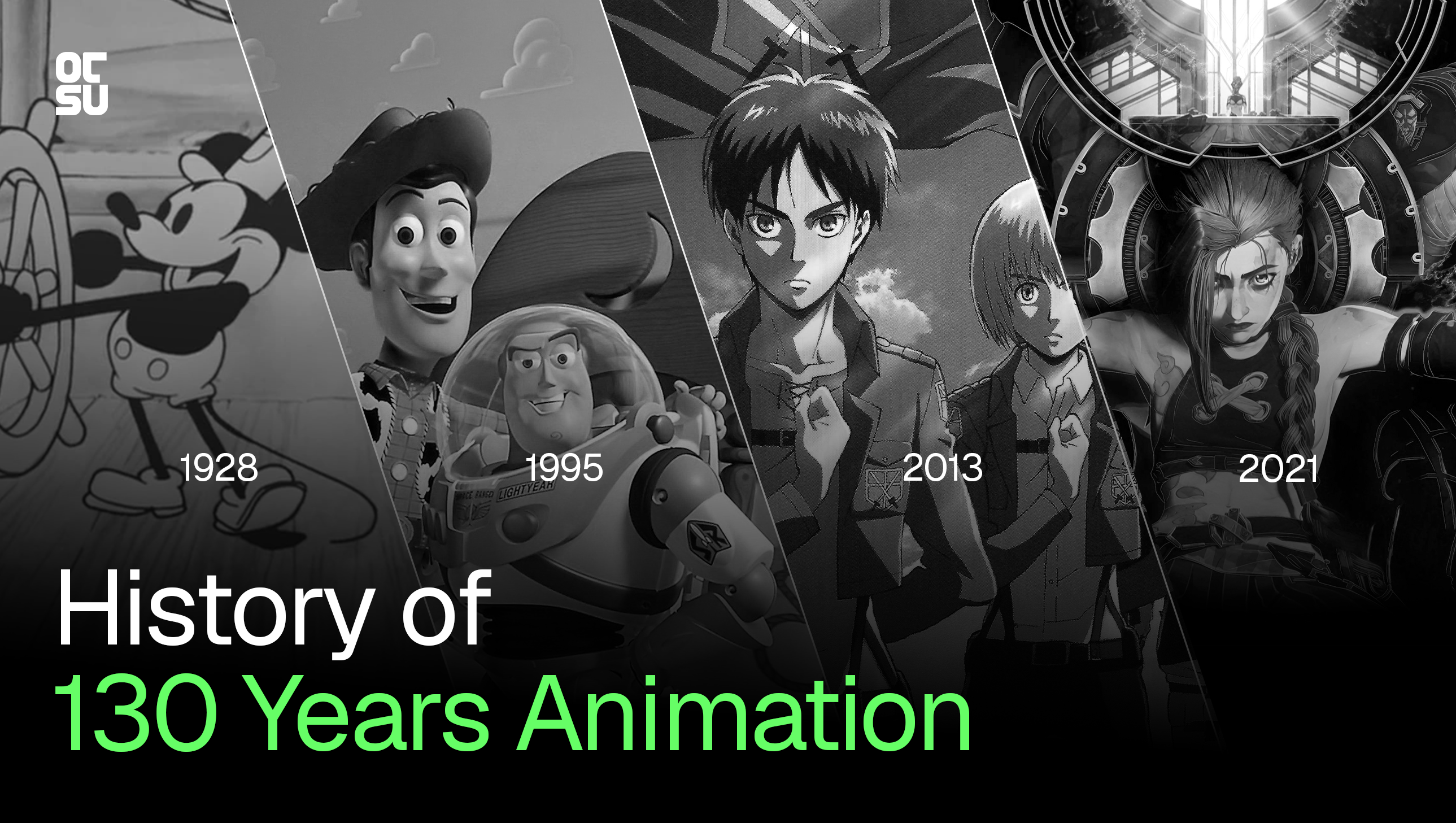
Animation did not evolve simply because artists drew more frames or technology became more advanced. For more than a century, the history of animation has centered on a different question: which shots deserve the most effort to make audiences feel something? From cel animation and limited animation to CGI and hybrid 2D/3D, animation history is a history of choices about timing, staging and emotion. It is also one of the clearest ways to understand anime's distinctive language of movement.
- 01Before Film: Where the History of Animation Begins
- 02The Studio System and the Evolution of Animation
- 03Movement as Acting in Early Animation History
- 04Limits as Style: Limited Animation and Anime History
- 05How CGI Changed Animation History
- 06Hybrid by Design: The Newest Chapter in Animation History
- 07The Lesson the History of Animation Teaches Today
Before Film: Where the History of Animation Begins
Long before cinema, people were already searching for ways to make still images appear to move. The history of animation really begins here, with devices such as the phenakistiscope and zoetrope that used sequential images and viewing mechanisms to create apparent motion, establishing a key principle behind the medium.
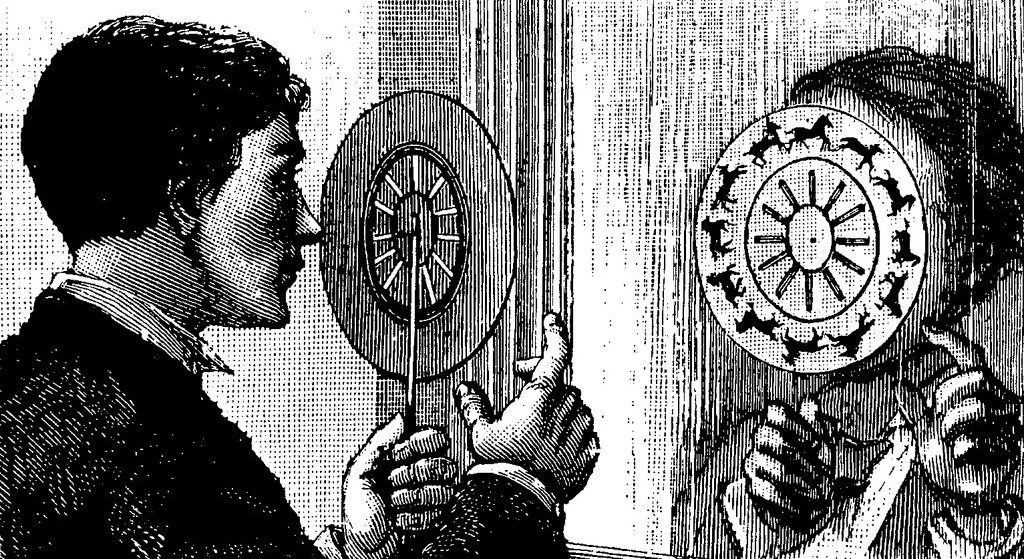
The principle remains true in every production pipeline today. A 2D shot, a 3D character and a hybrid sequence are all constructed from carefully arranged static images. The difference is not whether those images were drawn on paper, built from polygons or rendered by a computer. It is how the animator controls the distance between frames to create a sense of weight, speed, hesitation, impact or surprise.
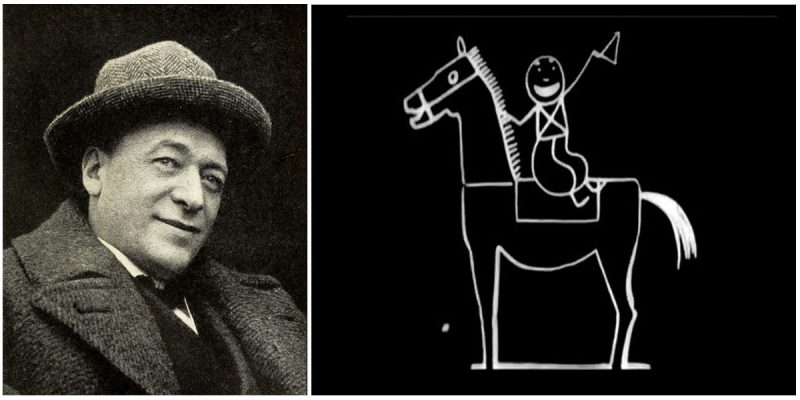
In 1908, Émile Cohl's Fantasmagorie became one of the early landmark examples of hand-drawn, frame-by-frame animation. More than a technical novelty, the film marked an important turning point in early animation history: characters and objects could transform freely according to the logic of imagination. This is where animation moved beyond simply reproducing reality. It allowed artists to create motion that could never be captured by a camera.
The Studio System and the Evolution of Animation
At the beginning of the twentieth century, the evolution of animation moved from the work of individual artists to collaborative studio production. Once a film required thousands of drawings, studios needed systems that allowed multiple people to contribute without images shaking, drifting or losing consistency.
The peg system addressed registration by keeping drawings aligned from one frame to the next. Cel animation changed the workflow again: moving characters could be drawn on transparent celluloid sheets and placed over static backgrounds. Studios no longer had to redraw an entire setting for every frame. This shift is one of the most important chapters in the history of animation, because it made large-scale production possible.
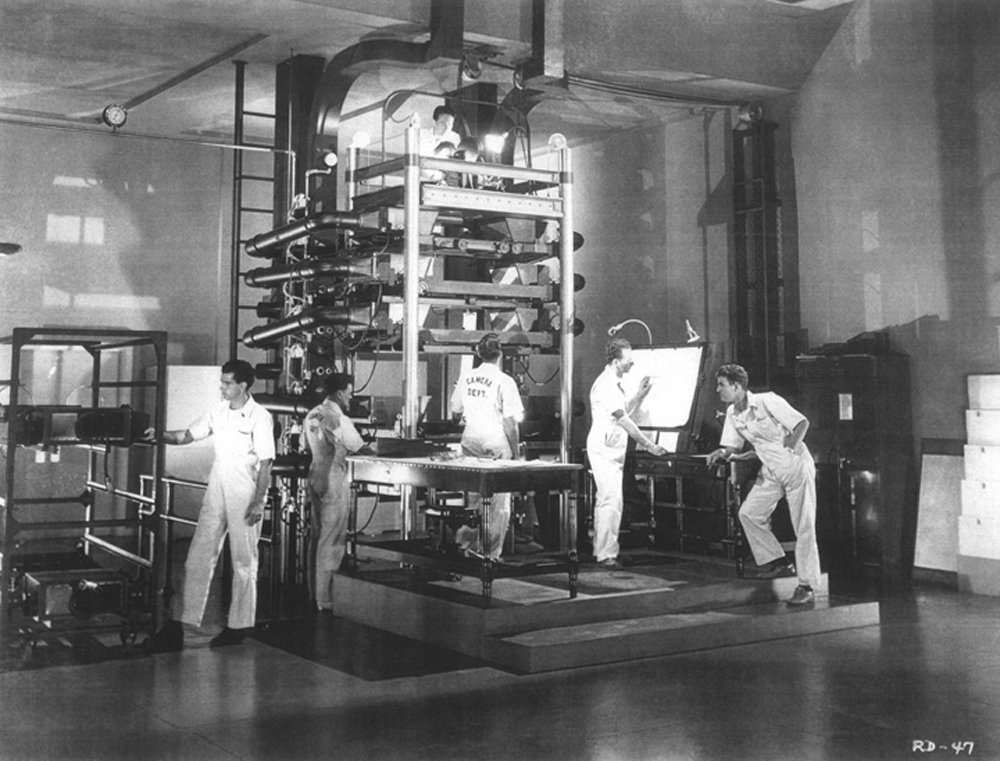
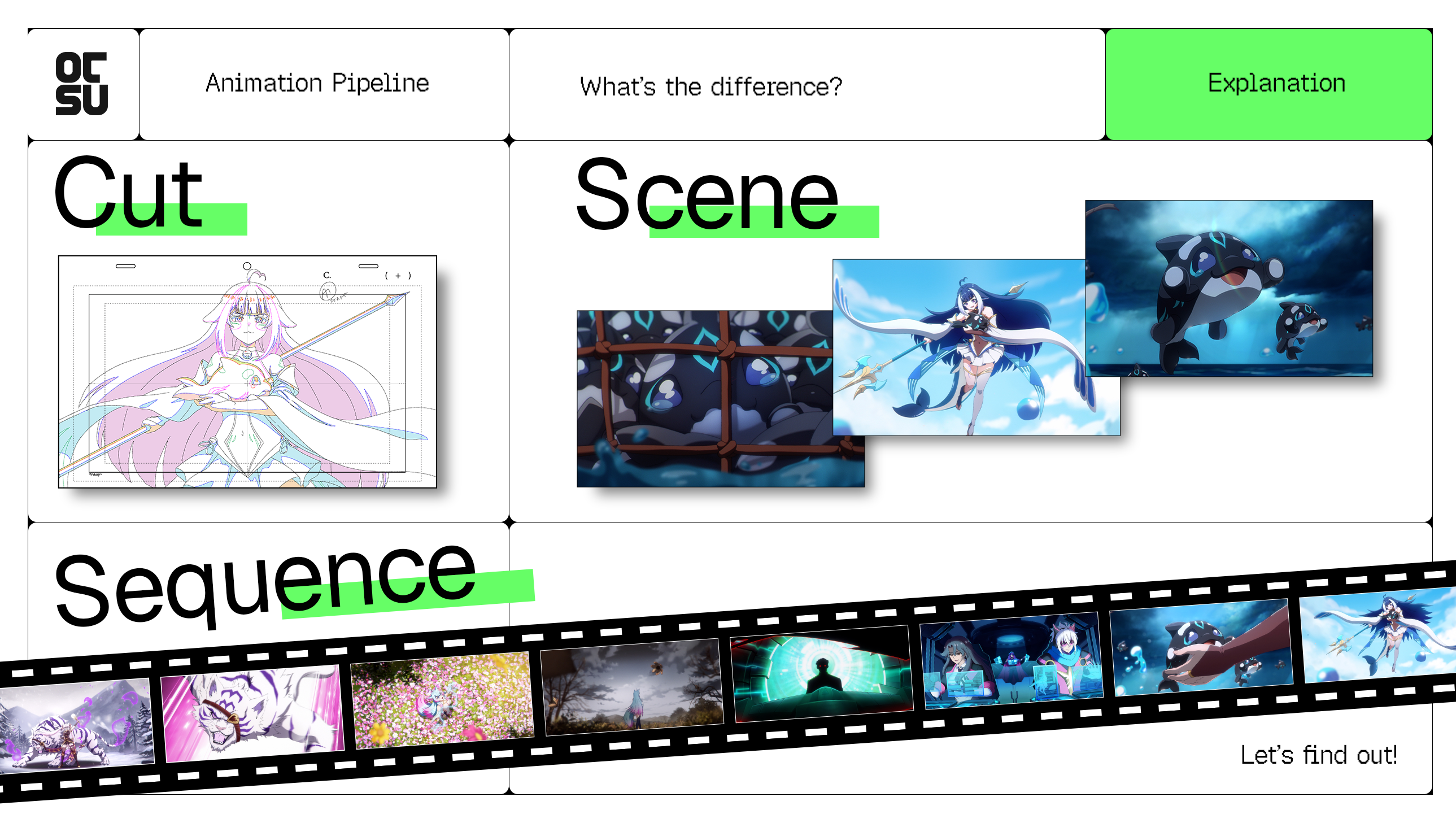
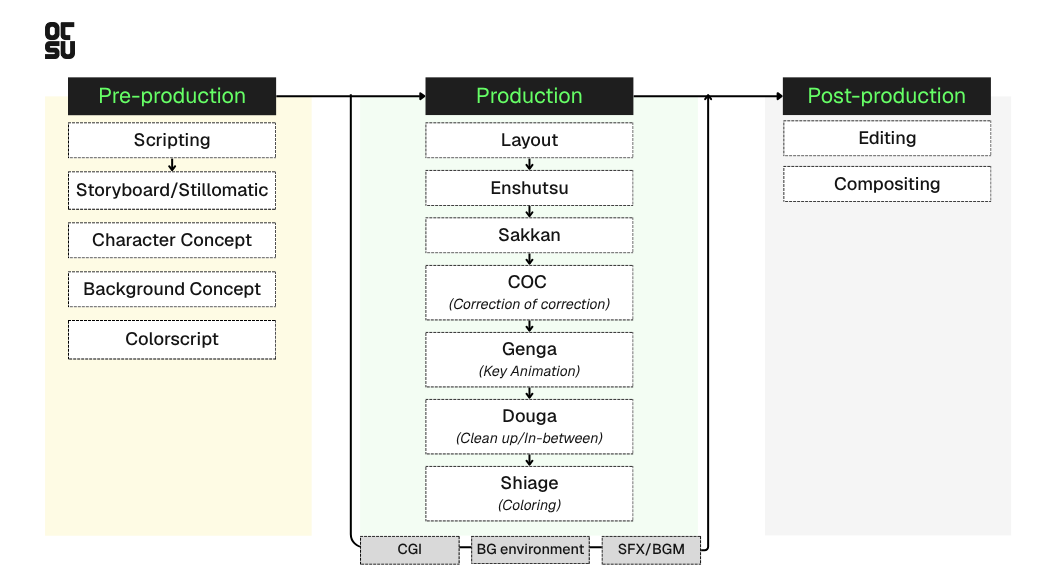
This was the beginning of production-pipeline thinking. In the collaborative model that later became standard, layout establishes space and point of view. Key animators design key poses and extremes. Inbetweeners connect the motion between them. Background artists create the world in which characters exist. Ink, paint and camera departments finish the shot. Tools have changed dramatically since then, but the production logic has not: a strong scene is rarely the result of one department working in isolation.
At Otsu, the same collaborative logic informs frame-by-frame production from concept art and storyboarding through animation, visual effects, compositing and sound design. Each stage adds something the final shot needs, whether that is clearer staging, sharper timing or a stronger emotional read.
Movement as Acting in Early Animation History
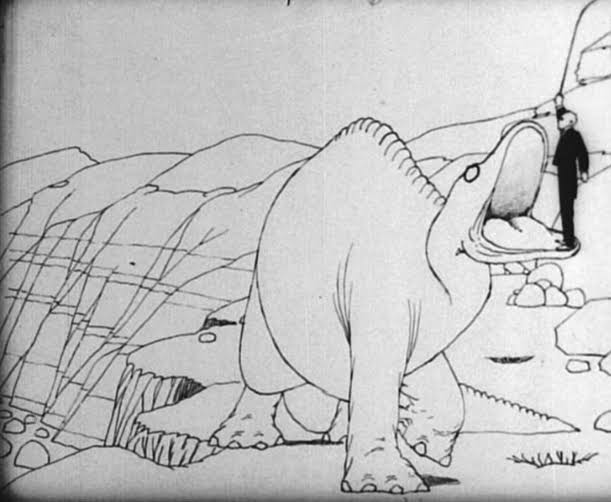
Winsor McCay's Gertie the Dinosaur in 1914 demonstrated that an animated character could act. Gertie did not merely walk or jump. She reacted, hesitated and revealed personality. In the history of animation, this was a crucial shift from motion as a visual trick to motion as character behaviour.
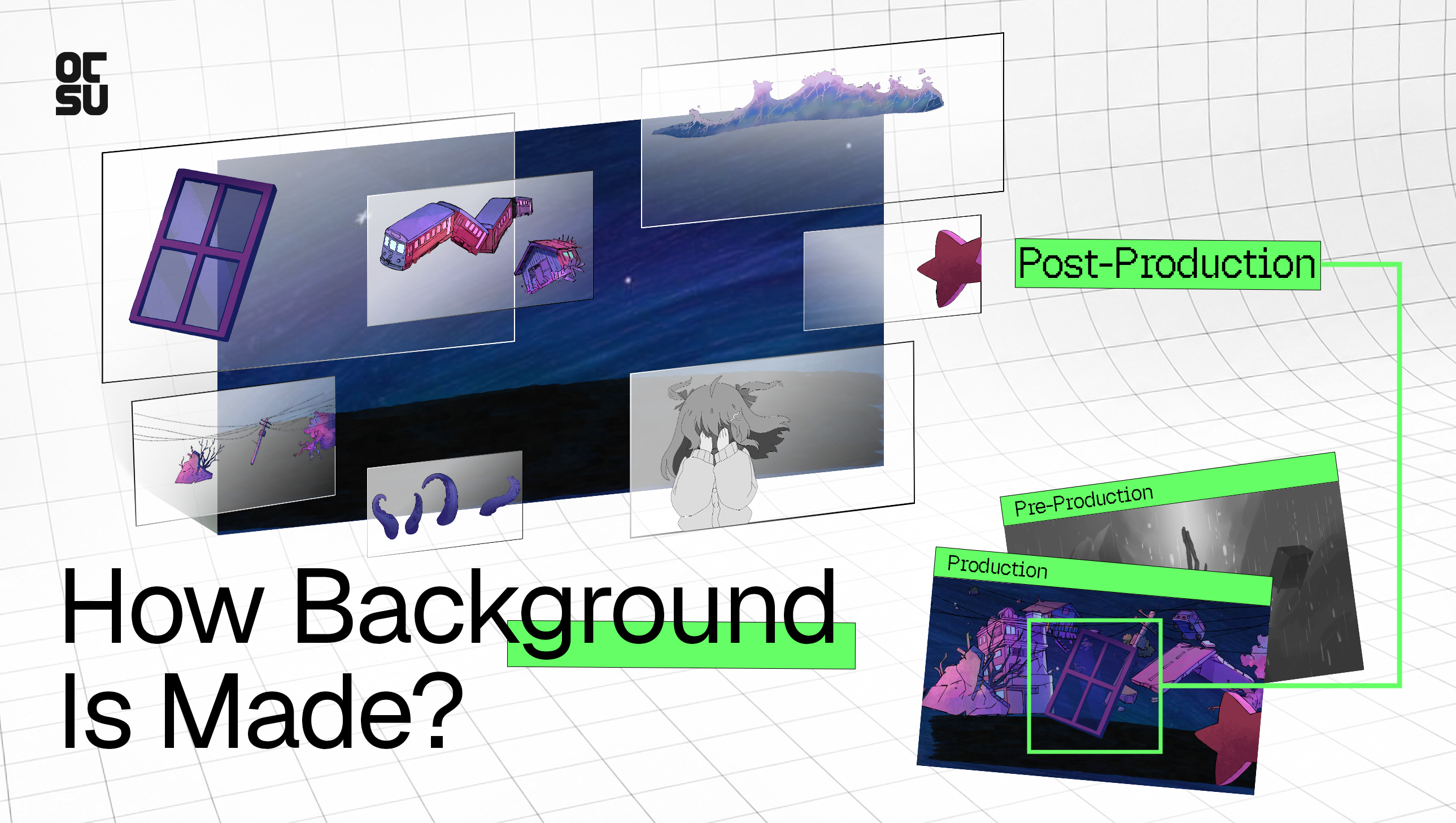
Synchronized sound, colour and the multiplane camera later expanded animation's storytelling capacity. When foregrounds, characters and backgrounds are placed at different depths, they move at different speeds to create parallax. The frame no longer feels like a flat stage. It gains space, atmosphere and a stronger sense of place.
Snow White and the Seven Dwarfs in 1937 became a landmark for long-form animated storytelling. Its achievement was not only its scale. It proved that audiences could follow an animated character through a complete emotional journey when design, acting, editing rhythm and sound all served the same story.
The lesson is direct: technique matters only when it helps the audience understand the character more clearly. A beautiful camera move without purpose quickly becomes decoration. A zoom, pan, dolly or tracking shot should only appear when it shifts emotional focus or helps the audience read the space.
Limits as Style: Limited Animation and Anime History
As television expanded, studios had to produce more content with tighter schedules and budgets. Limited animation became a practical response: holding poses longer, reusing loops, panning across backgrounds and concentrating frames where they mattered most. It is one of the most misunderstood turns in the evolution of animation.
It is often reduced to simply "less movement." In reality, limited animation is a way of allocating movement. Not every shot needs to animate on ones, meaning a fresh drawing for every single frame. An expression can become stronger when a character holds for a few frames. A cut can create more force than continuous motion. A well-designed background can communicate atmosphere without requiring hundreds of additional drawings.
That thinking became an important part of anime production, especially for television. Anime cannot be reduced to a low frame count. Its visual identity also comes from how composition, colour, acting, framing, sound and stillness work together. When a moment needs to explode, production can concentrate its resources on key animation. When a scene needs tension, a held pose, an eye line and a slow camera push-in may be enough.
In international anime discourse, sakuga often refers to a standout passage of animation or to the visible craft behind it. It is not simply "more frames." What matters is the decision to place effort where motion needs weight. If a viewer feels the force of a hit, the pain of a fall or the emotion in a turn of the head, timing, spacing, silhouette and staging have usually been solved well before the final polish.
How CGI Changed Animation History
CGI did not arrive to invalidate hand-drawn animation. It introduced another way to organise production, and it opened a new chapter in animation history. When Toy Story was released in 1995, it proved that a feature-length animation could be made entirely with computer graphics. Yet the film did not work because its characters had more polygons than hand-drawn ones. It worked because traditional principles still held: clear poses, readable silhouettes, specific character objectives and timing that supported performance.
In contemporary production, CGI is particularly useful for challenges that are difficult to handle in 2D alone: complex camera moves, deep environments, mechanical assets, crowd scenes and reusable objects viewed from multiple angles. 3D helps teams control perspective, lighting and space more efficiently. But it cannot create emotion on its own. A strong rig still needs an animator's choices. A polished render still needs a strong layout so the audience knows where to look.
Seen across the whole history of animation, the move from cel to digital is not a story of new technology defeating old technology. It is a process of moving repetitive tasks into new tools so artists can protect time for the work that cannot be automated: acting, rhythm and visual decision-making.
Hybrid by Design: The Newest Chapter in Animation History
Hybrid animation is where this idea becomes especially clear, and it may be the most telling stage in the recent evolution of animation. 2D and 3D should not be combined merely because each has a technical advantage. They need to serve one visual language.
3D can drive movement in a shot with a camera flying through architecture, vehicles or mechanical spaces. 2D can preserve character acting, line quality and expressive flexibility. But when the two are brought together, the team must solve at least three issues: registration, timing and line look.
Registration ensures that contact points between 2D and 3D assets do not drift. Timing ensures that both image layers live in the same rhythm. Line look ensures that the line weight, texture, shading and degree of stylisation in 3D do not disrupt the 2D design. If even one of these elements is wrong, the audience can feel that an asset has been placed onto the scene rather than belonging inside it.
Compositing is where these layers begin to speak the same visual language. It manages light, colour, atmosphere, depth cues and effects so foregrounds, characters, backgrounds and effects can coexist in one coherent world. This is why hybrid animation is not a shortcut. It is a production choice that needs clear planning from concept, previsualisation, layout and colour script onward.
The Lesson the History of Animation Teaches Today
Looking back, every major milestone in the history of animation is tied to a decision about resources. Cel animation reduced what had to be redrawn. The multiplane camera created depth without constructing a real world. Limited animation selected which frames deserved the greatest investment. CGI moved space, camera work and reusable assets into a digital environment. Hybrid animation assigns 2D and 3D to the tasks they do best. This is the throughline of animation history.
That is why the question "Should this be 2D or 3D?" is often incomplete. A more useful question is: what does this story need the audience to feel and what should this shot prioritise? Some scenes need deep space and parallax. Some need a clear silhouette against a flat background. Some need a few extremely precise frames rather than a dense stretch of motion. There is no universal answer for every project.
This is also the perspective Otsu brings to anime-inspired animation. A shot does not need excessive motion merely to demonstrate technical ability. It needs a reason to exist. When storyboard, colour script, layout, genga (the key animation drawings), clean-up, compositing and sound all move toward one intention, the frame does more than move. It feels alive.
Looking for a partner who moves storyboard, layout, key animation and compositing toward one intention? Otsu Animation is the animation studio built for exactly this. Contact us now!
Who invented animation and when did it begin?
Optical toys like the phenakistiscope (1833) established the illusion of motion and Émile Cohl's Fantasmagorie (1908) is regarded as the first true hand-drawn animated film.
Is limited animation in anime considered low-quality animation?
No. It allocates movement on purpose, holding poses and concentrating frames where they matter. Born from 1950s TV budgets, it became the core of anime's visual language.
Was Toy Story the first fully computer-animated feature film?
Yes. Pixar's Toy Story (1995) was the first feature made entirely with CGI, opening the industry's digital era.
Does CGI completely replace hand-drawn 2D animation?
No. 2D stays alive, especially in anime. Many studios now use a hybrid 2D/3D workflow instead of dropping either technique.
What is the difference between 2D and 3D animation?
2D builds motion from flat drawings, strong in line and expression. 3D works in three-dimensional space for better control of camera, lighting and depth. Hybrid animation combines both.