2D Animated Game Trailer: Main Types and Why They Work

Game trailers are essential for any game's release. While many game trailers rely on in-game footage, top-tier studios choose to utilize 2D animation to promote their games. An animated game trailer lets developers showcase their game world in a unique visual style. By transforming characters into a stylized, hand-drawn format, this approach can deliver a parallel artistic version of the game world. This creates a highly distinctive experience that sets the project apart from standard in-game graphics.
Main Types of Animated Game Trailer
In game trailer production, trailer formats are selected based on the objectives of a game's launch campaign. Those objectives influence both the trailer's structure and duration. For projects featuring 2D animation, this usually takes in two main types: a gameplay trailer or a game cinematic trailer.
Gameplay Trailer
A gameplay trailer is the most common format in game trailer production, often used to launch a new game, introduce major updates, or reveal new cosmetic skins. Released before the content becomes available, it builds excitement by giving players their first look at what they will actually experience in-game. They typically begin with a short animated sequence or stylized intro before transitioning into in-engine footage. The remainder of the trailer focuses on real gameplay, key mechanics, character abilities, environments, highlighting combat, progression systems, user interface and other gameplay elements that players will encounter during actual play.
Most gameplay trailers run between 30–90 seconds, although larger game expansions may extend beyond 2 minutes. Because gameplay footage occupies most of the runtime, animation is typically used as a supporting element rather than the primary focus. It helps create a strong first impression, helps define the game's visual identity and emphasize important moments, while the gameplay itself remains at the center of the presentation. This approach makes gameplay trailers more efficient to produce, as only selected portions require handcrafted animation.
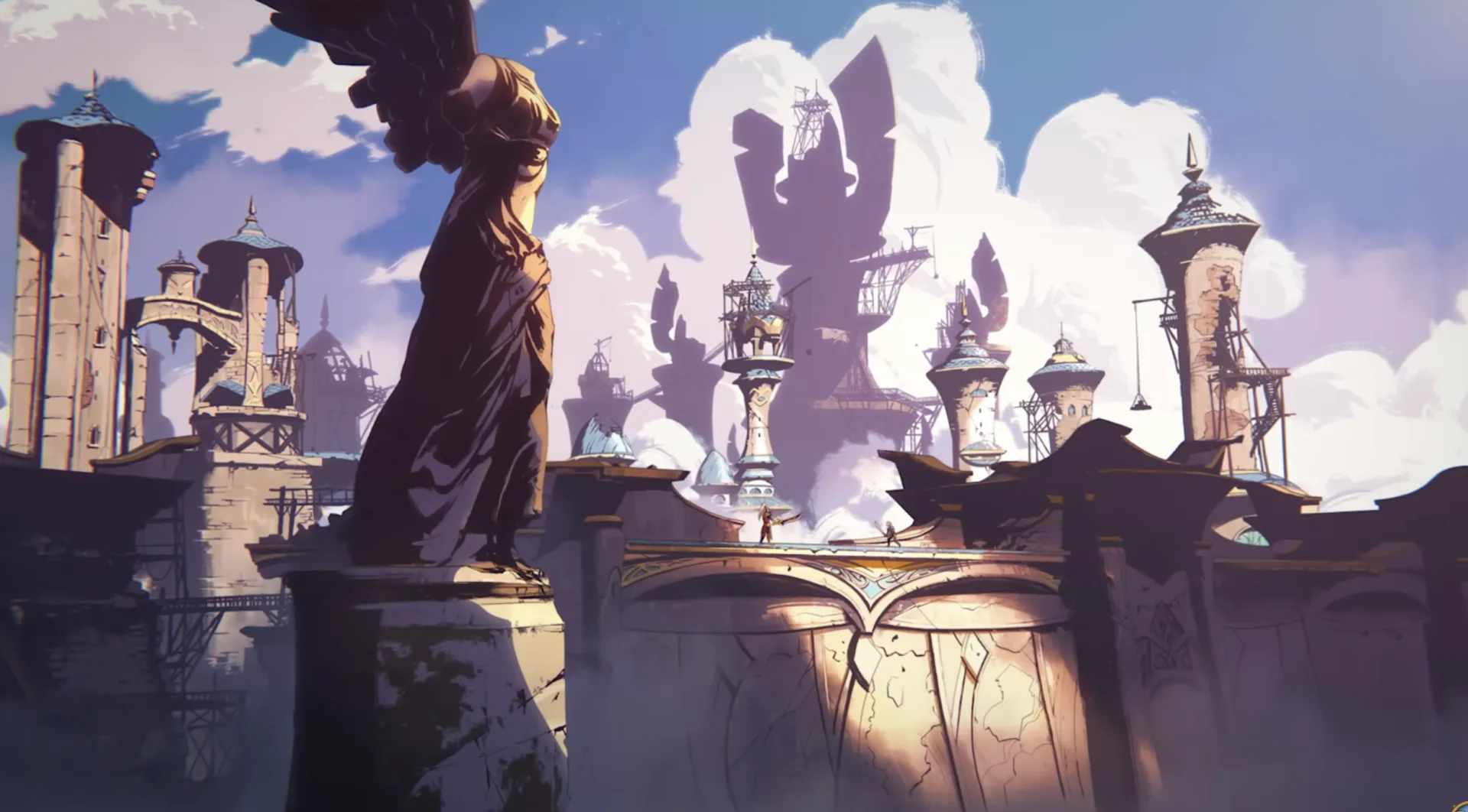
A strong example is Hades II's v1.0 Launch Trailer, where a short hand-drawn 2D sequence serves as the opening visual hook before transitioning into gameplay. The animation first establishes the game's mythological tone, introduces its central conflict and mirrors the bold, painterly aesthetic that defines Hades II. The transition into gameplay feels seamless because the color palette, character designs and visual language remain consistent throughout, ensuring that the animated opening strengthens the playable experience.
Because gameplay remains the centerpiece, with a limited opening seconds, the 2D animation work must capture attention, establish the trailer's tone and communicate the personality of the game. The visual choice must stick to the game's art direction and narrative themes, allowing the transition into gameplay to feel both natural and cohesive.
Gameplay trailers focus more on gameplay than storytelling. By the end of the trailer, the audience should know what they can do in the game, what makes the new content worth exploring and what they can expect from the experience once they jump in.
Game Cinematic Trailer
Cinematic trailers are designed to build a deeper emotional connection between players and the game's world. They are often used to introduce new characters, explore character backstories, expand the game's lore, or reveal major narrative arcs.
Unlike gameplay trailers, which usually use animation as an opening hook before transitioning into gameplay, cinematic trailers are fully animated from start to finish, without relying on real in-game assets or gameplay footage to communicate the experience.
They are usually longer than gameplay trailers, running between 3–5 minutes. Rather than recreating the in-game look with gameplay footage, every scene is built with 2D animation, making cinematic trailers much more animation-intensive. Because of their high production values, they are often used to announce big-budget projects like AAA games. The result is a premium-looking trailer that strengthens players' emotional connection to the game's world and lore.
For instance, Spirit Blossom Beyond demonstrates this approach through Xin Zhao's cinematic reveal. To support the story, the world of Ionia was redesigned with two contrasting visual styles: an ethereal spirit realm defined by saturated colors, painterly textures and flowing motion, and a grounded physical world built from earthy tones and organic landscapes.
The artistic choice enhances the emotional contrast between the two worlds while staying true to the game's lore. This contrast not only distinguishes the two realms but also reinforces the trailer's emotional tone and narrative, demonstrating how 2D animation can deepen a game's lore while remaining faithful to its visual identity.
Why 2D Game Trailers Work for Game Promotion
Excellent Way for Storytelling
A 2D game trailer is a fantastic way to exaggerate action and focus on a visually appealing, highly emotional message. It allows developers to re-imagine a 3D character from the game into a completely custom 2D version, offering a fresh, unique visual vibe that stands out from standard marketing.
This gives developers more room to tell a compelling story. It sets clear expectations for the plot and engages the viewer on an intense emotional level. High-quality cinematics also improve how players perceive a game, making it feel more polished and premium.
2D animation gives developers more creative freedom than gameplay footage alone. Here, artists can fully control composition, pacing, cinematography and visual symbolism to create a more emotionally engaging narrative. This makes 2D animation particularly effective for introducing new characters, exploring their motivations, or expanding the game's lore in ways that gameplay alone cannot.
Beyond visual appeal, stylized 2D animation helps establish a stronger emotional connection between players and the game's universe. Character performances become more expressive, environments can be reinterpreted to emphasize atmosphere, and every frame can be carefully composed to support the story. A well-produced 2D game trailer builds hype and reinforces the impression of a game backed by high production values.
Tapping into New Audiences
A successful 2D game trailer does more than engage existing players – it introduces the game to entirely new audiences. While gameplay trailers primarily appeal to people already interested in a specific genre, stylized animation has the ability to attract viewers through its artistic quality alone. Even audiences unfamiliar with the game may stop to watch because the visuals, storytelling, or animation style capture their attention.
This broader appeal makes 2D animated trailers highly effective across platforms such as YouTube, TikTok, X, and Instagram, where distinctive visuals encourage sharing, discussion, and community engagement. Fan artists, animation enthusiasts, and general audiences often contribute to the conversation, extending the trailer's reach beyond traditional gaming communities. By transforming a marketing asset into entertainment in its own right, a 2D game trailer can significantly increase brand awareness and create lasting interest long before the game is released.
How to Make a Trailer Game Hooks Your Players
Every game trailer, regardless of its length, should tell a story. That story does not have to be complex, but it should communicate one clear message that stays with viewers after the trailer ends. Whether the goal is to introduce a new hero, reveal a gameplay update, or expand the game's lore, every creative decision should support that single objective.
Different games demand different approaches. A competitive multiplayer title may prioritize fast-paced gameplay and mechanics, while a narrative-driven RPG may focus on characters and emotional world-building. Understanding what makes the game unique is the foundation of an effective trailer.
Build a Strong Opening Hook
The opening seconds determine whether viewers continue watching or scroll away. A strong hook should establish the game's tone immediately, using striking visuals, dynamic animation, memorable character moments, or a compelling narrative question. Rather than overwhelming the audience with information, the first 10 to 15 seconds should create curiosity and encourage viewers to keep watching.
Focus on Showcasing Gameplay or Cinematic Storytelling
You must clearly define the purpose of your animated game trailer before production begins. If you want to reveal new seasonal features, choose a hybrid format with a short 2D intro, followed by real live-capture showcase elements. However, if you want to sell the emotional depth of a character's lore, choose a pure cinematic style with zero gameplay. This prevents the viewer from experiencing visual whiplash when shifting between hand-drawn animation and the actual game engine, maximizing their emotional immersion.
Choosing Between Short and Long Formats
Your video needs to convey the story, basic mechanics and core identity without spoiling too much. A teaser should reveal just enough information to spark curiosity, setting up a perfect loop for follow-up marketing materials later in the campaign.
A trailer needs to convey story, core gameplay mechanics, and anything else viewers need to understand about the game – without revealing too much. A trailer that reveals just enough, with more detail to follow later, is usually the right length, with the less animation thing. If for long, the animation will take longer.
Trailer length should be determined by how much the audience needs to know, not by how much content is available. A teaser often performs best when it introduces only the game's core identity and leaves room for curiosity, while longer trailers can develop gameplay systems, narrative, or character arcs in greater detail. From a production perspective, longer trailers also require significantly more animation, planning, and post-production, making it important to balance creative ambition with production scope.
Different purposes call for different approaches – and choosing the right structure from the start is what separates a trailer that gets scrolled past from one that gets shared.
Looking for a partner to power your next game trailer? Otsu Labs is the animation studio built for exactly this. Contact us now!
How many types of 2D game trailers?
There are two main types of 2D game trailers:
- Gameplay Trailer: Uses real gameplay footage, often with a short animated intro, to showcase gameplay and core features.
- Cinematic Trailer: A fully animated trailer that focuses on the game's story, characters and world without showing gameplay.
How long should a game trailer be?
The ideal game trailer length depends on its purpose. Game trailers are usually 30–90 seconds for announcements, reveals, or major updates. Story-driven or lore-focused cinematic trailers are often 3–5 minutes long.
What makes an effective game trailer?
A good game trailer has a strong opening hook, a clear purpose and showcases either gameplay or storytelling without revealing too much.
Why use 2D animation for game trailers?
2D animation gives developers more creative freedom to create unique visuals, tell stronger stories, and build a deeper emotional connection with players through storytelling, characters and world-building.